

LOS ANGELES
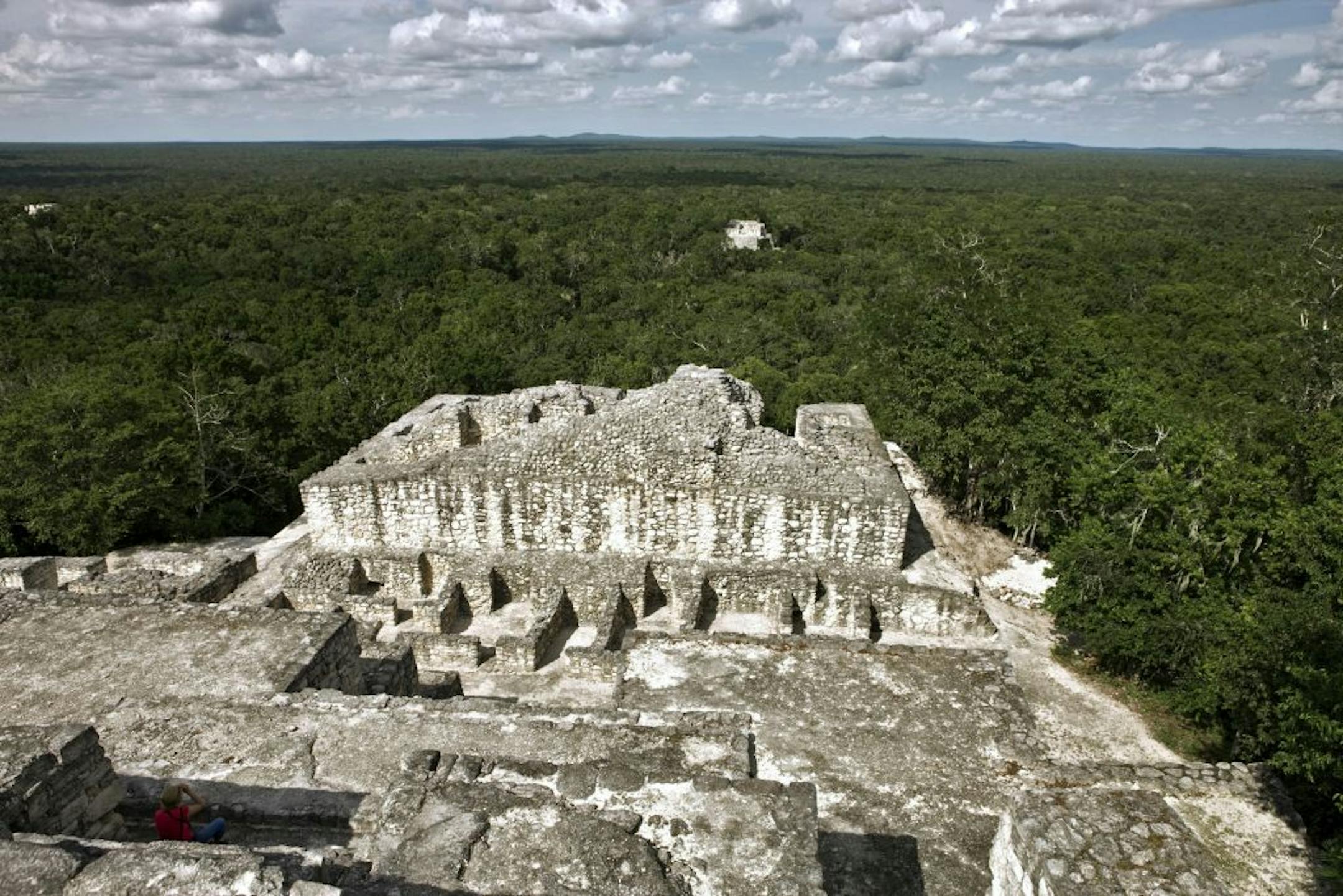
Argument has raged for decades over what doomed the ancient Mayan civilization and spurred its people to abandon their awe-inspiring temples and pyramids in the rain forests of Mexico and Central America. Warfare, disease, social unrest and over-farming have all been cited as potential factors in the decline of a culture that was scientifically and culturally advanced for 750 years.
A new study bolsters the theory that large-scale climate change was responsible for the society's demise -- and also argues that changes in global weather patterns also were responsible for their rapid rise.
Using data from a 13,500-year-old stalagmite taken from the floor of a recently discovered cave in Belize, scientists said they were able to assemble a precise record of rainfall for the region going back 2,000 years.
The ancient cave spire was created by rainwater as it leaked from the ceiling of Yok Balum cave and deposited dissolved minerals in a growing mass on its floor, drip by drip. By examining the ratio of atomic isotopes along the length of the stalagmite, researchers said they were able to determine when portions of it formed and how much rainwater fell during each six-month period.
What they discovered was a period of abundant rainfall during the early days of the civilization, followed eventually by drought. The results were published recently in the journal Science.
"Unusually high amounts of rainfall favored an increase in food production and an explosion in the population" beginning around 440 A.D., said study leader Douglas Kennett, an anthropologist at Penn State University. "This led to the proliferation of cities like Tikal, Copan and Caracol across the Maya lowlands."
By 700 AD, that wet weather gave way to a "general drying trend that lasted four centuries and was punctuated by a series of major droughts," he said. "That triggered a decline in agricultural productivity and contributed to societal fragmentation and political collapse. ... Maya kings lost their power and influence."


