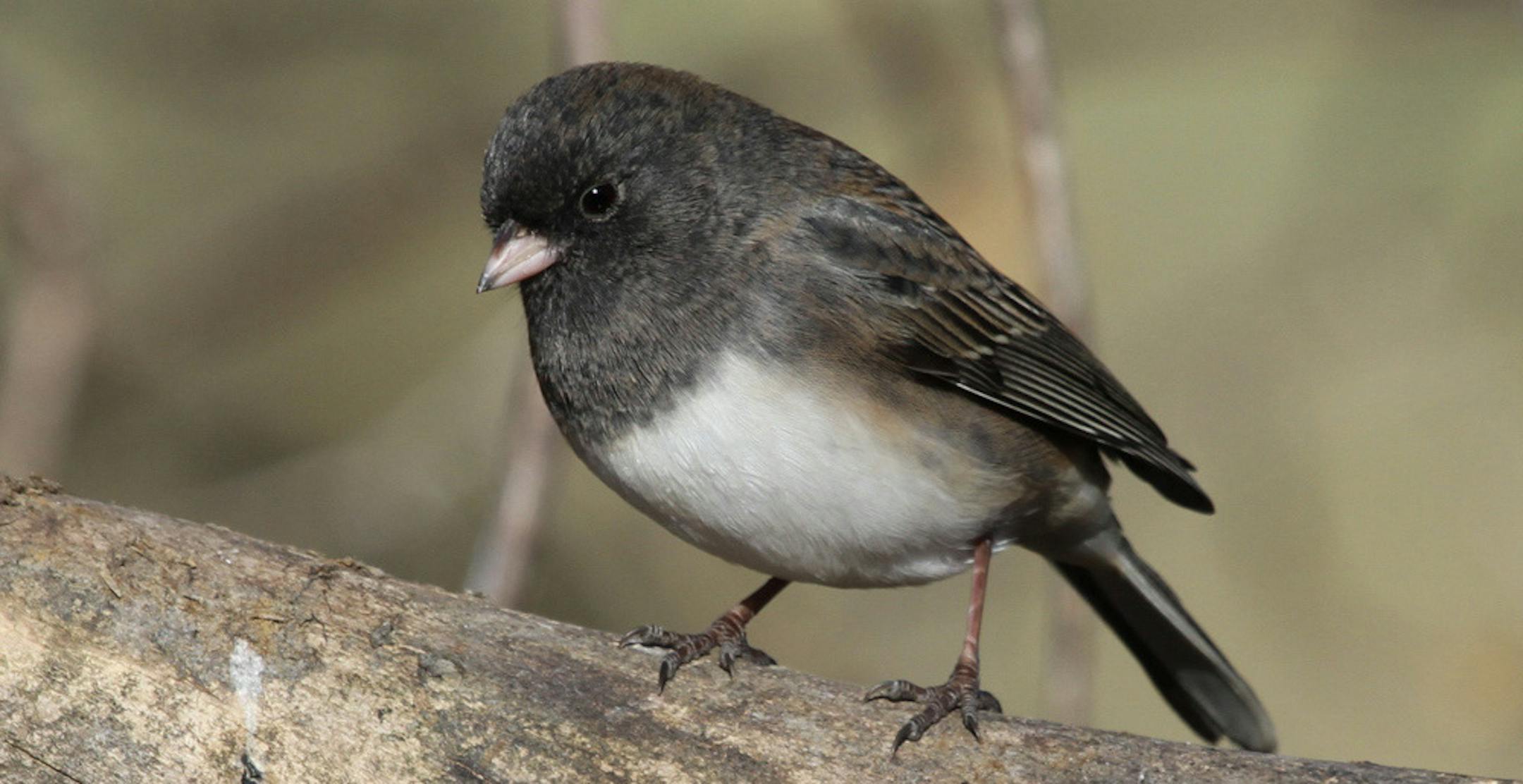
Q: I saw a junco in my backyard on Sept. 20 — isn't this early for them?
A: That dark-eyed junco was right on schedule, since they usually begin showing up as early as late August, according to "Birds in Minnesota," by Robert Janssen. (If you want to know when and where birds appear in Minnesota, this book comes in handy.) Some people regard this little northern sparrow as a harbinger of winter, but the cold season was still a ways off when you saw your junco.
Homemade mix
Q: I've stopped buying premixed birdseed and instead buy bags of black oil sunflower seed, sunflower pieces, nyger, peanuts and safflower seed and make my own mix. I'm finding I attract more birds and have a lot less waste.
A: I'm not surprised at your good results, since you're creating a high-quality, high-energy seed mix that should appeal to many kinds of birds.
Feeding time
Q: I've observed pairs of birds at my feeders where one bird feeds a seed to the other. In some cases it's a male cardinal feeding a female, sometimes it's a parent feeding a young bird. Recently I saw a female finch feeding what looked like another female. Is this usual and why don't parent birds encourage their offspring to move to a feeder and feed themselves?
A: These are excellent observations. In the case of the cardinals, the male feeding the female is part of their courtship ritual, he's showing that he would be a good food provider. In the case of the finches, females and juveniles look very much alike, so this probably was a parent feeding a youngster. As for why parent birds don't simply lead their fledglings to feeders and let them figure it out: It takes awhile for young birds to catch on to new sources of food, and learn how to extract it. I'll bet those parent birds are almost counting the days until their youngsters finally realize they can feed themselves.
Winter visitor
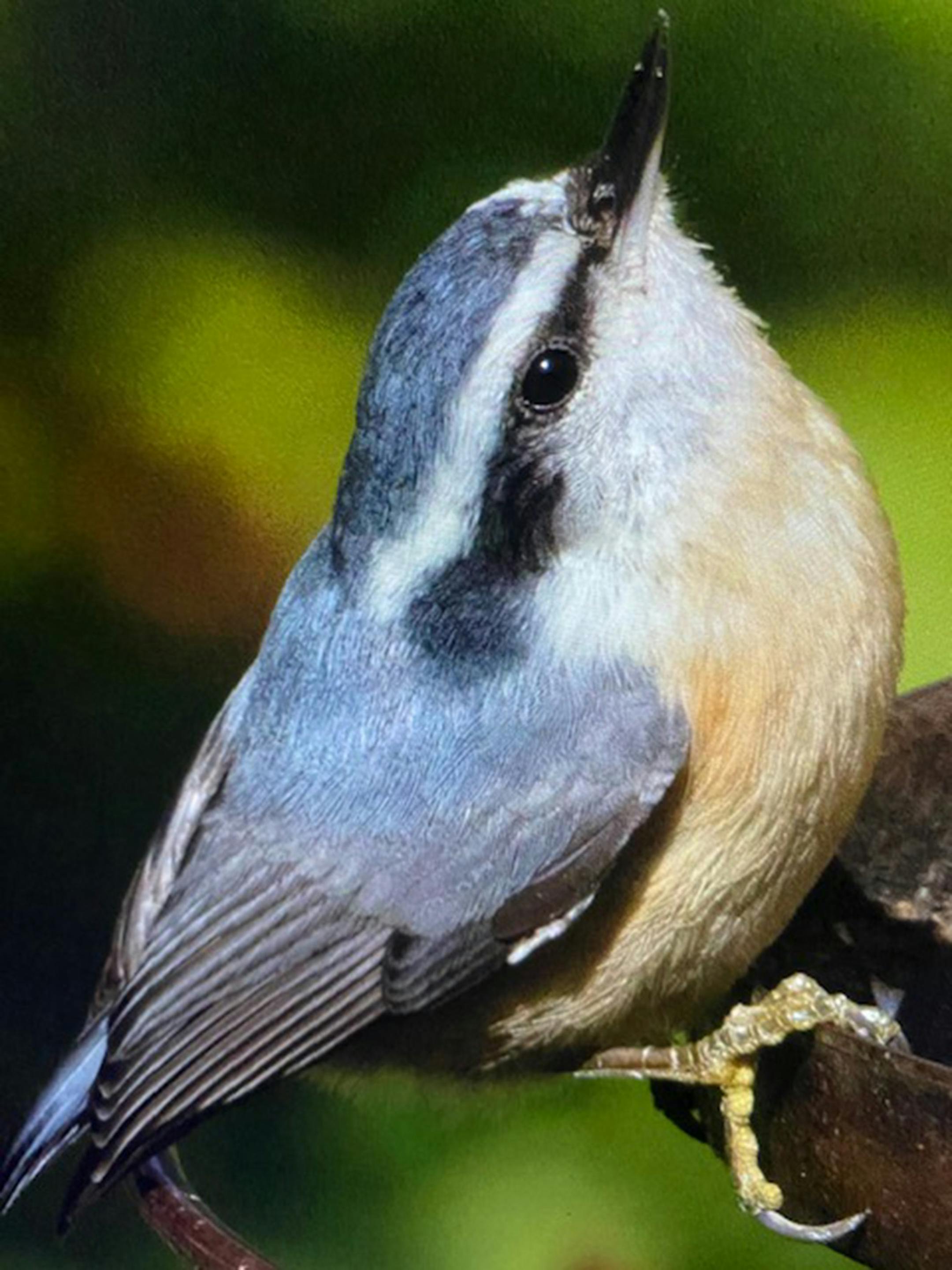
Q: There's a funny little bird at my suet feeders that I've never seen before. Can you tell me from the photo I sent what it is?
A: The bird in your photo is a red-breasted nuthatch, a cousin to our familiar white-breasted nuthatches. They're smaller and more dramatically marked, and they make a similar call, although their sounds are more nasal. We don't see these nuthatches every year, but with this year's poor crop of cone seeds in the conifers of the eastern boreal forest in Canada, many began flooding into the United States as early as August. This movement is expected to continue during the winter and they'll visit bird feeders that offer black oiler sunflower seeds, suet and/or peanuts.