
Dick Cheney: Congressional leaders in 2004 favored keeping survelliance program secret

The Associated Press
June 24, 2013 at 5:05PM
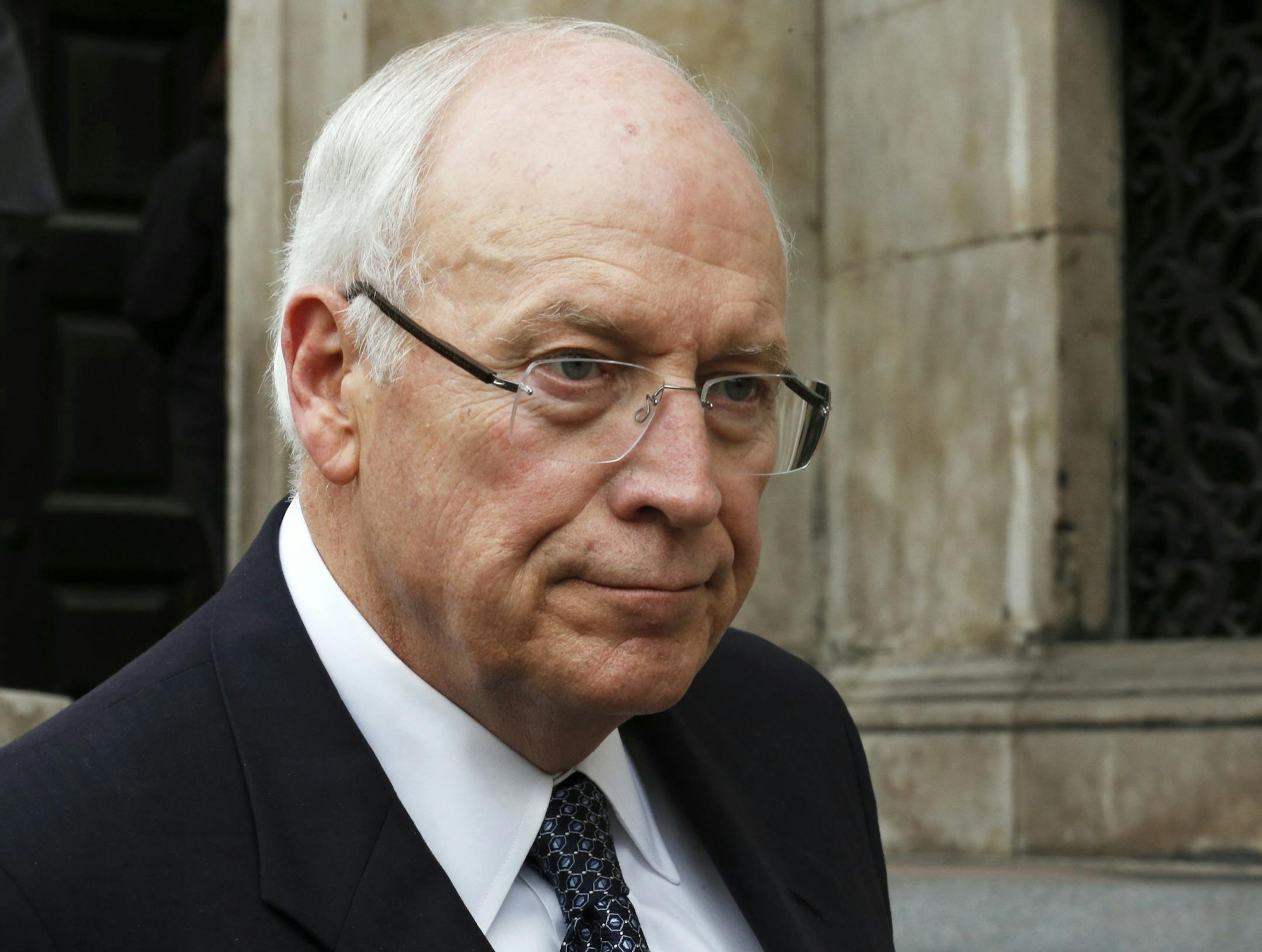
Former U.S. Vice President Dick Cheney leaves after attending the funeral service of former British Prime Minister Margaret Thatcher at St. Paul's Cathedral, in London, Wednesday, April 17, 2013. Margaret Thatcher, Britain's Iron Lady, was laid to rest Wednesday with a level of pomp and protest reflecting her status as a commanding, polarizing political figure.
Former U.S. Vice President Dick Cheney (Associated Press - Ap/The Minnesota Star Tribune)

WASHINGTON — Former Vice President Dick Cheney said Monday U.S. congressional leaders he briefed in 2004 on a surveillance program recently disclosed by leaker Edward Snowden supported it, and both Republicans and Democrats wanted to keep it secret.

Cheney said he was directly involved in setting up the program, run by the National Security Agency, or NSA, in the weeks after the 9/11 attacks. He said it has had "phenomenal results" in preventing terrorist attacks.

Cheney did not specify which survelliance program he was referring to. Snowden, a former NSA contractor, is facing espionage charges stemming from his disclosure of U.S. surveillance programs that collect phone records and online data in the name of national security.

"There was a time when it was a very, very close hold. Unfortunately it's become public," said Cheney.

He was asked about Snowden's disclosures at a forum at a Washington think tank on U.S.-Korean affairs. He said the leaks have already caused significant damage to U.S. national security as it had forced the government to declassify information to explain the surveillance program.

"If you tell the enemy how you are reading their mail, it's going to lessen your capability to do that," he said.

Cheney, who served as vice president in the George W. Bush administration, said that the way the program was set up, it required presidential approval for anyone outside the agency to be allowed to "read in" to it.

Cheney said he met and briefed congressional leaders — whom he did not identify — about three years after the program started and they were "unanimous" that it should continue.

"I said, 'Do you think we ought to come back to the Congress in order to get more formal authorization?' and they said, 'Absolutely not.' Everybody, Republican and Democrat, said, 'Don't come back up here, it will leak'," Cheney said.

Cheney expressed concern that a private contractor was able to gain access to the information that Snowden has leaked, and speculated that someone within the NSA was feeding information to him.

Snowden left Hong Kong Sunday for Moscow to avoid extradition to the U.S. His intended destination remains unclear.

While the Obama administration and U.S. lawmakers have decried Snowden's leaks, free speech advocates have praised him for shedding light on secret surveillance programs in a democratic society.

about the writer

about the writer

MATTHEW PENNINGTON

More from No Section

See More
FILE -- A rent deposit slot at an apartment complex in Tucker, Ga., on July 21, 2020. As an eviction crisis has seemed increasingly likely this summer, everyone in the housing market has made the same plea to Washington: Send money — lots of it — that would keep renters in their homes and landlords afloat. (Melissa Golden/The New York Times) ORG XMIT: XNYT58
Melissa Golden/The New York Times

It’s too soon to tell how much the immigration crackdown is to blame.