

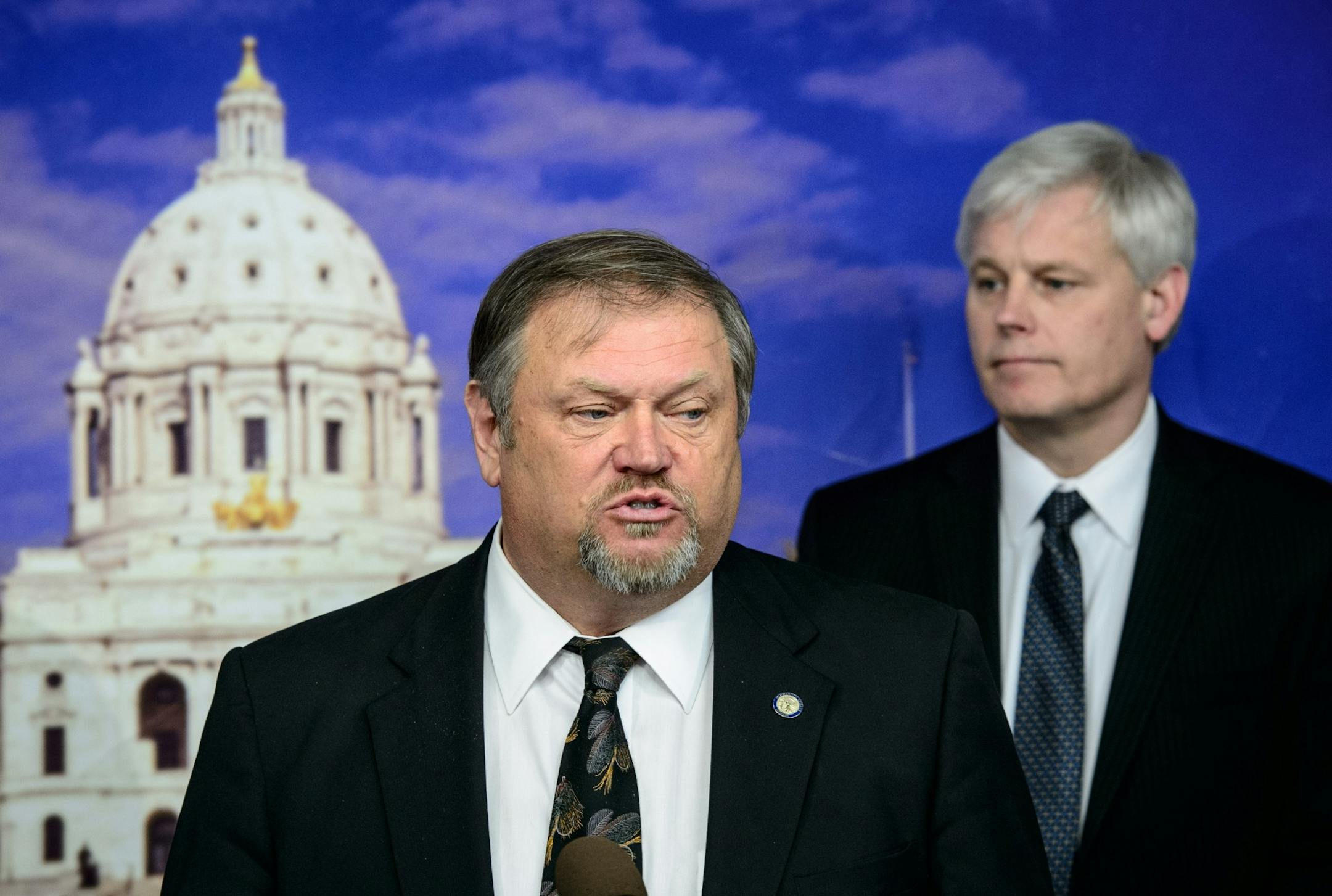
By the end of the week, the Minnesota Legislature will approve a measure to hike the state's minimum wage to $9.50 an hour, DFL leaders said on Monday.
The deal on minimum wage will allow DFL lawmakers to start with April recess next week with another major agenda item ticked off.
"This session is really starting to come together," said Senate Majority Leader Tom Bakk, DFL-Cook.
The final agreement would phase in the wage hike by 2016, by which time most large businesses would have to pay their workers $9.50 an hour. Smaller businesses, those with gross sales under $500,000 a year, would be able to pay workers $7.75. Businesses employing workers aged 16 and 17, teenage workers during a 90-day training period and workers in the country on J1 visas would also be permitted to pay employees $7.75 an hour.
After 2018, the minimum wage would continue to rise as inflation increases. Those increases would be capped at 2.5 percent, meaning that the most that year's wage could be is $9.74 an hour.
"I congratulate the House and Senate leaders for reaching agreement on Minimum Wage legislation. I am very pleased that it will raise Minnesota's minimum wage to $9.50 per hour, and index it to inflation. I look forward to signing this legislation into law," DFL Gov. Mark Dayton said in a statement.
The deal would also allow the Department of Labor and Industry to suspend any automatic increases during a "substantial downturn in the economy."
The hard-fought deal won praise from the Raise the Wage Coalition, a group of advocates that have long pushed for a minimum wage increase.


