
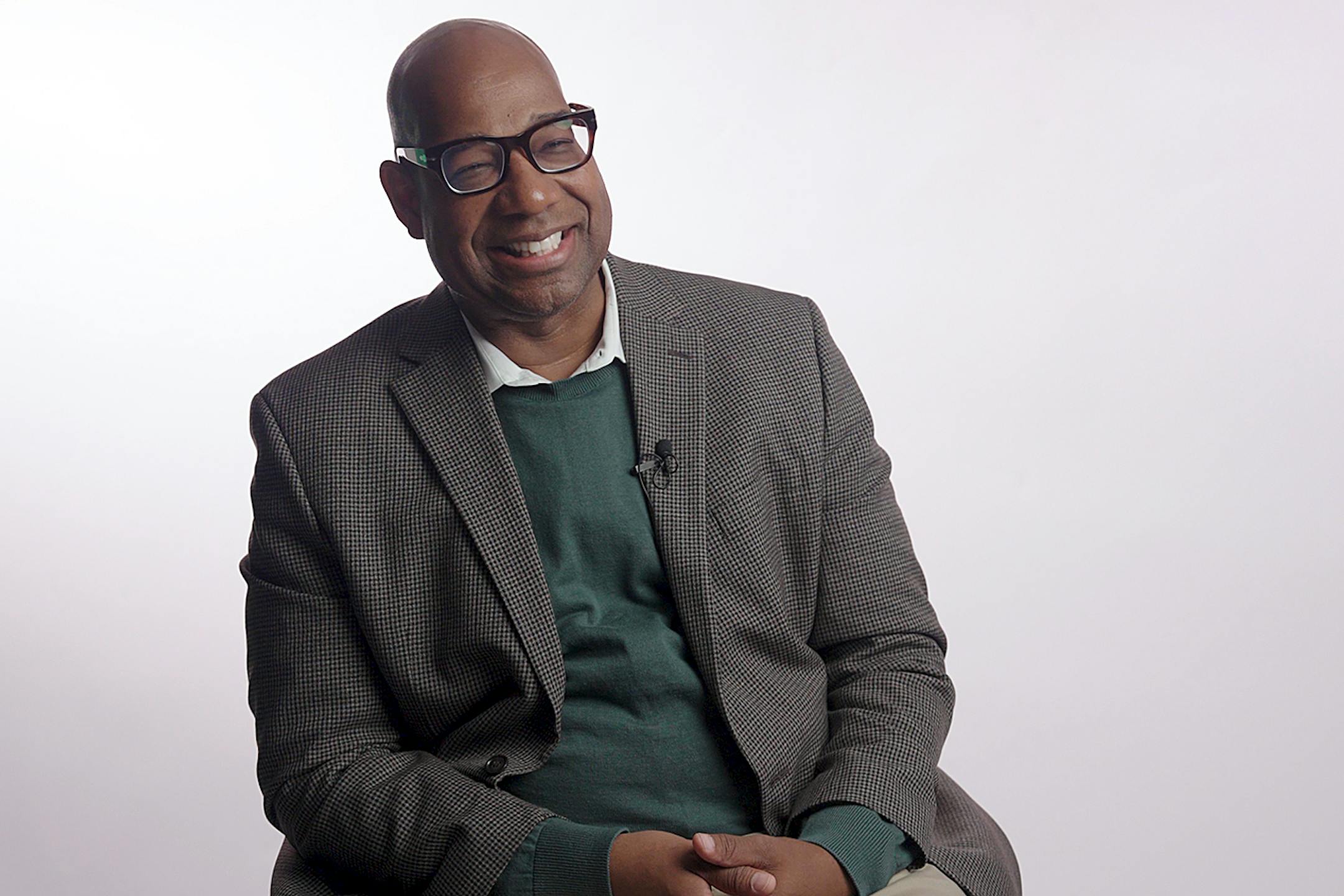
Minneapolis mayoral candidate DeWayne Davis, in his own words

November 2, 2025
DeWayne Davis, candidate for Minneapolis mayor (Amanda Anderson/The Minnesota Star Tribune)

First-time candidate Davis talks about his top priorities: addressing homelessness and police reform.

The Minnesota Star Tribune

Minneapolis mayoral candidate DeWayne Davis is the 15th child of a Mississippi Pentecostal minister. He worked as an aide to several congressmen and as a lobbyist for student loan company Sallie Mae before he enrolled in seminary.

He moved to Minneapolis in 2013 and served as pastor of All God’s Children in south Minneapolis before becoming the lead minister of Plymouth Congregational Church in 2020.

Davis has never held public office, and much of his campaign has focused on dissatisfaction with the administration of Mayor Jacob Frey, especially on the city’s response to homelessness and on police reform following the murder of George Floyd.

As part of its coverage of the Minneapolis city election, the Minnesota Star Tribune asked the four most prominent candidates for mayor to sit for videos addressing a variety of campaign issues. (Omar Fateh’s campaign canceled a scheduled interview and did not respond to requests to reschedule.) Davis’ comments have been edited for length and clarity.

On his top priorities if elected

The first thing that I would do: work with the City Council. I would expand the homelessness response. Right now, I think it is woefully inadequate for the scale of our problem.

Second thing I would do is really have a deep conversation with everybody about how we’re doing on the court-enforceable settlement agreement [between the city and the Minnesota Department of Human Rights over the Minneapolis Police Department]. One of the things that I’m really concerned about is that it is a check-the-box activity, and that we are not making sure that those reforms are embedded such that we are following both the letter and spirit of the agreement.

The third thing that I would do is I really would — and this is what I can’t emphasize enough — have multi-jurisdictional collaboration and coordination.

On public safety and reforming the Minneapolis Police Department

I still think there is a culture that has to be broken up. And Minneapolis is not the only city that struggles with this, but I think our neighbor, St. Paul, has done a little bit of a better job at this.

I think we are seeing change because new cohorts of police officers that we’re getting I think are shaped by what happened with George Floyd, and I think it’s ever-present in their minds that this is something that is going to require a different kind of policing. I worry, of course, and if you look at the independent monitor’s last report about the progress we’re making on the court-enforceable settlement agreement, there are some red flags about resistances to some of the training, new training and use of force. So there’s a mixed bag.

I think we’re doing better. I think there’s more sensitivity to it, but this is where leadership is important too, where we have leadership that is not only setting expectations about meeting the court-enforceable settlement agreement, but also changing the culture; setting expectations that we want to see, setting expectations with the chief of police that this is where we need to go.

So we need that kind of leadership to make sure people understand the commitments that we are behind in terms of what we want to see, but I am hopeful. I really am.

On housing affordability and rent control

I have been very honest with people about my concerns about the government setting rents. But what I have also said is the government can play a very powerful role in making sure that we have the kinds of projects so that others can begin to provide really affordable rents.

So I’ve talked over and over again about how the government could get far more engaged in incentivizing nonprofit and public development, working with some great nonprofits in this area, Beacon Housing, working with Project for Pride in Living, working and incentivizing CommonBond, where we are really engaging them to build more projects, working with them to get access to capital so they can build more projects, and then they can set rents at zero to 30 [percent of area median income]. And again, when they are doing it, when these nonprofit and public developers are participating, they are in the market.

But notice, I think this is another case where we don’t have to have a false choice here. We can encourage and we can accept that we need to have private developers doing it, because we do have a supply problem. But the question is, what kind of policy can we imagine that would provide safe, affordable housing for people on the low-income scale? And there are other things that we can do. Let’s look at tenant opportunities to purchase. How about the city incentivizing property owners to make improvements to their properties without forcing the price to go up? These are things that we can begin to have a conversation about.

On the city’s efforts to address homelessness and encampments

I don’t think we have much of a plan. I think the sweeping of encampments is a reaction. We simply are not doing enough to prevent encampments from occurring, and then we box ourselves in such that when we have hundreds, 50 or 100 people in the encampment, we simply have no choice but to send in the police when a crime occurs.

I want us to build a homelessness response that prevents encampments from getting started in the first place, and what that would mean is probably expanding [the Homeless Response] Team to at least 15 people. I’m just thinking maybe one person per ward and some others, and move it out of Regulatory Services and put it into the Department of Public Health so that we can get the benefit of some interagency collaboration around substance use disorder and mental health provision.

On property taxes and the budget

This is all of our city, and we’ve got to figure out a way to make sure that everybody is getting what they need to live and thrive in a safe, affordable way. And so when we’re talking about this tax issue, we need to give ourselves an opportunity … And by the way, when we get all that information and we open up this discussion, who knows what we could create, who knows what idea might come forth from that. We have so many talented, smart people. It just strikes me as odd that we can’t possibly arrive at a way to deal with certain issues, with all of us working together, giving our best ideas and our best effort, and trying to reach it.

about the writer

about the writer

Star Tribune staff

See Moreicon

More from Minneapolis

See More
card image
Richard Tsong-Taatarii/The Minnesota Star Tribune

The 40-mile commuter train had its last journey from the suburbs into the Twin Cities ahead of the Vikings-Packers game.

card image
card image