Detroit faces $850 million fight to fix blight

The most elaborate and detailed survey conducted of city's decay urged officials to "act aggressively."

The New York Times
May 28, 2014 at 6:15AM
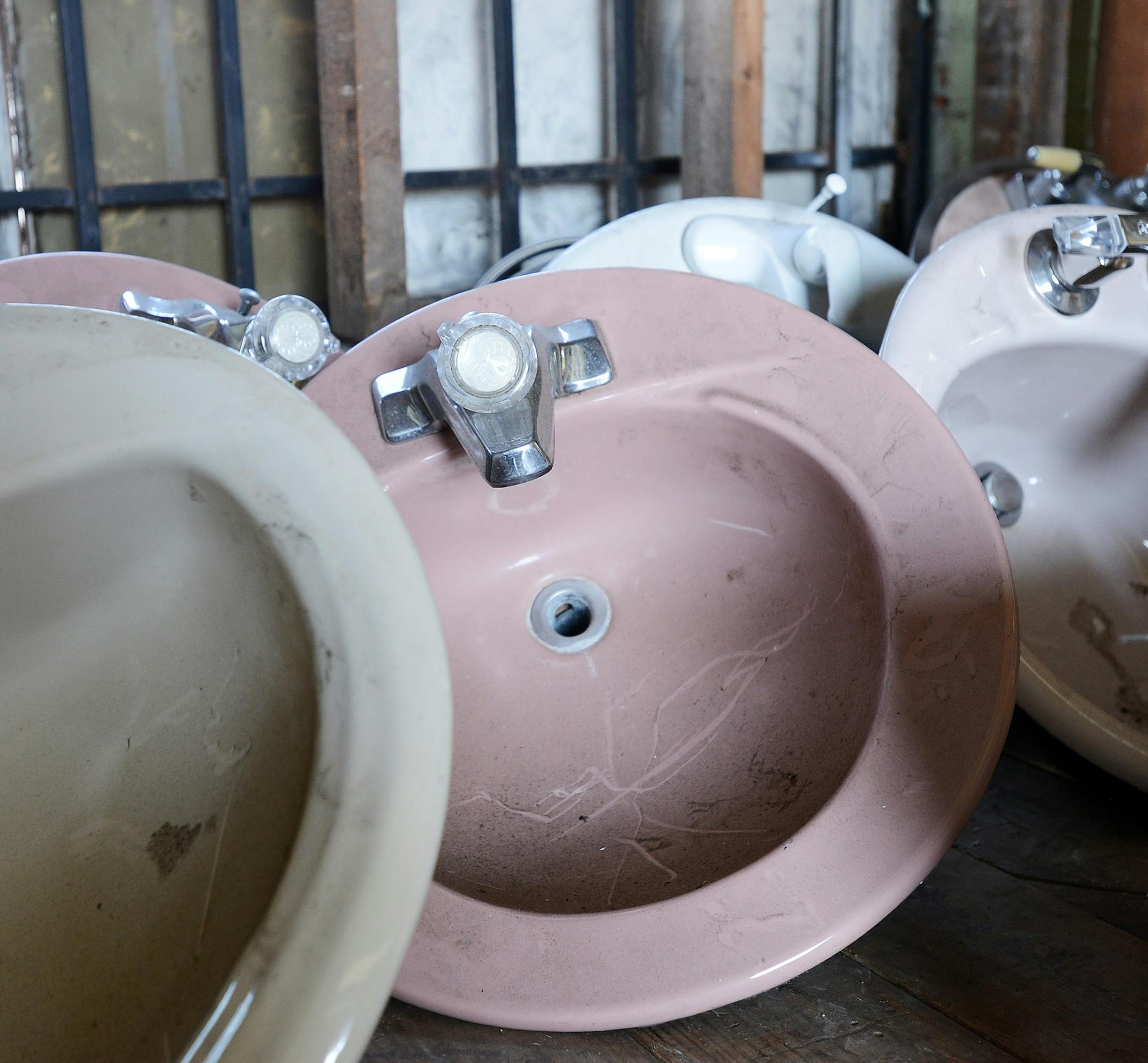
Many items for homes including sinks, toilets, doors, windows, bathtubs, etc. are for sale at the Architectural Salvage Warehouse in Detroit, seen in a May 13, 2014 photo. Detroit plans to start work soon on a pilot project to rescue and sell parts of deteriorating homes before demolishing them. The deconstruction project will solicit bids from teams to salvage reusable flooring, fixtures and moldings in 10 vacant buildings in one city neighborhood. (AP Photo/The Detroit News, Robin Buckson) DET
Sinks removed from abandoned homes were among household items for sale at a Detroit salvage warehouse. (The Minnesota Star Tribune)

DETROIT – Saying that Detroit needed to rid itself of its vast collection of dilapidated houses, junk-filled lots and empty shops, a task force examining the city's blight said Tuesday that the price tag for the cleanup would be at least $850 million, including the likely demolition of 40,000 buildings scattered around the city.

The price tag came in a report by the Blight Removal Task Force, a group formed to catalog and find ways for Detroit to rid itself of the decay that has become one of the bankrupt city's defining features.

The task force also suggested that the city must deal with the hulking factories that dot Detroit — crumbling reminders of the manufacturing prowess of a city far larger, wealthier and more vibrant than it is now.

The report warned that demolishing industrial structures would add hundreds of millions more to the cost, in part because of the need to remedy environmental degradation that the buildings have left behind.

The report — perhaps the most elaborate survey of decay conducted in any large city — found that 84,641 parcels among the city's more than 377,000 properties are plagued by blight. Of those, some 40,000 buildings or parts of buildings should be torn down, according to the study.

"Detroit needs to act aggressively to eradicate the blight in as fast a time as possible," the report concluded. "Other cities contending with high levels of blight have never addressed more than 7,000 structures a year. At that pace, it would take Detroit more than 11 years to address" its decaying buildings and rubble-strewn lots.

Five-year goal to eliminate blight

The report added that "because blight creates more blight," the city's deterioration would continue "without swift remedies." It called for eliminating blight within five years.

The survey grew out of a task force convened in September by the Obama administration, which was seeking options as to how Detroit might remake itself after it became the nation's largest city to file for municipal bankruptcy.

Despite concerns about the cost, city, state and federal officials, along with foundations and private business leaders, backed the remedy.

Kevyn Orr, Detroit's emergency manager, said Tuesday that the city's problem with blighted buildings had been mounting since the Depression and had been the subject of multiple studies by previous administrations.

The current report, Orr said, was finally an answer. "This is an unprecedented time and an unprecedented day," he said. "Here we are, 83 years later, with the tools to address it."

The data — a compilation of gloomy statistics about the state of the city's real estate — was gathered by 150 resident surveyors and volunteer drivers who divided the city into quarter-mile squares, which were nicknamed "microhoods." The front of each property was photographed and surveyors filled out forms related to the condition of each property. The information was then uploaded via a live-stream feed and confirmed.

The study revealed that 30 percent of Detroit's parcels of land are now uninhabited — a total of 114,000 vacant lots.

The report defined blight, generally, as properties that are deemed a nuisance; that have been vacant for five consecutive years or more without being kept up to code; or that constitute a health or safety threat.

Plans to pay for half the cost

About 22 percent of the city's parcels are troubled by blight, the study found, and of those lots with buildings on them, the percentage rose to 30 percent, according to the survey.

City officials said Tuesday that they have plans for how to pay for about $450 million of the massive demolition effort. Some of that is already dedicated federal funding. The bulk would come from the city's pool of money that officials hope a federal bankruptcy judge will allow them to spend fixing the city. Still, that leaves the city nearly $400 million short, without even considering tearing down the old factories.

Among properties held by private homeowners, 53,500 parcels — or 23 percent of all privately owned lots — were deemed troubled by blight. But a far higher percentage — 93 percent — of the nearly 27,000 publicly owned parcels were found to be suffering from blight, the survey found.


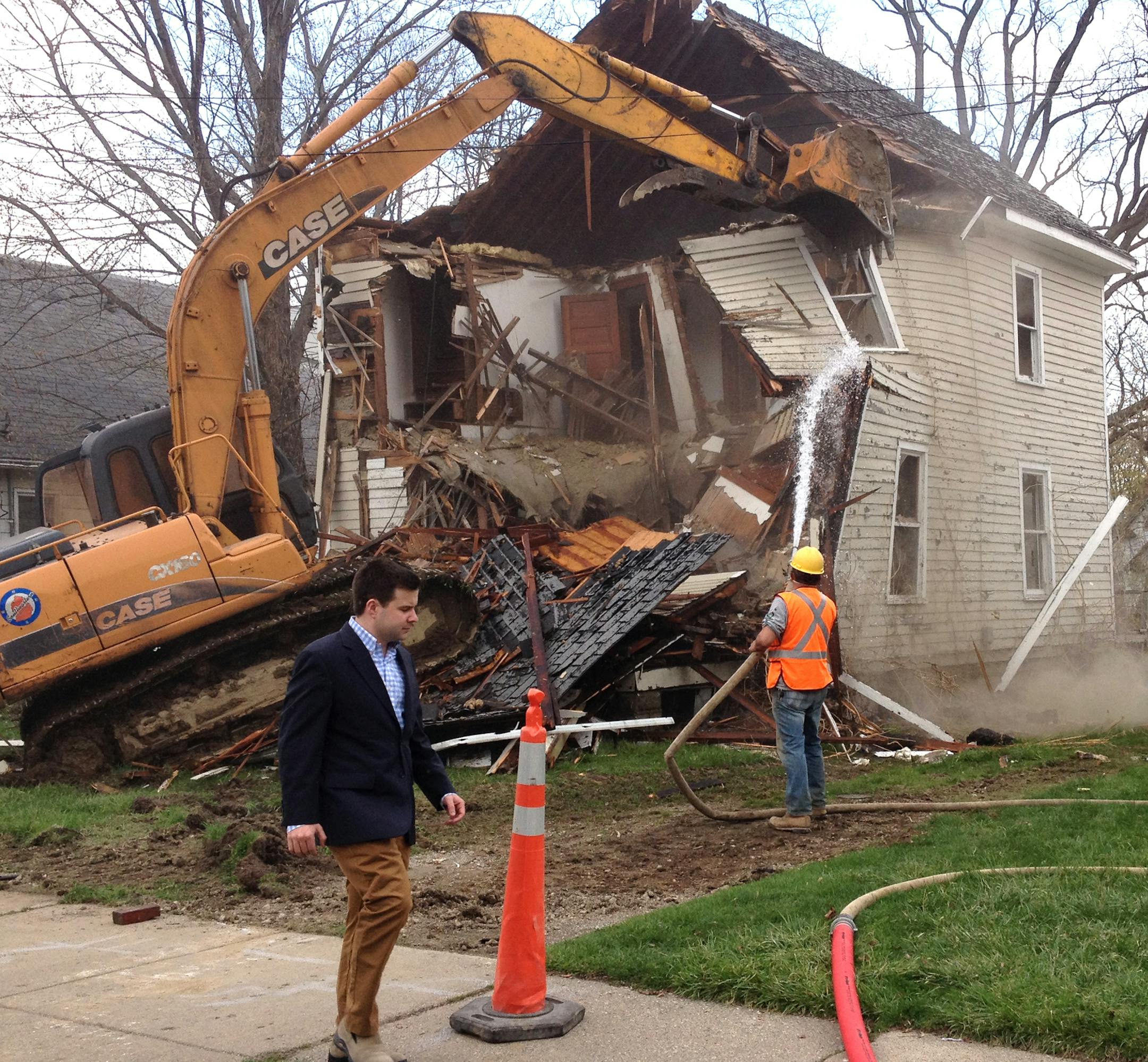
Bill Pulte Jr. walks in front of a Pontiac house being demolished by Pulte's nonprofit Detroit Blight Authority on Wednesday, April 30, 2014. (AP Photo/Detroit Free Press, Bill Laitner)
Bill Pulte Jr. walked in front of a Pontiac house being demolished by his nonprofit Detroit Blight Authority. (The Minnesota Star Tribune)
Warehouse personnel and field worker Michael Leitner moves a kitchen cabinet into place at the Architectural Salvage Warehouse, Tuesday, May 13, 2014. Detroit plans to start work soon on a pilot project to rescue and sell parts of deteriorating homes before demolishing them. The deconstruction project will solicit bids from teams to salvage reusable flooring, fixtures and moldings in 10 vacant buildings in one city neighborhood. (AP Photo/The Detroit News, Robin Buckson) DETROIT FREE PRESS OUT;
Warehouse personnel moved a cabinet removed from a deteriorating home at Architectural Salvage Warehouse. (The Minnesota Star Tribune)
State-appointed Emergency Manager Kevyn Orr, left, and Mayor Mike Duggan are seen during a news conference in Detroit, Tuesday, May 27, 2014. Removing blighted residential properties, lots and vacant commercial structures that have plagued Detroit neighborhoods for decades would cost $850 million, a task force said Tuesday. Blight has "gone on for years" without a "real strategy" and has gotten worse as a result, said Duggan. Orr called it an unprecedented effort. For the first time in Detroit's
State-appointed Emergency Manager Kevyn Orr, left, and Mayor Mike Duggan during a news conference. (The Minnesota Star Tribune)
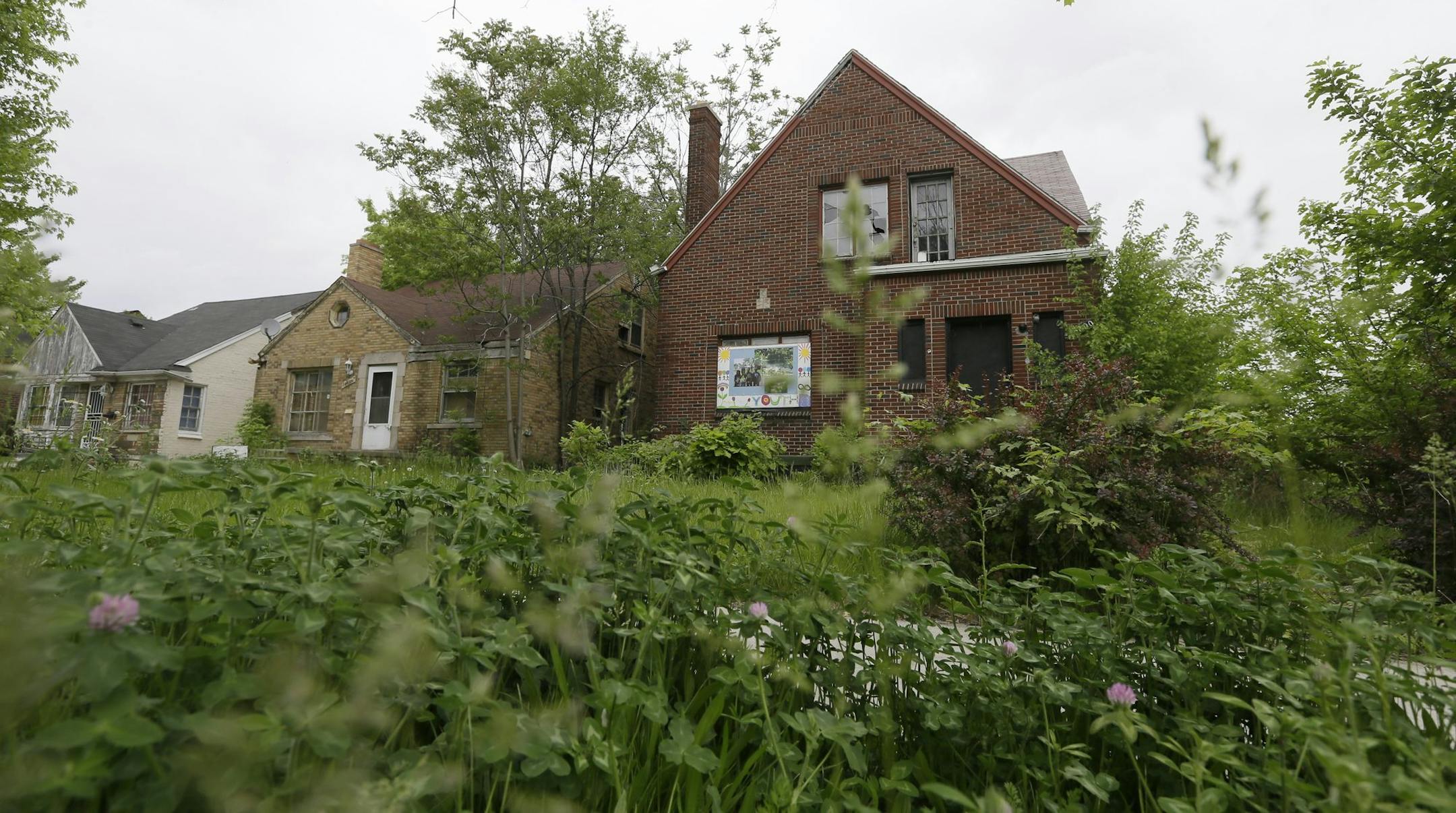
Grass and weeds grow in front of two vacant homes in Detroit, Tuesday, May 27, 2014. Removing blighted residential properties, lots and vacant commercial structures that have plagued Detroit neighborhoods for decades would cost $850 million, a task force said Tuesday. The study by the Detroit Blight Removal Task Force is part of efforts announced last year by the administration of President Barack Obama to help Detroit, which is trying to work through the largest municipal bankruptcy in U.S. his
Grass and weeds growing in front of two vacant homes in one of Detroit’s many blighted neighborhoods. Removing abandoned properties is a priority for the city. (The Minnesota Star Tribune)
about the writers

about the writers

Monica Davey

Timothy Williams

More from No Section

See More
FILE -- A rent deposit slot at an apartment complex in Tucker, Ga., on July 21, 2020. As an eviction crisis has seemed increasingly likely this summer, everyone in the housing market has made the same plea to Washington: Send money — lots of it — that would keep renters in their homes and landlords afloat. (Melissa Golden/The New York Times) ORG XMIT: XNYT58
Melissa Golden/The New York Times

It’s too soon to tell how much the immigration crackdown is to blame.