

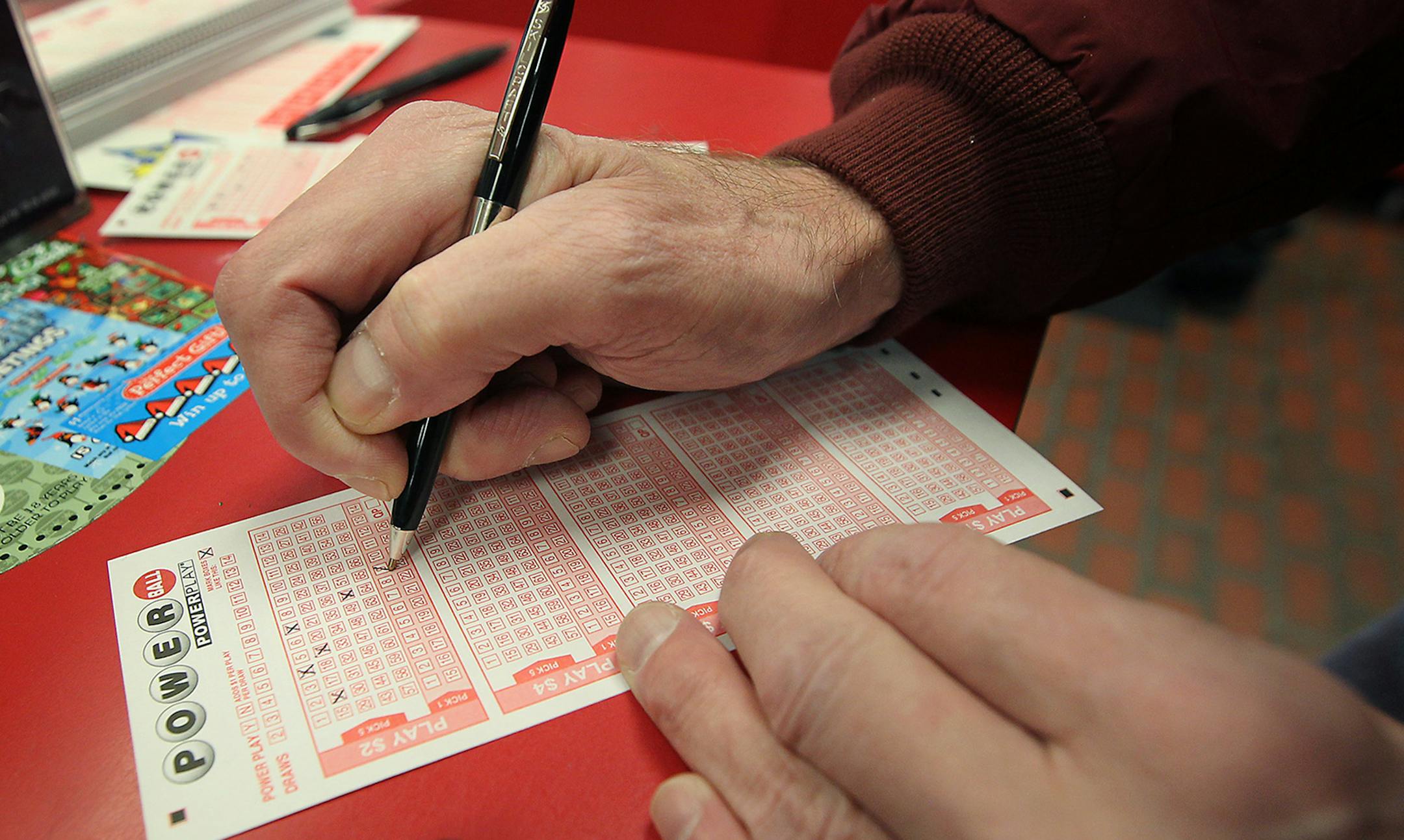
Never mind the statistics and grim improbabilities.
A record-breaking $1.5 billion Powerball jackpot that's driving a national frenzy is all about dreams, not cold, harsh reality.
Talk to a statistician or mathematician in search of secrets to increase your odds of becoming the next Powerball multimillionaire and you'll likely feel sheepish as you plunk down $2 for Wednesday's almost unfathomable jackpot. "I think 110 people won a lottery, not the top prize … by using numbers on a fortune cookie," said University of Minnesota mathematician Doug Arnold. But mostly it's random and you might as well have a computer generate the numbers, he said.
To win, a player will have to match the five numbers plus the Powerball among 292.2 million possible combinations.
That's an incredible long shot, so Arnold, being a numbers man, isn't about to buy a lottery ticket. "If you analyze it enough, it's not so much fun," he said. "The likely chance of dying by any cause in the next 30 seconds is higher than winning the Powerball," he said. "Certainly if you have to get in a car and drive to buy a Powerball ticket and drive back home, your chance of dying in a car accident is greater than winning the jackpot."
But gigantic lotteries lure people in much like roller coasters are a draw for some people. "You don't get anywhere on a roller coaster. But you might buy a ticket for a roller coaster because you may enjoy the ride."
The Powerball is cheap fun, said Doug Hartmann, a U sociology professor.
"When the Powerball gets big like this … it's the sense of being part of a larger story that becomes way more important," he said. "It's the collective experience of dreaming and fantasizing. It's about being part of the office pool or the family where you get a ticket or two and everybody talks about it over dinner."


