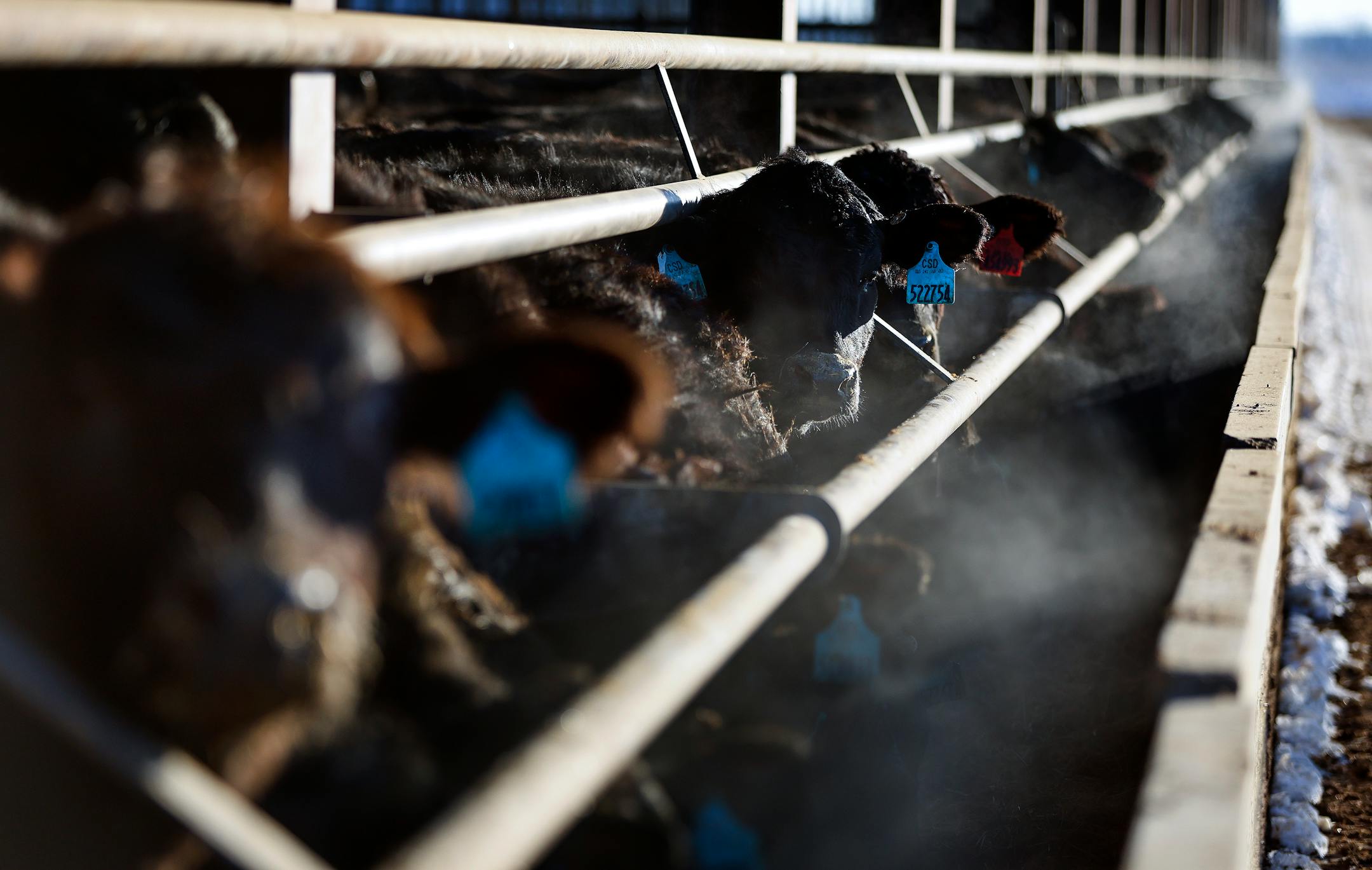
At Amana Farms in eastern Iowa, some 2,500 Angus cattle stand at a rail waiting for their breakfast. A truck drives slowly down the line, dumping a mix of hay, corn and distillers grains into the troughs.
Manure drops through the slatted floor into a pit that is scraped every hour, shifting manure to an anaerobic digester nearby. The digester, which acts like a 1.6 million-gallon bovine stomach, processes the manure and other food waste into methane, which is captured and turned into electricity.
"We essentially can power all the homes in the colonies and all the small businesses," said Amana Farms general manager John McGrath about the Amana Colonies, a set of small towns that are a popular tourist destination.
Digesters are one solution to the big challenge of reducing greenhouse gas emissions from agriculture, which makes up more than 10% of the total greenhouse gas emissions in the United States as of 2020, the most recent year available.
Agriculture is a major source of planet-warming greenhouse gases, and farming-intensive states like Iowa — with 13 million acres of corn and seven hogs per person — are outsized contributors, federal data show. Iowa ranks No. 2, behind Texas, for greenhouse gas emissions from agriculture.
While nationwide emissions from sectors like energy production have fallen in recent decades, those from agriculture – especially livestock and corn – have grown.
Half the states in the country have no greenhouse gas reduction goals, which makes it hard to see how the United States is going to reach its economywide target of a 50% reduction below 2005 emissions levels by 2030. Minnesota issued a Climate Action Framework last fall that officially adopts the U.N. Intergovernmental Panel on Climate Change's goals to cut 50% by 2030, leading to net-zero by 2050.
"It's purely a political decision, right?" said Steven Hall, an associate professor in the Department of Ecology, Evolution and Organismal Biology at Iowa State University. "If there's no political will to advocate for such goals, it's not going to happen absent market-based approaches or voluntary efforts."