

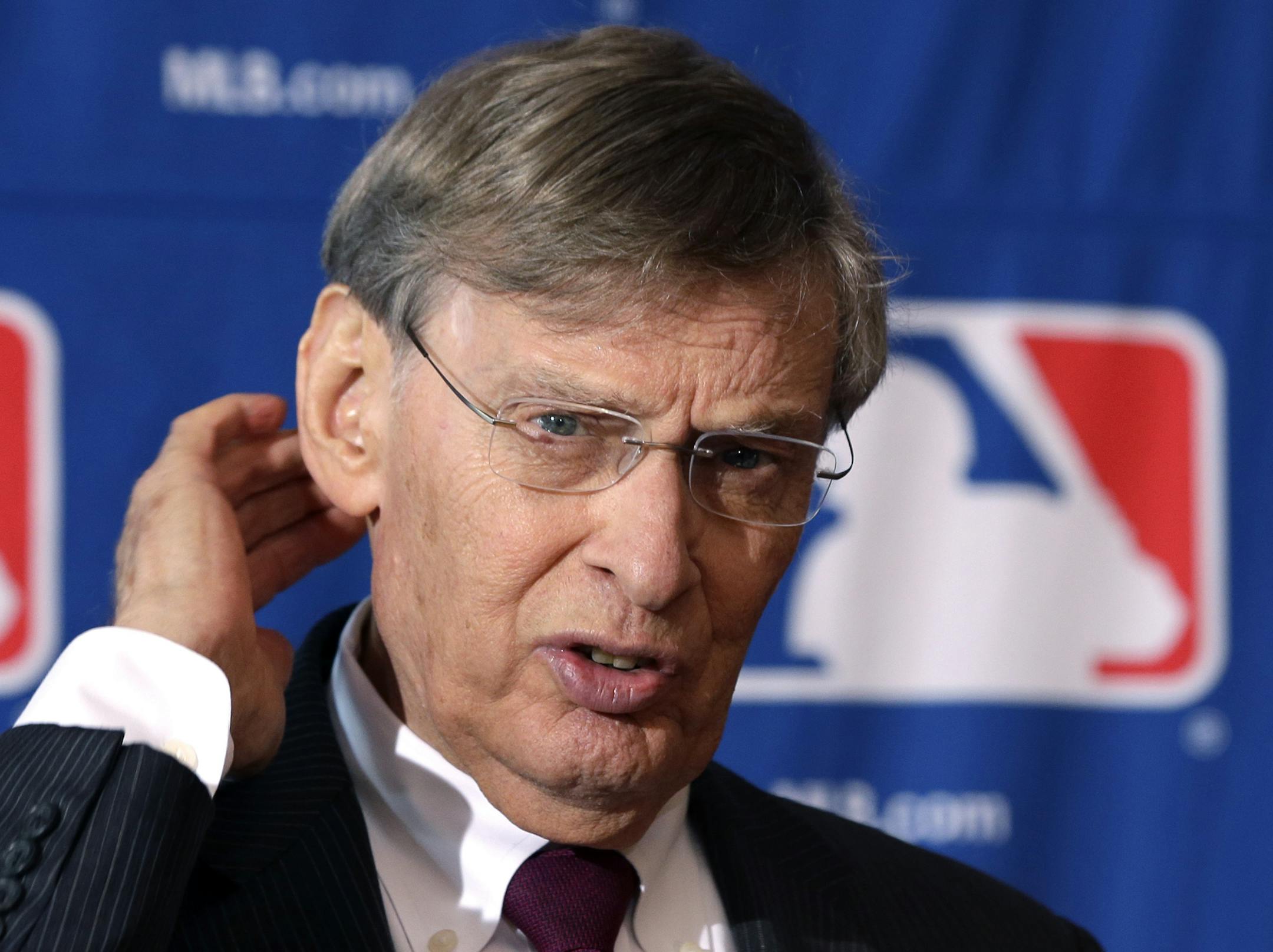
Some baseball fans in these parts will scoff and complain when Bud Selig is brought up in a conversation. Many haven't forgotten the contraction threats of 2001 and remember Selig's involvement in a tension-filled period in Twins history.
"I'd like to think that a lot of that has already worn off but, yes, that is going to be part of the history," Twins President Dave St. Peter said.
The Twins, of course, ended up staying. And the league has moved onward and upward. Selig on Thursday announced he will retire following the 2014 season, ending what will be considered one of the greatest runs a commissioner of any major professional sport has had.
Selig took over on an interim basis in 1992, when league revenues were $1.2 billion. MLB is now a $8 billion industry, the result of widespread growth.
Since 1992, 22 stadiums have been built, the MLB Network has launched, the RBI program has expanded and the World Baseball Classic has been established. A drug policy that was embarrassingly weak about 10 years ago has been significantly strengthened.
Perhaps the two greatest accomplishments of Selig's administration have been revenue sharing and labor peace.
"I think history will show that Commissioner Selig was probably as progressive and as innovative as any leader has been in any major professional sport," St. Peter said. "I don't think he's gotten any real credit for what he has accomplished and really transformed the sport. It starts with things like revenue sharing. That led to widespread competitive balance in the game, facility development. Things such as the wild card and interleague play, instant replay. I'm not sure if there has been an individual that has been at the helm for more change than Commissioner Selig has been.
"He will leave the game in a much, much better spot than when he arrived."


