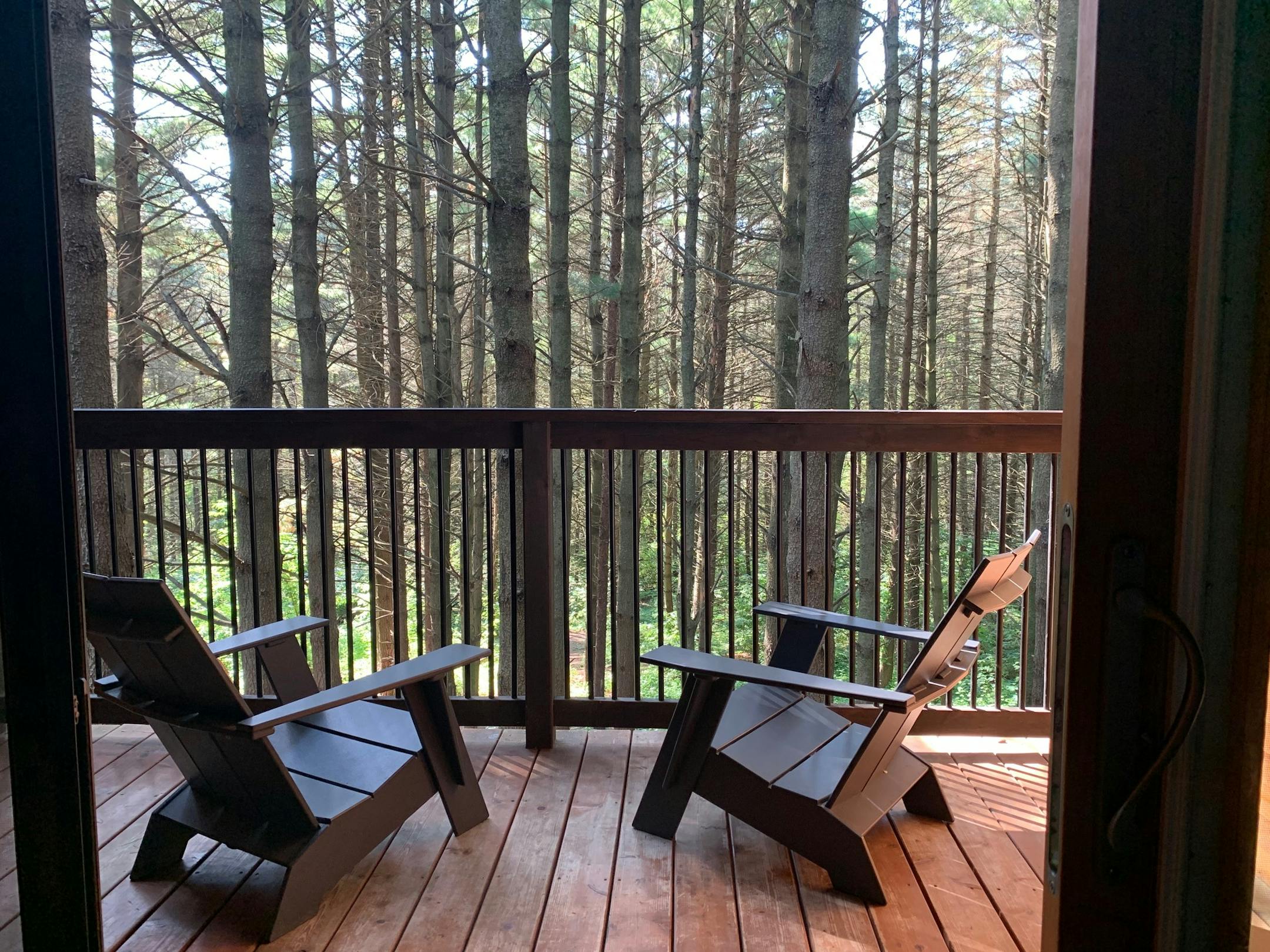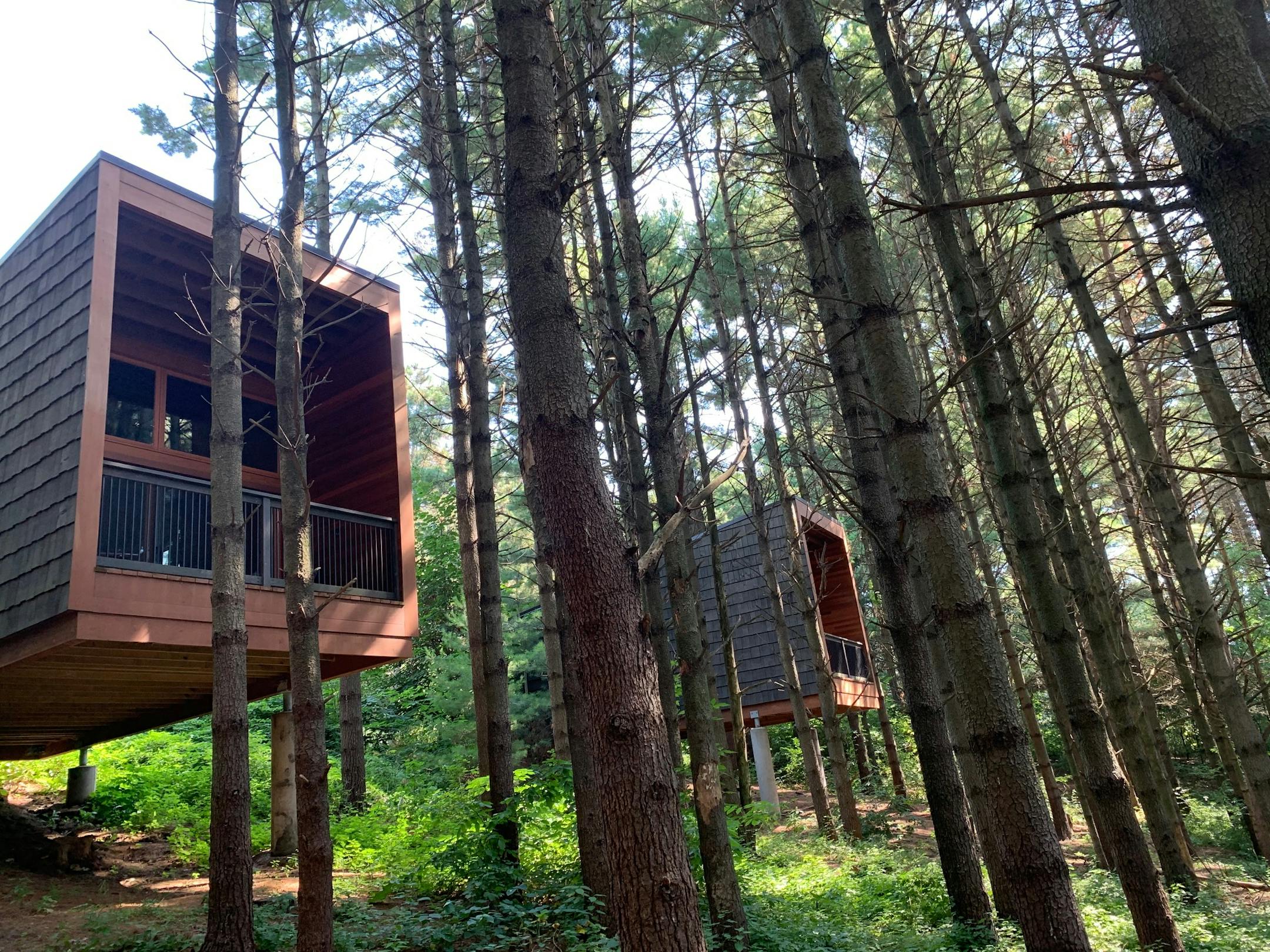
When the morning sun peeked into our camper cabin at Whitetail Woods Regional Park, I almost thought I'd awoken as a bird. My nest was, in fact, a boxy, mod bunkhouse, cantilevered into a stand of evergreens. I looked through the cabin's glassy back wall and watched the thin, towering trunks sway in the barest breeze. I never would have noticed their invisible rhythm if not for my uncommon perch.
In late 2014, Dakota County opened the park, located between Rosemount and Farmington, and began taking reservations for its three treehouse-style camper cabins. Within 30 minutes, there were more than 200 requests for overnights. They've been booked nearly solid ever since.
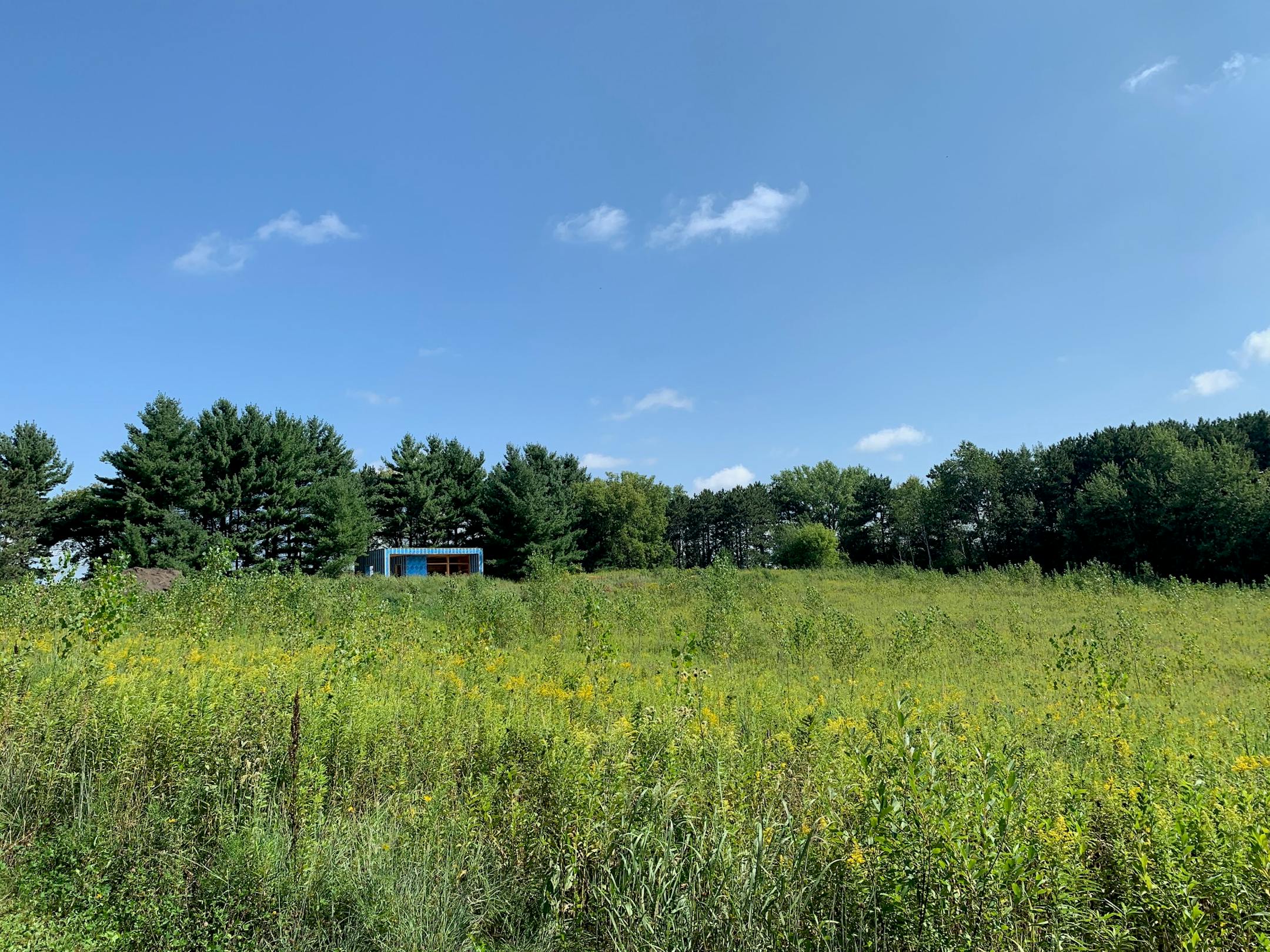
The uniqueness of the cabins, designed by Minneapolis-based HGA architects, initially drew me to Whitetail Woods. But once I arrived, I discovered the park's location and amenities were ideal for a quick, nature-intensive getaway. My family could hike and bike through the park's 450-some acres of woods, wetlands and prairie. Then, after communing around the campfire, we'd sleep on mattresses, with roof overhead. The exurban spot was close enough to to have pizza delivered, but felt far more secluded.
Camper cabins, upgraded
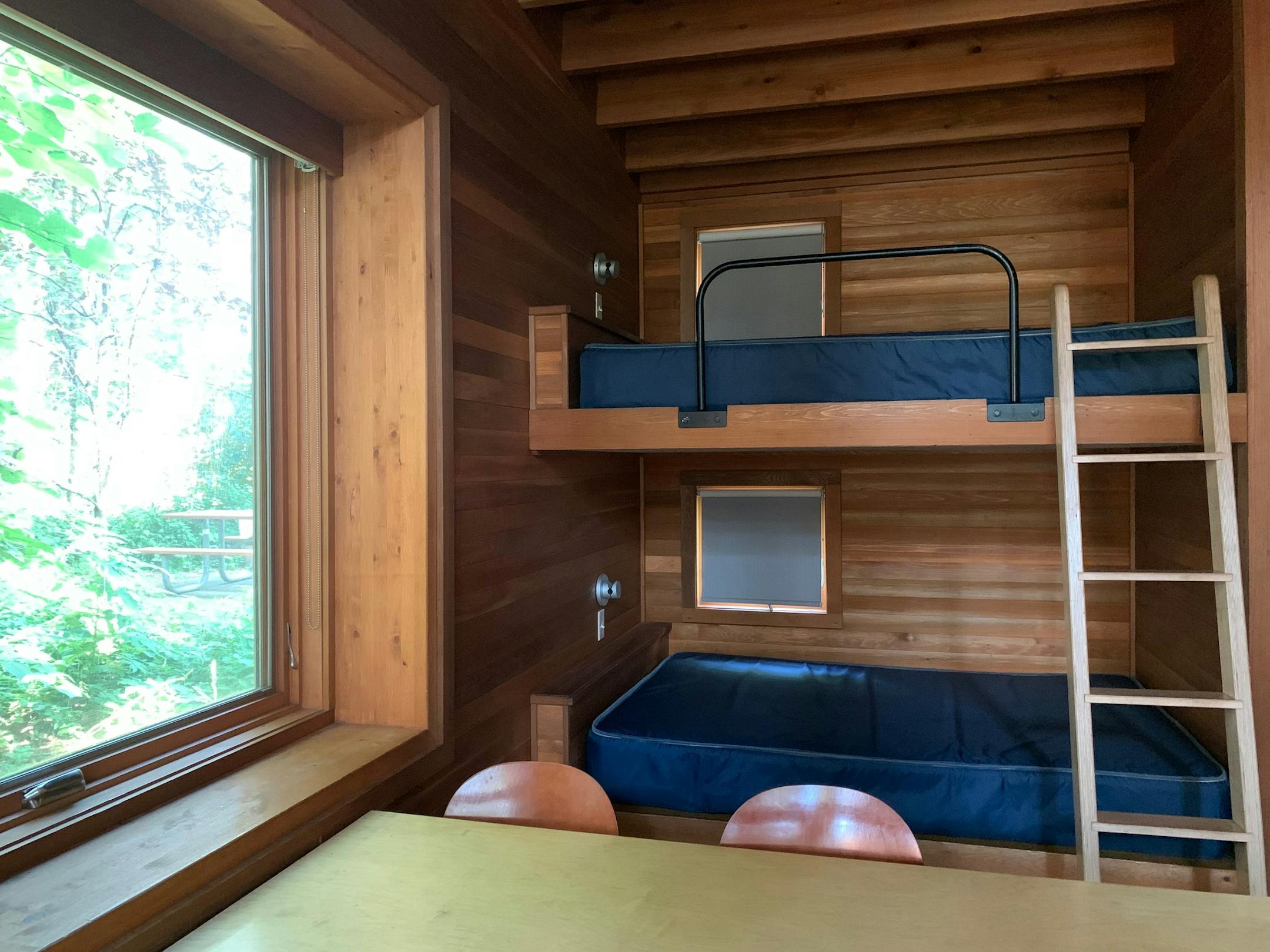
The DNR operates about 100 camper cabins across Minnesota's state park system — rustic, one-room structures positioned somewhere between a tent and motel room. They're sparsely furnished with bunk beds (BYO bedding) and a dining table. Most are outfitted with electric heat and power, though a few basic models supply only a wood stove. They're meant to be utilitarian, and that's how they feel.
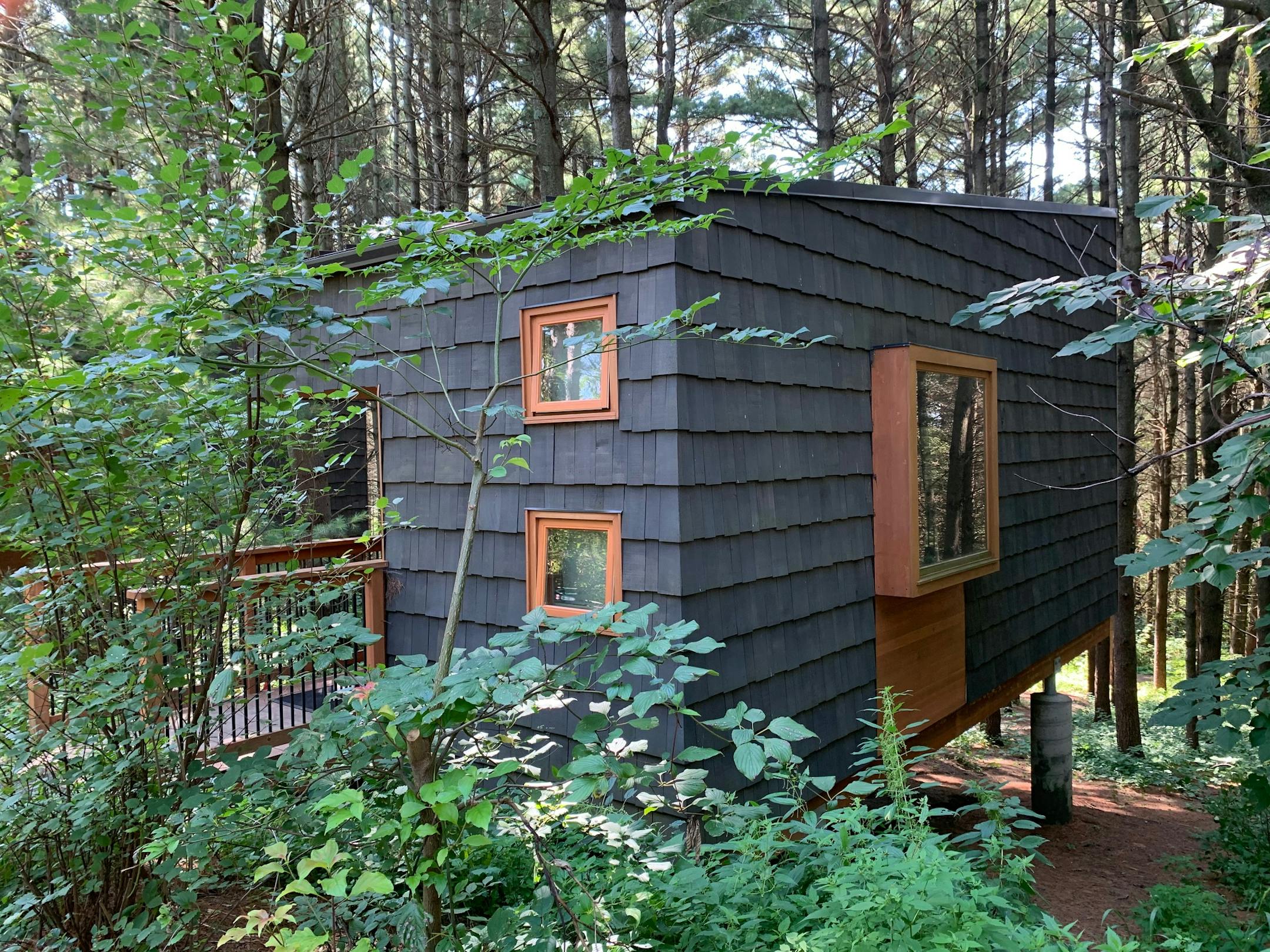
Though Dakota County's Whitetail cabins are nearly as spartan, their design makes the overnight experience more special. The ones I've visited, dubbed the Pine Forest cabins, were built on a slope, with the backs on stilts. From afar, they resemble angular telescopes, trained on the trees. The trio are placed close enough to one another that a marshmallow roasting stick could practically reach the neighbors' fire pit. But being tucked back in the trees creates a sense of privacy.
Inside, the 250-square-foot wood-lined boxes feel snug as a sauna. Each contains double-wide bunk beds, a foldout couch and a dining table. The sleek lines of tongue-and-groove pine and the roof's upward slope draw the eye to the focal point: sliding glass doors leading to the cabin's deck, jutting into the boughs. And oh, that view. It's easy to see why the cabins won awards from the national and state chapters of the American Institute of Architects.
Visiting Whitetail