

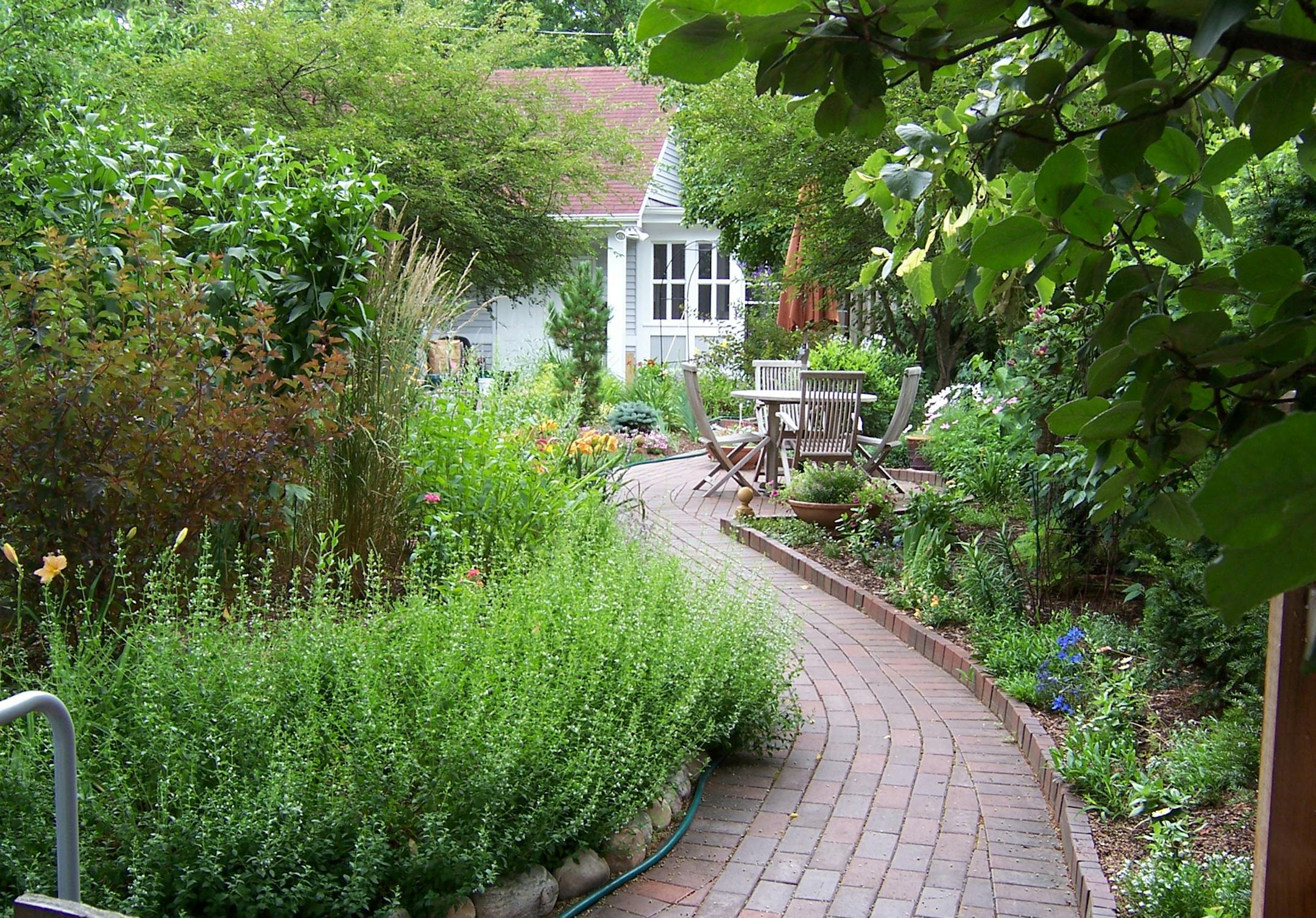
A front walkway is all business. It's the primary path, leading visitors from the curb or driveway to the front door. But a path that meanders through the garden is an invitation to explore.
"From a design perspective, at the start of a path, we want to create a focal point, like a personalized piece of art, whether it's a gnome or sculpture," said Steve Kooyenga, senior landscape architect at Chalet in Wilmette, Ill. "I want to go down the path and get a close look at that object or plant."
Designing a path begins with determining whether the garden is formal or informal. A formal-style path typically includes straight lines. Informal paths tend to have soft, curving lines.
"I take cues from the architecture and the material used on the house or found on the property," said landscape designer Kristin Pategas of Hortus Oasis in Winter Park, Fla. "If there's brick on the house or natural stone in the landscape, I may repeat those materials in the path."
Secondary paths — those found in side yards and backyards — can be made from many materials, including mulch, brick pavers, clay pavers, crushed stone, flagstone, bluestone or a mixture of any of them.
If the path leads to a garage, you'll want a material that allows for easy snow removal. In that case, something firm, like brick pavers or flat stones will be better than mulch or gravel.
A common mistake is using small, smooth stones, Kooyenga said. "Rock, river gravel or pea gravel are the worst things you can use. They're all little round stones and when you step onto them you sink in, and it's uncomfortable. We'll use gravel for pathways, but it needs to be crushed and broken into pieces."
A better choice is crushed or "decomposed" granite, he said. "You can walk on it, ride a bike or move a wheelchair, and there's no runoff of water — it soaks right down to the ground." To keep weeds from emerging, Kooyenga recommends using landscape fabric to separate the stone from the soil.


