

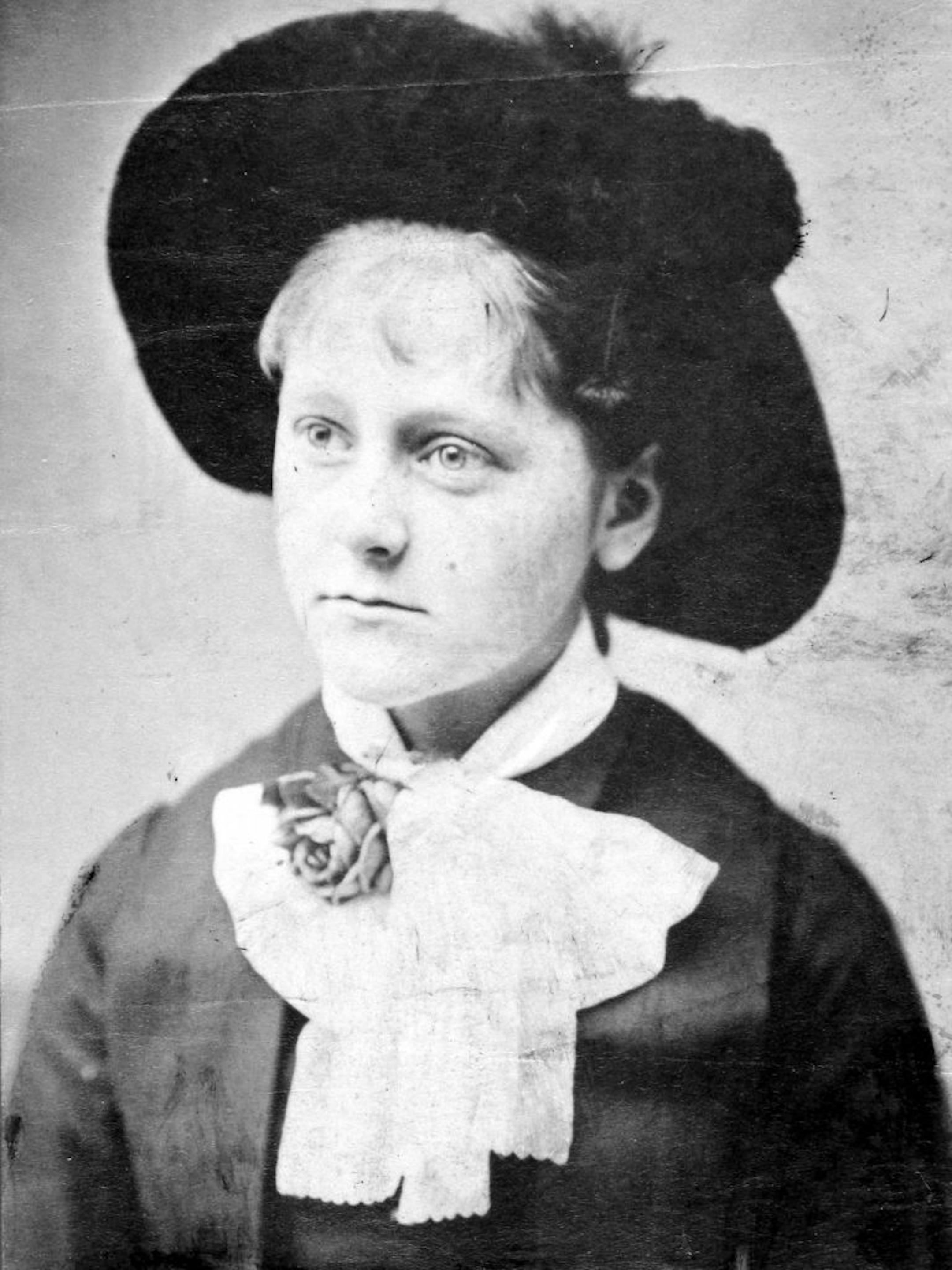
Two great granddaughters of early Hastings leader William LeDuc and his wife, Mary, returned Sunday to the LeDuc Historic Estate in Hastings to speak about the family that spawned an unusual, women-run business in 1888.
LeDuc, a Civil War general, was an avid entrepreneur who owned part of early Hastings and ran a flour mill, bookstore and other businesses. Two of his daughters, Florence and Alice, followed suit and defied social norms by starting the Hastings Needlework Co., which grew to employ 32 women, said Chad Roberts, executive director of the Dakota County Historical Society, which manages the LeDuc mansion, owned by the city of Hastings.
Anne LeDuc, 86, who is visiting the grand Gothic Revival mansion, continued the family's businesswoman tradition by running a historic hotel in Cape May, N.J., for 30 years until selling it three years ago.
"It was unusual for women [in 1888] to start a business," LeDuc said last week from her home in Moorestown, N.J. "It is another link I feel I have carried on -- the tradition of women in business."
Her grand-aunts, Florence and Alice, who never married, started the Hastings Needlework Co.. Their mother, matriarch Mary LeDuc, was the bookkeeper until she died in 1904, said Heidi Langenfeld, an educator at the 146-year-old LeDuc mansion. She said Mary had four children, including a son, Willis, and an older daughter, Minnie, whose two daughters also did embroidery for their aunts' business.
Hastings Needlework, which embroidered table runners, wall hangings and other items, was profiled in the October 1903 edition of House Beautiful magazine. A copy, preserved by the county historical society, described the embroidery, which included patterns featuring dragons, nymphs and quaint birds:
"Of all the beautiful and original work being done at Hastings, the reproducing and adapting of Indian designs is of the most exceptional interest. The Indian, and all that made up his wild and romantic life, is rapidly passing. More than this, the striking, eccentric decorative quality of the designs and color combinations make them not alone interesting, but of unusual artistic value. The moccasin, which is the totem of the Hastings Needlework, is well chosen, as the Indian reproductions, while but a small part of the whole, are its most distinctive feature."
Florence started the business after attending an art school in New York while visiting Minnie, whose family lived there, said Ann Braaten, an assistant professor at the University of North Dakota in Fargo. She studied the LeDuc business and artistic patterns at the Minnesota Historical Society. Braaten said a letter to the society in 1962 from Alice LeDuc, then in her 90s, said Florence began the business and, as it grew, Alice joined the work, followed by their mother. Alice was artistic and created most of the embroidery patterns.


