
Dennis Anderson: Where cans were king … Lake Christina works its way back to healthy

October 5, 2014 at 2:54AM
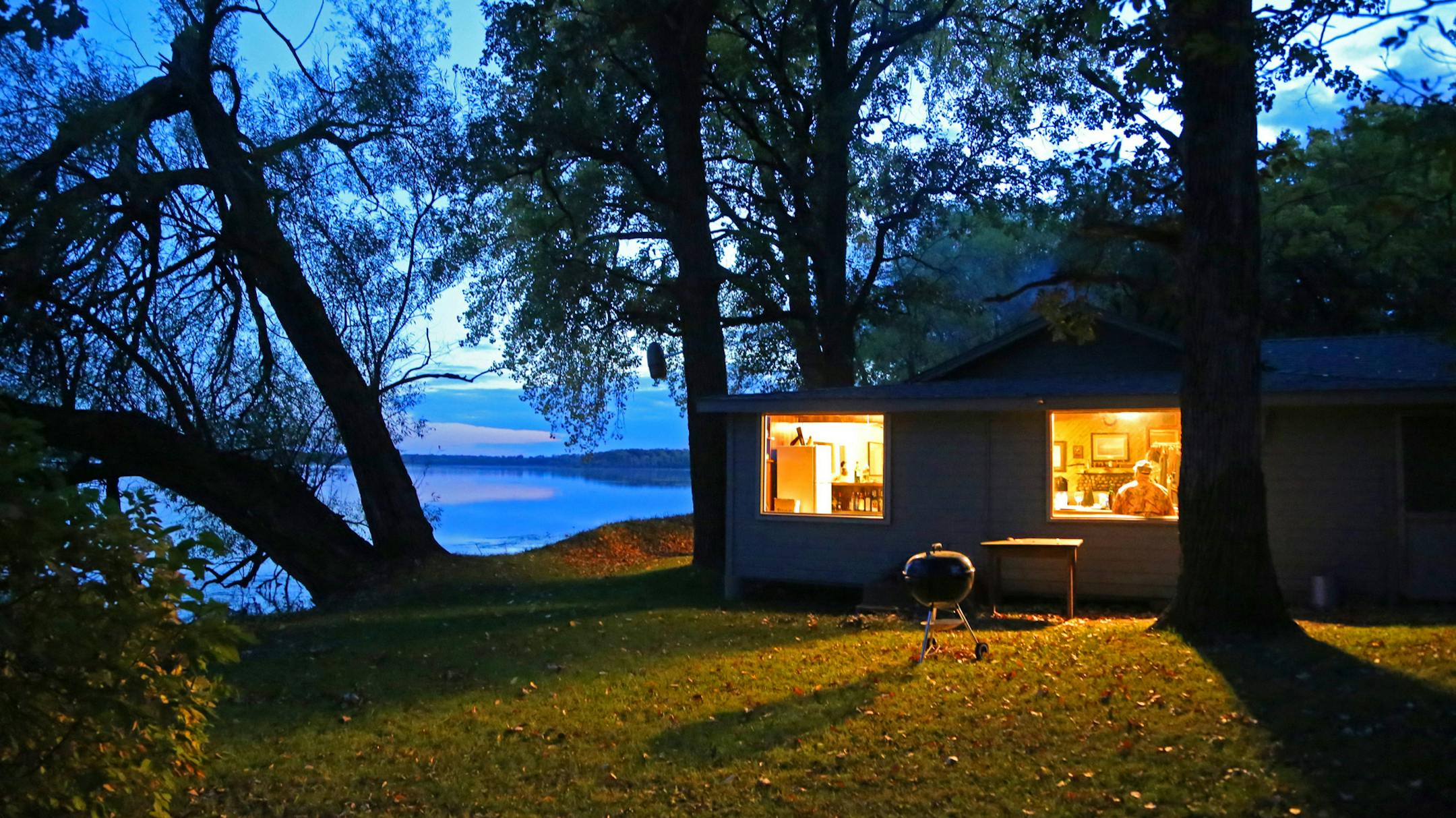
A duck hunting camp purchased by 3M Corp. on Lake Christina remains one of about 10 such camps on the lake near Ashby, Minn. The camp is now owned by 10 individuals, all present or retired employees of 3M.
A duck hunting camp purchased by 3M Corp. on Lake Christina is one of about 10 such camps on the lake. The camp is now owned by 10 present or retired employees of 3M. (The Minnesota Star Tribune)

Lake Christina, then and again

LAKE CHRISTINA – Historically one of the continent's most important, but troubled, canvasback stopover points, this lake today bears the promise of a duck lake reborn.

Its water is clearer than any time in recent memory, its sago pondweed more abundant and its ducks more plentiful.

Or so it seemed Friday morning, hunting from the "3M" camp, one of about 10 duck camps that encircle Christina, about a half-hour's drive from Alexandria, Minn.

Purchased in 1953 with corporate funds, the seven-acre camp is now owned by 10 current or retired 3M employees. (An earlier 3M camp was operated in southern Minnesota, on Lake Maria, where 10 executives leased duck hunting property from 1936 to 1987.)

Christina wasn't chosen by accident. By the late 1800s, a railway had been built from the Twin Cities to nearby Ashby, Minn., where industrialist James J. Hill regularly arrived in his private rail car to hunt Christina's canvasbacks — birds that waterfowlers routinely refer to as the King of Ducks.

Other hunters also came by rail, some from as far away as Chicago. Some were sports; others were professional gunners who were paid $4 a dozen for canvasbacks and $3.50 for redheads.

Soon immortalized nationwide as a duck-hunting hotbed, Christina was visited especially heavily in mid-October, when the "cans" — among the largest, sleekest, fastest and most beautiful of waterfowl — showed up.
But Christina wasn't important only to Minnesota. As waterfowl managers soon learned, the 4,000-acre lake was critical continentally as a food-and-resting place during the canvasbacks' migration.

Historically, these birds have staged, or gathered, on Lake Winnipegosis about 200 miles north of Winnipeg, before flying south to Delta Marsh, about an hour west-northwest of Winnipeg.

From there, the birds have flown to Christina, where they stage again before many of them turn eastwardly, to Lake Poygan in Wisconsin and St. Clair Flats in Michigan, en route to their wintering grounds in Chesapeake Bay.

Diving ducks, canvasbacks have depended on Christina's clean, shallow water and protein-rich aquatic plants to nurture them during their spring and fall migrations.

At times, as many as 100,000 of the birds have been counted on Christina.

But by the 1960s, Christina had suffered the same plight that befell many other Minnesota shallow lakes. Carp were abundant, the lake was dirty and plants couldn't grow. Not only were canvasbacks affected, but also redheads, ringnecks and scaup, as well as other species.

• • •

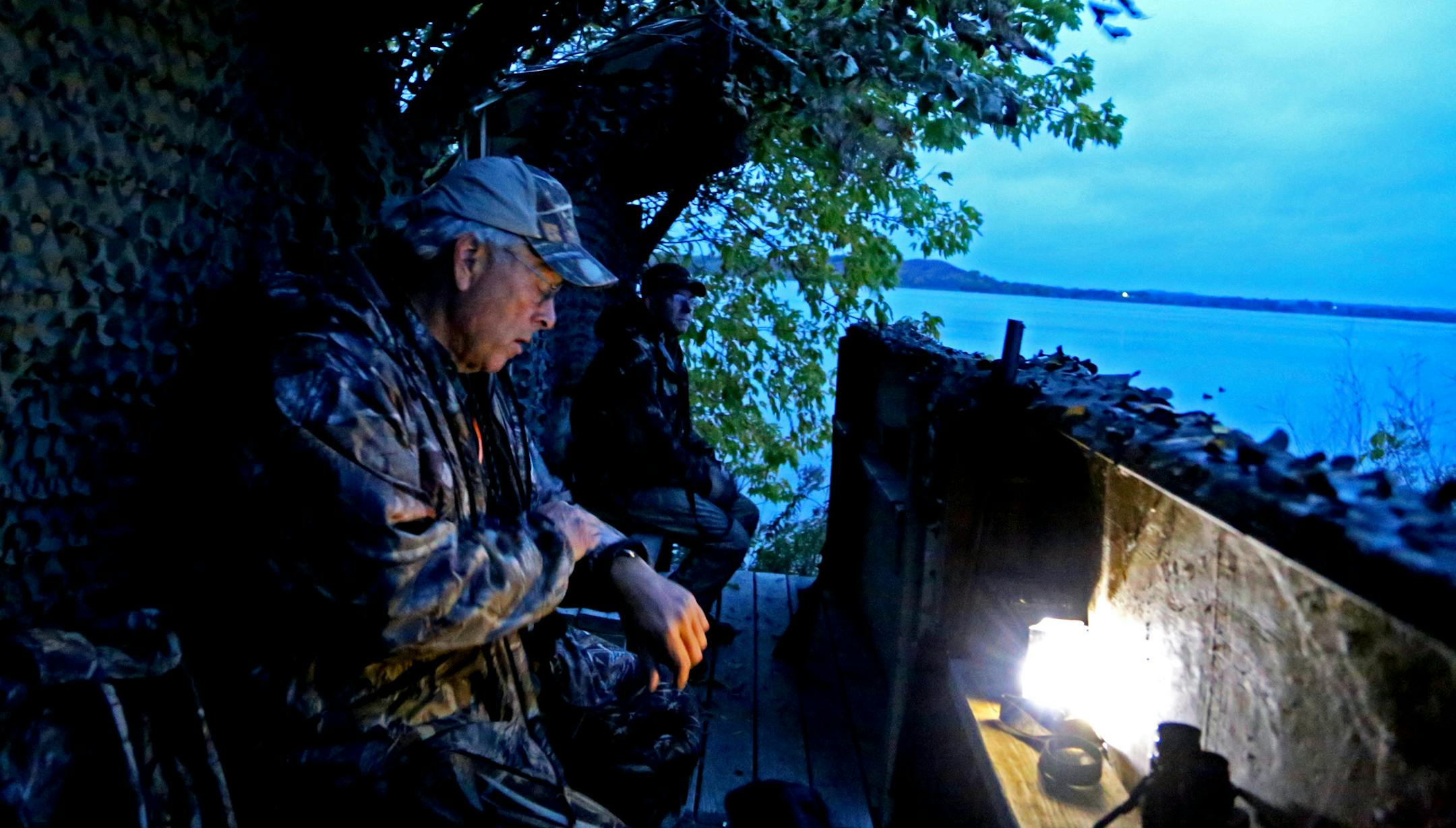
Friday morning before dawn, Dan Gahlon, Tim Hoffman, Jon Schneider and I slipped into blinds on Christina's shoreline, overlooking a couple dozen decoys.

Howling form the northwest, the wind cascaded across the lake in torrents. Not far away, flocks of coots gathered like huge ink blots on the lake's roiled surface. The pouldeau, as Cajuns call them, numbered in the tens of thousands.

"Having so many coots on the lake is a good sign that the lake has plenty of food," Schneider said. "They eat the same sago tubers and other aquatic plants canvasbacks and redheads do."

A Ducks Unlimited biologist, Schneider is among a score or more of conservationists who in recent years have propelled Lake Christina toward a brighter future. The Department of Natural Resources has played a big role in this process, as have local residents, lake associations and hunters, among them Gahlon, Hoffman and other members of the 3M duck club.

At the heart of Christina's rebirth is a water control and pumping structure at its outlet to Pelican Lake, near the public access. Made operative in 2012, the intensively engineered project cost $2 million, three-quarters of which was paid for by Legacy funds, with the rest supplied by the DNR, the U.S. Fish and Wildlife Service, the Christina-Ina-Anka Lake Association, the Pioneer Heritage Conservation Trust, the McKnight Foundation, Flint Hills Resources and Ducks Unlimited, among others.

The goal is to again provide a food-rich stopover for migratory canvasbacks and other birds by drawing the lake down as necessary to control rough fish and encourage plant growth.

Previously, the DNR attempted to kill the lake's carp by spraying a fish-killing chemical, a procedure that wasn't environmentally sensitive and succeeded only temporarily.

As then-DNR Commissioner Joe Alexander noted in 1983 when Christina was belatedly designated a wildlife management lake:

"The struggle to hold back civilization and restore Lake Christina continues to the present," Alexander said. "But it is more than a large project for a small area. It is small project for an entire continent."

If Minnesota voters hadn't passed the Legacy Act in 2008, the future of Christina and other shallow lakes across the state would have remained cloudy. Instead, many of these lakes are cleaner, healthier and richer, benefiting not only waterfowl but people.

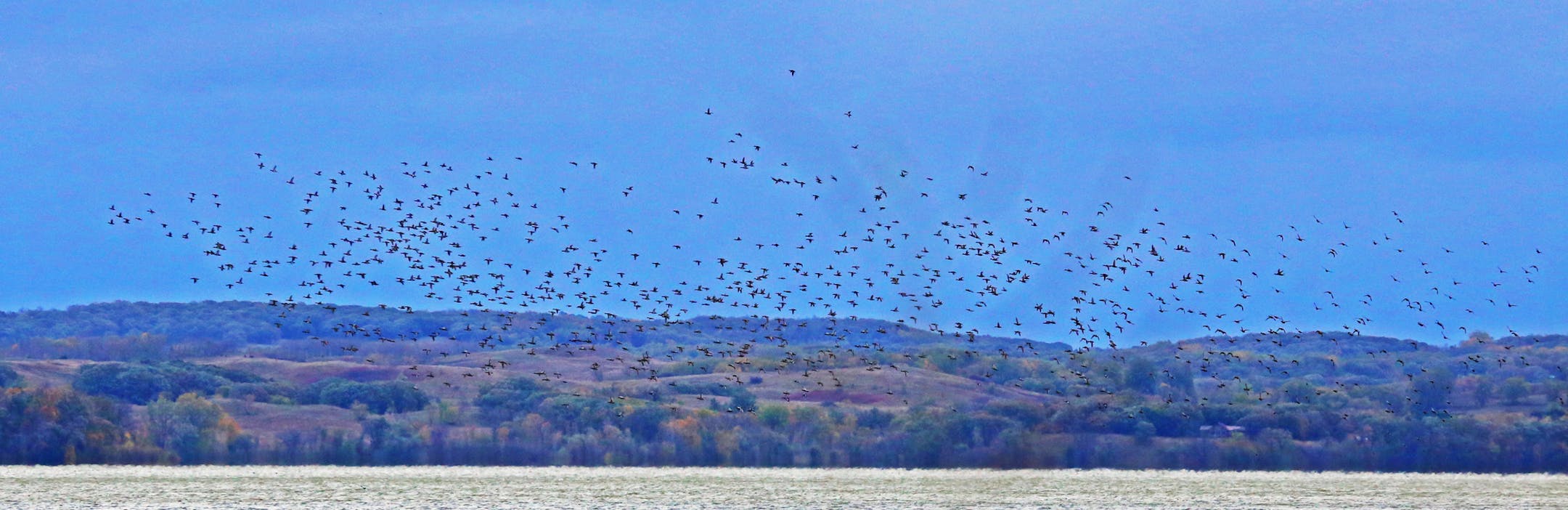
"Look at those redheads," Gahlon said Friday morning, as vast clouds of the birds lifted and swelled above Christina, trading on the strong winds.

Never again will trainloads of waterfowlers trek to Christina to chase the lake's canvasbacks.

But with continued maintenance and a little luck, the lake will once again can be a valued migratory stopover point for the King of Ducks, recalling, in the process, not only the lake's history but ours.

Dan Gahlon, left, of Delano, checks his watch just prior to shooting time Friday morning at Lake Christina near Ashby, Minnesota, about 30 miles from Alexandria, Minn. Jon Schneider of Ducks Unlimited is at right. Schneider, along with the DNR and especially nearby residents, helped spearhead the recent restoration of Lake Christina by controlling its water level and ridding it of many of its carp.
Dan Gahlon, left, of Dellwood checked his watch just before shooting time Friday morning at Lake Christina near Ashby, Minn., about 30 miles from Alexandria. Jon Schneider of Ducks Unlimited was at right. Schneider, along with the DNR and especially nearby residents, helped spearhead the recent restoration of Lake Christina by controlling its water level and ridding it of many of its carp. (The Minnesota Star Tribune)
A thousand or more redhead ducks traded in strong winds across Lake Christina Friday morning, a sign of the lake's good health.
A thousand or more redhead ducks traded in strong winds across Lake Christina on Friday morning, a sign of the lake’s good health. (The Minnesota Star Tribune)
about the writer

about the writer

Dennis Anderson

Columnist

Outdoors columnist Dennis Anderson joined the Star Tribune in 1993 after serving in the same position at the St. Paul Pioneer Press for 13 years. His column topics vary widely, and include canoeing, fishing, hunting, adventure travel and conservation of the environment.

See Moreicon