

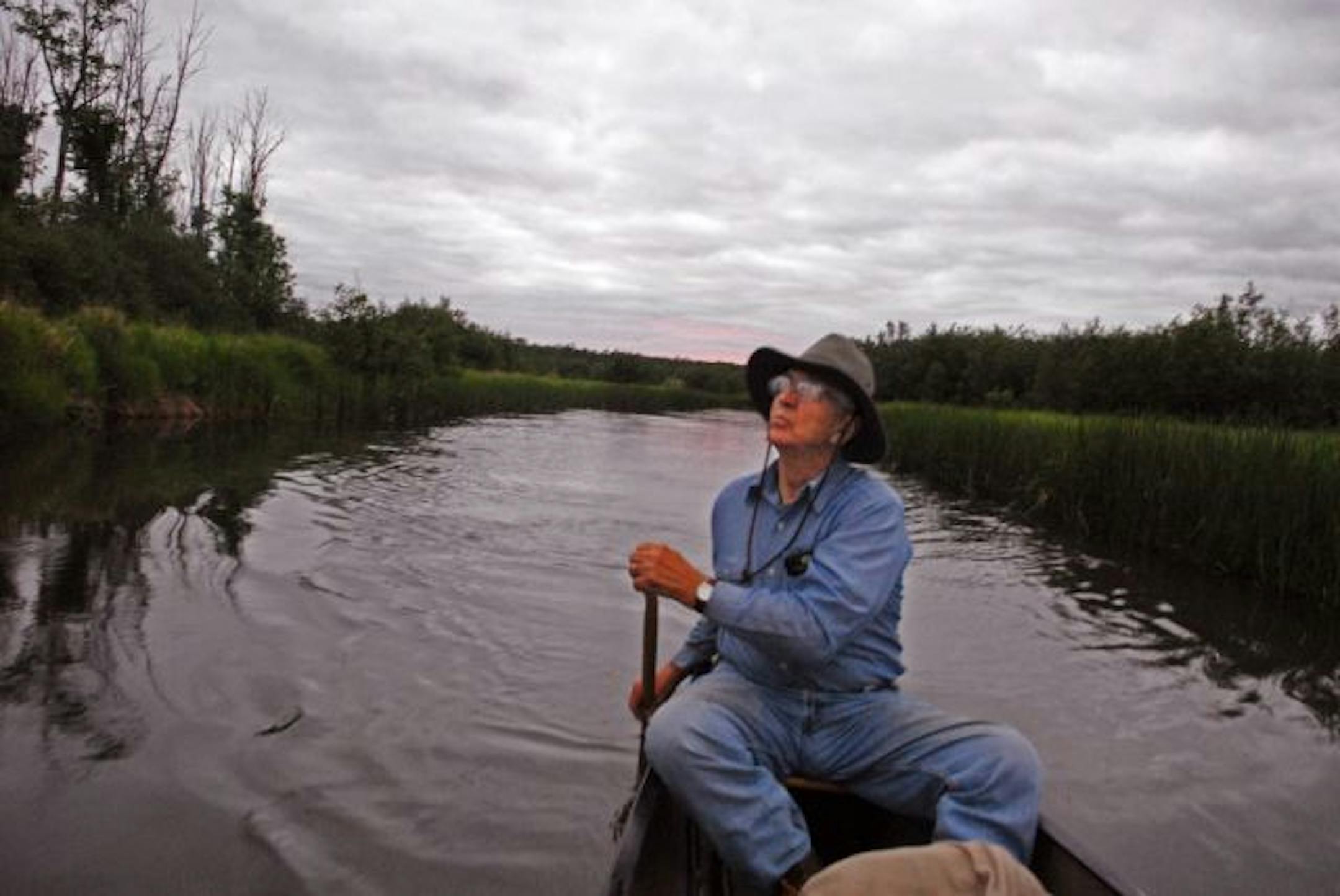
IN NORTHWEST WISCONSIN — Rivers paddled at night focus the senses. Water laps more loudly than in daytime. So too the wails of coyotes and songs of sedge wrens, whose callings pierce the dark, like thunderclaps.
Also, by seasons, trout otherwise hidden beneath the surface tip up their noses to sip flies, an action that resonates stereophonically in the dark.
Late Thursday evening, Dave Zentner and I slipped our canoe quietly into one of many rivers that twist and fall across far northwest Wisconsin, not far from Lake Superior. These are waters, often, that divide vast sloughs, draining cedar bogs and tag alder swamps. The most famous is the Brule, a river fished by five presidents. Tonight Dave and I are on a smaller stream, brought here, each of us, by the hatch, erratic as it's been this summer, of Hexagenia, or "Hex," a mayfly.
In the north country, the Hex bears the weight and importance of life itself. Trout need these flies to gain weight, often putting on as much as 25 percent of their annual chubbiness in the three weeks or so the Hex is present.
Also, cedar waxwings chomp on these flies, as do turtles, frogs and blackbirds, each a part of a life mix that begins and ends, fundamentally, with clean, cold, flowing water.
"It's a night-by-night thing, the hatch, particularly this summer," Dave said. "Let's see what happens."
Dave lives in Duluth, an hour or more distant from this river, and is among a fairly small legion of conservationist-nutjobs who can't quite get enough of river fishing, fly rod in hand.
Dave's wife, Margo, an apparent saint, will tell you her husband comes and goes with the season's hatches, sneaking at all hours from the house with a canoe on top of his truck, and other gear inside, not least boxes of flies and fishing memories dating back six decades.


