

An old adage suggests it's better to hunt with your kids, than for them. But developing young people into hunters -- or anglers, campers, or paddlers -- isn't easy nowadays.
Too many distractions exist in the form of team sports, as well as new media (video games, Internet) and old media (TV) to believe the percentage of American youth who "live outdoors" ever will rival the population share that did long ago.
Yet it's also true that most parents pay only lip service to providing their kids with outdoor alternatives to these distractions, and they opt too often instead to drop their young ones off at soccer practice or a similar activity -- allowing someone else to provide their children's recreation.
So what, you say? Just this: If it's true, as many people believe, that nature, broadly defined, and activities in it are beneficial to individuals, families and society as a whole, and if it's also true that the nation's youth suffer from a nature deficit disorder, it follows that efforts made toward reducing that deficit are in and of themselves valuable and rewarding. To everyone.
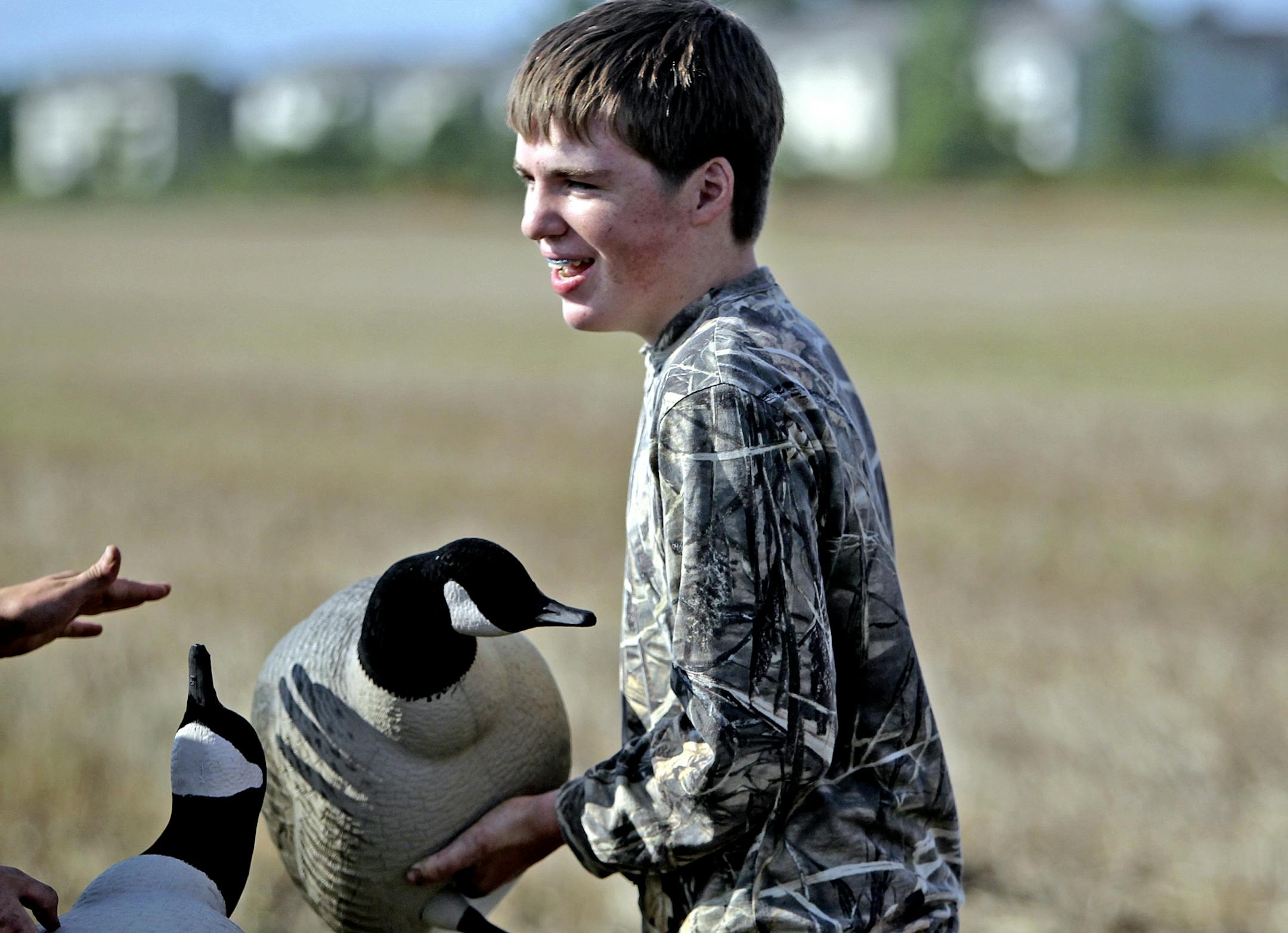
On Saturday, first day of the early goose season, I reflected on this as I hunted with my son, Cole, and his pal, Max Kelley, both 15.
I say "hunted," but I didn't carry a gun, as I usually don't in these cases. Instead, I helped facilitate the outing by driving them to their hunting field, helping to lug decoys and other equipment and trying to ensure the boys' safety.
But they could have gotten along without me. Both have hunted since a young age. Both are skilled duck and goose callers, hunters and shooters. And both know what gear to bring, when and how to load it into a pickup and what to do when we're on site.
All good. But ask them how many kids in their respective schools hunt, and the answer is "almost no one."


