The mind entombs memories not easily forgotten. Which explains why Bill Young recalls so vividly his years as a boy living in Emmetsburg, Iowa, and delivering the Des Moines Register door to door.
"On my route was a man named Andy Adams, a retired gunsmith," said Young, 50. "All he cared about was muzzleloaders. He'd say, 'Come on in, have a seat,' and he would talk and talk and talk about muzzleloaders.
"I wish now I would have paid more attention to what he said."
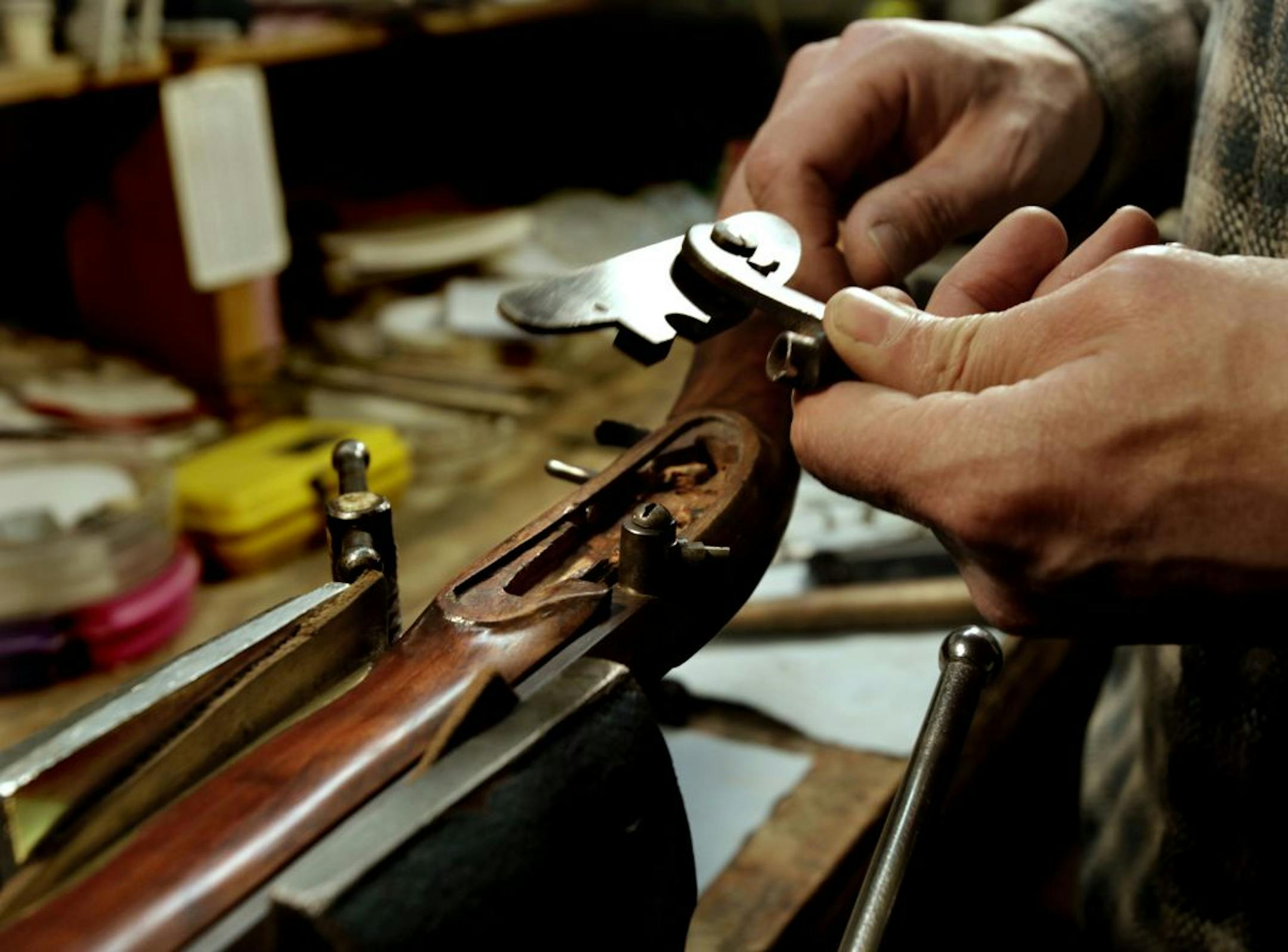
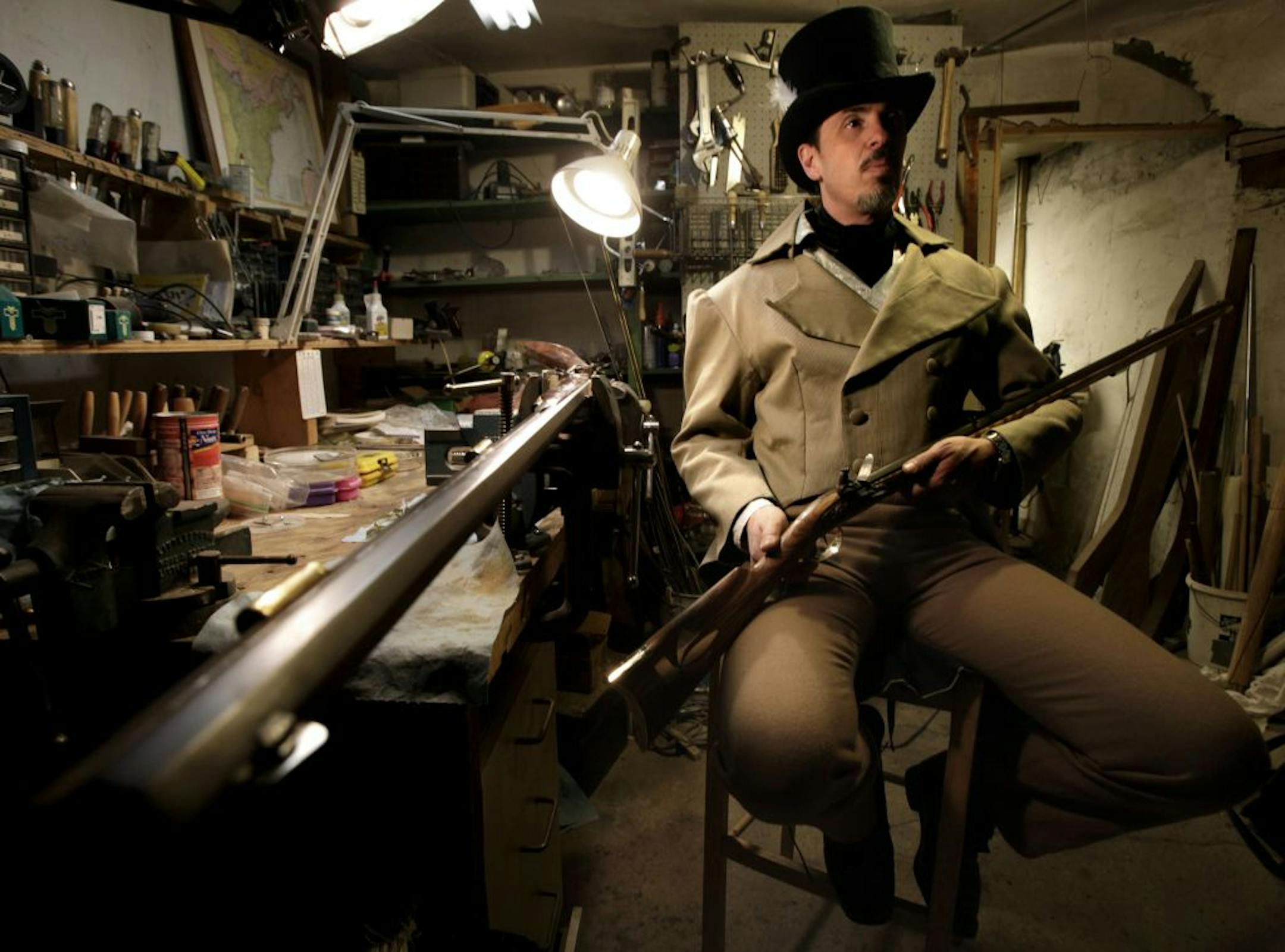
This was the other day, and Young, a schoolteacher in recovery from that profession, was in the basement of his south Minneapolis home, bellied up to a work bench on which he builds his own muzzleloaders -- rifles and shotguns that are loaded from the end of the barrel, or muzzle.
As he spoke, he wore a dandy outfit similar to ones donned by fur traders.
"This style of clothing was called 'Regency,' " Young said, "and was popular between 1780 and 1820. With the top hat, jacket, ascot and pants, I'm dressed as a gentleman of the fur trade might have dressed as he traveled by canoe with voyageurs.
"Even if a trader wanted to dress more plainly, he didn't dare. Otherwise the Native Americans might not treat him well. They'd think, 'What's so special about you? Why should I trade furs with you?' "
Captivated still by the black-powder guns he first heard about on that long-ago paper route, Young in the years since has studied closely not only the armament of the Civil War and pre-Civil war era but the broader history -- including clothing of the time -- that accompanied their deployment to the frontier.