
Advertisement

Dennis Anderson: The best of days at pheasant opener

Options abounded on a fall morning, but it was the opener of pheasant season, and there was no question what task to pursue.

October 20, 2010 at 7:23AM
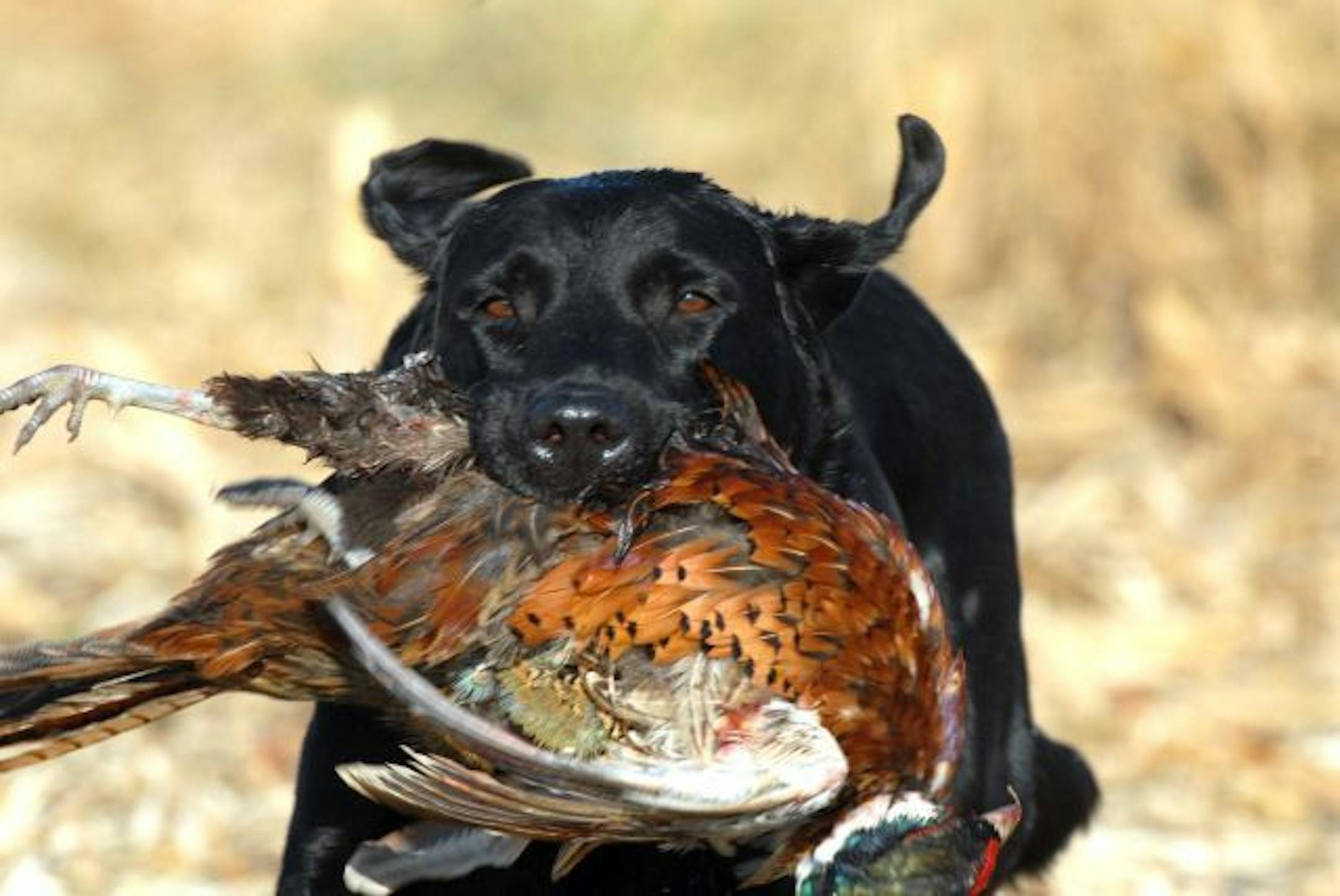
Ben, a black Labrador, earned his keep Saturday morning, returning a rooster downed shortly after the ringneck season began at 9 a.m.
Ben, a black Labrador, earned his keep Saturday morning, returning a rooster downed shortly after the ringneck season began at 9 a.m. (Dml -/The Minnesota Star Tribune)
Advertisement

IN WEST-CENTRAL MINNESOTA — On Saturday in this part of the state, everybody worked. Or so it seemed. Farmers cut corn. Pumpkin growers sold pumpkins. We hunted pheasants.

Of these, our little band of ringneck seekers had it best on what was the first day of the state's 2010 pheasant season. We didn't see a lot of birds. But stretching our legs along marsh edges and atop various conservation lands seemed an entirely American way to pass a cloudless October Saturday -- even one that by midday was perhaps slightly too warm for the three dogs that fanned out ahead of us, and too warm, by then also, for the six of us.

In our group were Will Smith of Willmar and his two sons, Matthew, 16, and Harrison, 14. Denny Lien of Lake Elmo was also along, as was my son, Cole, 15.

"It'll be interesting to see what we find; last winter was tough around here on pheasants," Will said early Saturday morning as we gathered for breakfast in Willmar.

In predictions made a month or more ago, the Department of Natural Resources said a harvest of about 400,000 birds -- the same as last year -- could be expected this season. That's down from the most recent ringneck harvest heyday in the state, recorded only a few years back, of more than 600,000 birds.

Yet, a seasonal collection of 400,000 roosters would be considerably better than a lot of hunters expected this fall, given the severity of last January and February's cold, wind and snow. So, when we left Willmar Saturday morning for our hunting grounds, we were generally upbeat.

Yet our positive vibe had been developed independent of any DNR forecast, and could be traced instead to memories of past autumns when, on similar days, rooster pheasants had arisen at our feet, banked either into or away from the sun, and cackled gloriously.

It's a kick really like no other, this flush of a male bird so florid a peacock would blush at its sight. Shouldering a scattergun seems in these instances as natural a reaction as any, and the tickling of the trigger, following which the big fellow is either stilled midflight or, if the hunter has fired an errant shot, allowed to fly into memories dark and deep.
Advertisement

Which broadly describes what occurred not long after we began Saturday morning.

To my left, then, were Matthew and Cole, and to my right, Denny, Will and Harrison.

"Hen!" Matthew shouted when a dull-feathered pheasant soon lifted from the knee-high grass. As quickly, a second bird flushed from the same location. It, too, was a female.

Then a rooster came up, big and gaudy, with Ben, a black Labrador who hunted with us Saturday, fairly leaping into the blue sky as Matthew discharged a round of chilled No. 4s, collapsing the pheasant.

Ben made the retrieve. The day had begun.

• • •

Advertisement

Yet these days never really are only about putting birds in the hand.

As much, they are about seeing what typically wouldn't otherwise be seen.

On Saturday that included skeins of Canada geese against an early-morning sky, birds so numerous they suggested a migration of some magnitude had begun, notwithstanding the long-running temperate weather that would seem to keep any right-thinking goose as far north as possible, for as long as possible.

Visible as well Saturday -- too visible -- were farmland drain tilers aplenty, their heavy equipment ditching croplands that at least to the untrained eye already seemed as flat and dry as land can get. But no matter. Tiling continues apace in Minnesota, its presence inversely proportional to prospects for healthy wildlife populations across the state's west and south.

We saw all of this and pheasants, too, hens as well as roosters, the latter of which either tricked us often enough, or evaded us cleanly enough, to ensure the challenge of ringneck hunting will not soon abate.

On Saturday also, pheasants were put to wing farther west of where we hunted, near Appleton, Minn., in the fields bordering a hunting camp where in autumn some friends of ours hide out, the Honker Hilton.

Advertisement

One of those friends, Greg Lens, a native of Marshall, died about this time a year ago, and his life was commemorated Saturday afternoon by fellow Honker Hilton hunters Nick Sovell, Nicholas Sovell, Tim Pengra, Rick Banbury, Tom Ellingson, Ben Ellingson and Mike Blum.

A big man at 6 feet 5 inches and 270 pounds, Greg once scored 61 points in a high school basketball game. But football was his main attraction, and he later played defensive tackle for the Atlanta Falcons. He was 64 when he died.

Greg coached high school football in Texas but returned to Minnesota every fall to hunt.

"This was his favorite place to be, and he brought us good luck today," Nick Sovell said. "The seven of us got our limit of birds, 14 of them."

Nick spoke not long after seven shells carrying Greg's ashes were loaded into the hunters' seven scatterguns and blown into the wind, the sun now angling low in the sky across west-central Minnesota.

The farmers by then were still in their fields, cutting corn. Pumpkin growers still sold their pumpkins.

Advertisement

And pheasant hunters? We had the best of it.

Some of us had pheasants scattered in truck beds, waiting to be cleaned. Others already had their birds on ice. Still others -- the luckiest of all -- locked and loaded as evening approached, waiting for the gaudiest of game birds to jump from cover just one more time.

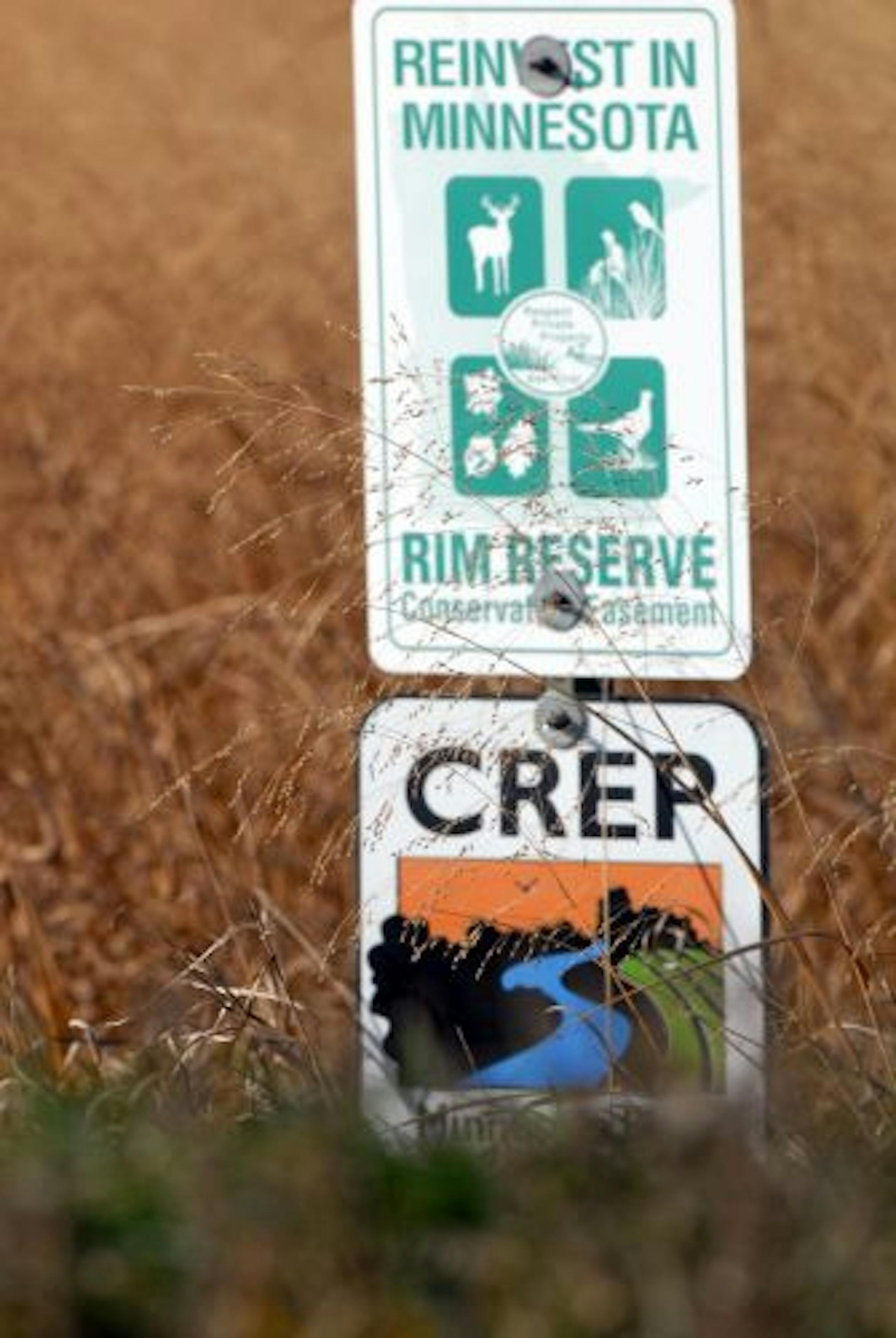
Most land in Renville County is dedicated to corn and soybeans. But conservationists have secured lands for wildlife through various programs, including state Rim Reserve and the federal Conservation Reserve Enhancement Program.
Most land in Renville County is dedicated to corn and soybeans. But conservationists have secured lands for wildlife through various programs, including state Rim Reserve and the federal Conservation Reserve Enhancement Program. (Star Tribune/The Minnesota Star Tribune)
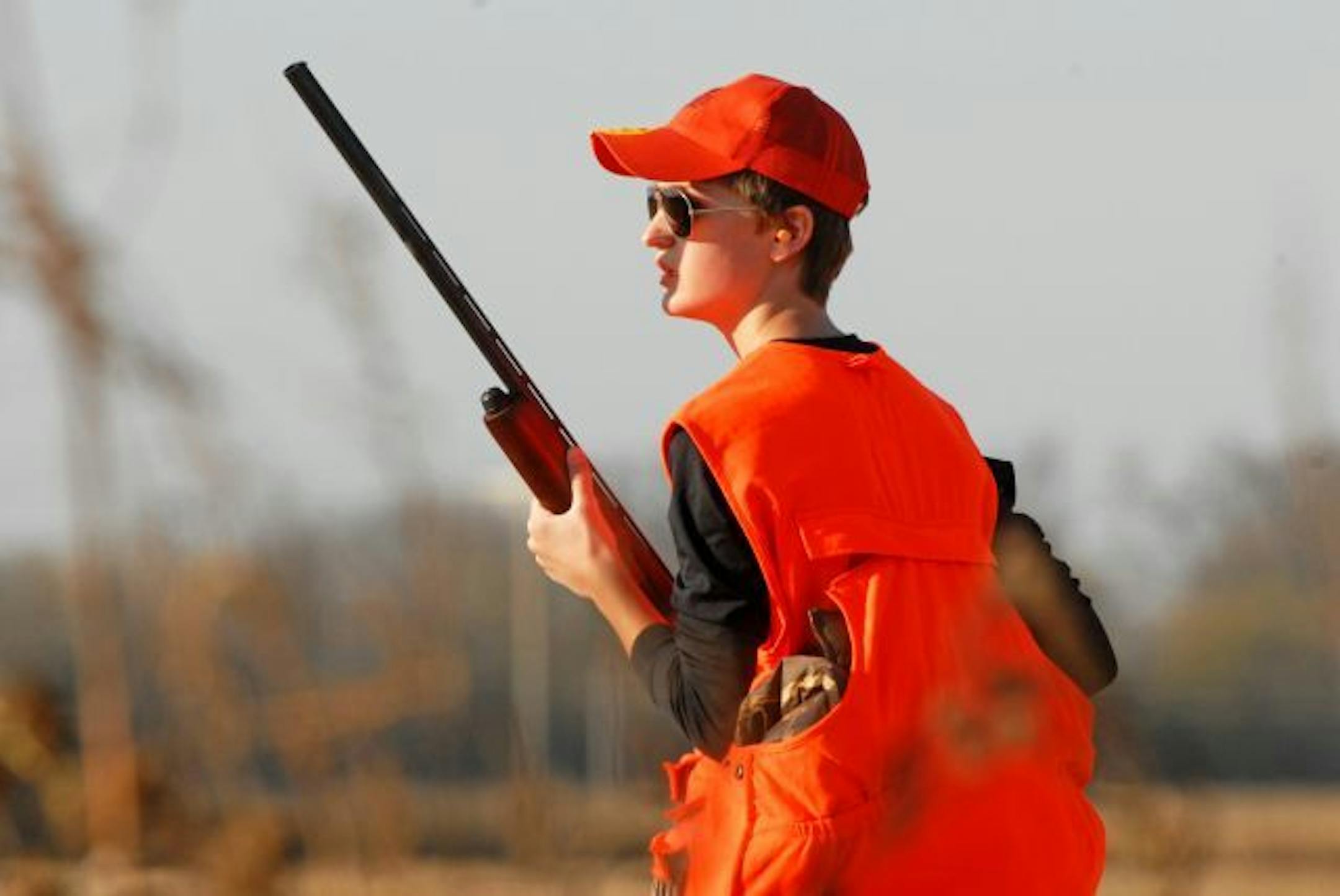
Harrison Smith, 14, of Willmar anticipated the flush of a wild rooster on Saturday.
Harrison Smith, 14, of Willmar anticipated the flush of a wild rooster on Saturday. (Dml -/The Minnesota Star Tribune)
about the writer

about the writer

Dennis Anderson

Columnist

Outdoors columnist Dennis Anderson joined the Star Tribune in 1993 after serving in the same position at the St. Paul Pioneer Press for 13 years. His column topics vary widely, and include canoeing, fishing, hunting, adventure travel and conservation of the environment.

See Moreicon
Advertisement