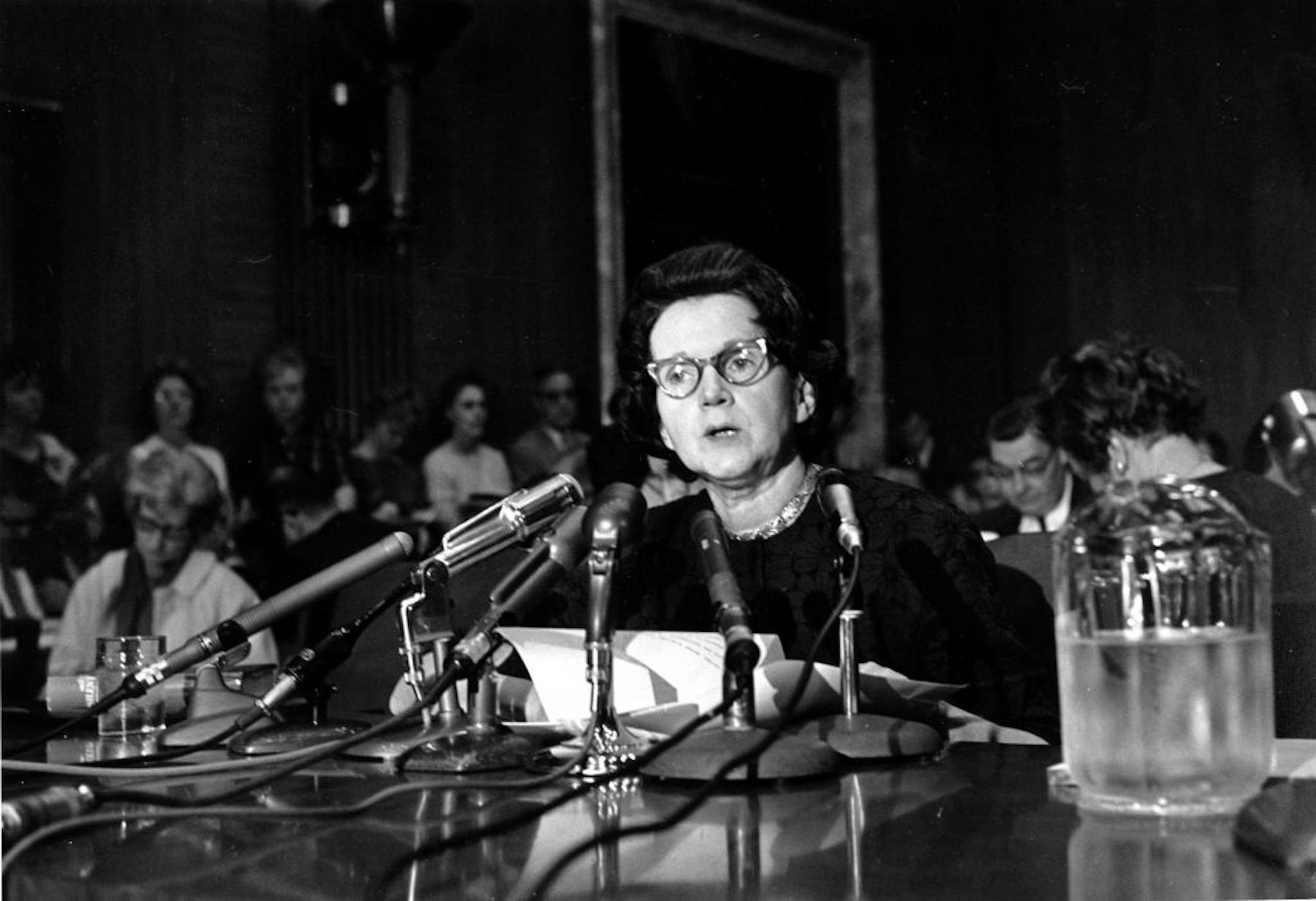
Fifty years ago, when Rachel Carson published "Silent Spring," the world changed forever.
But in many ways the human disposition remains as it ever was: indifferent to the health of the natural landscape surrounding us.
As chronicled in Twin Cities writer William Souder's remarkable biography of Carson published last week, Carson's exposé of the adverse effects of DDT on a smorgasbord of non-targeted fish and wildlife -- not least, eagles -- ushered in what we refer to now as the environmental movement.
Previously, "conservation" was equated with stewardship of natural resources, an undertaking often spearheaded by hunters and anglers.
Environmentalism, by contrast, as Souder reminds us in "On a Farther Shore, the Life and Legacy of Rachel Carson" (Crown, $30), recognizes that man is not apart from nature but rather a part of it -- destined, in degrees, to share the fate of the world's other life forms.
Carson's story, and the scathing attacks she suffered from the chemical industry after publication of "Silent Spring," are similar in important ways to the reception many climate scientists have received when warning about melting glaciers, long-term droughts and other calamities; issues that should be important to everyone, especially hunters and anglers, who historically have claimed a special franchise on similar concerns.
Though some still dispute that climate change is occurring, argue about who or what is responsible and/or what if anything can be done in response, it nonetheless seems indisputable that in years to come entire populations of people worldwide must work in unison to mitigate pressing environmental problems.
By comparison, the struggle by U.S. hunters and anglers for more than a century to ensure they have sufficient game and fish populations to shoot and catch will seem like a walk in the park.