

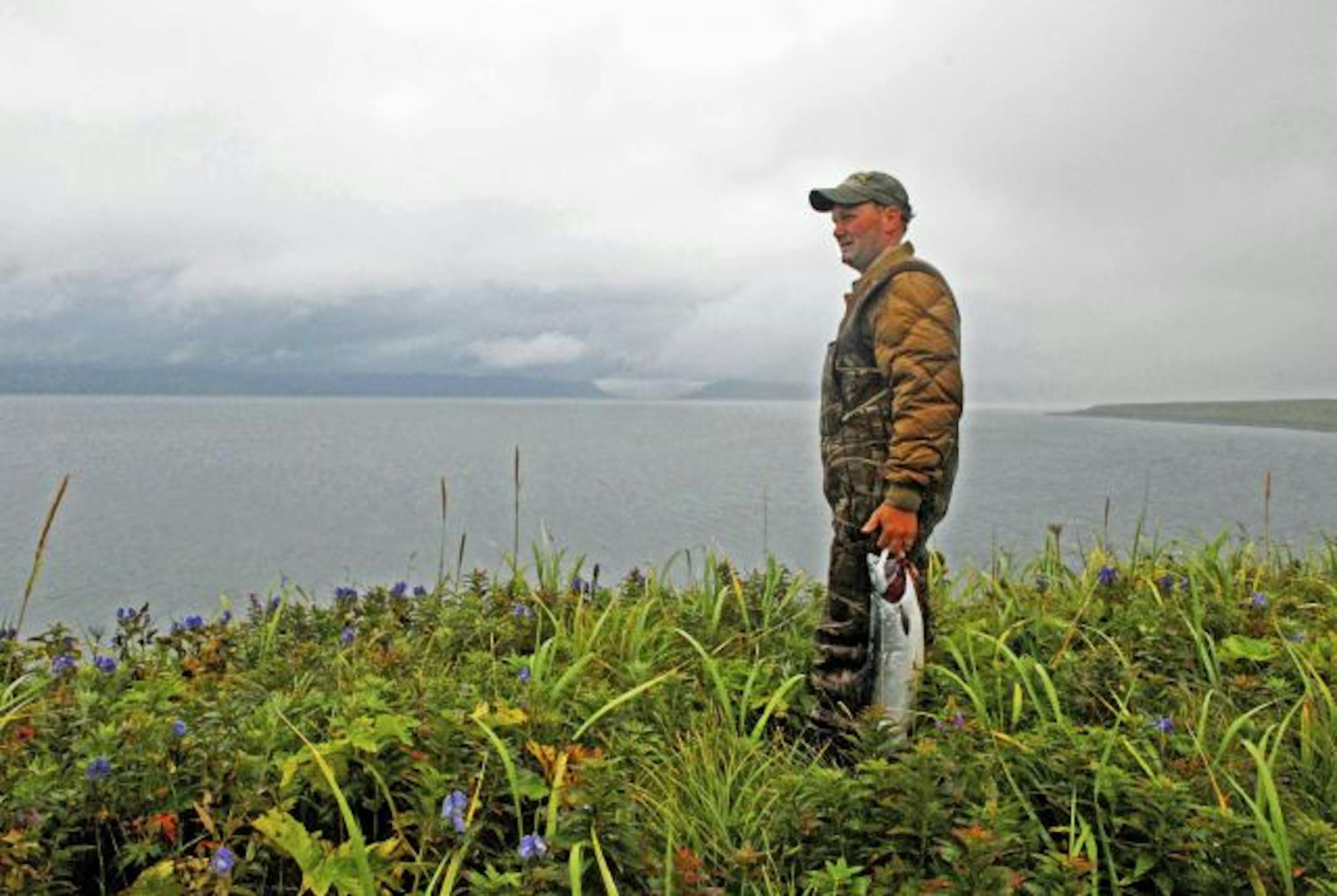
Born in a watery land, Minnesota duck hunters love their boats, any type, so long as they float and are camouflaged. On this morning, Pete Iverslie is no exception, backing into the Bering Sea a craft constructed for him in Maryland and shipped to Seattle, then loaded onto a cargo ship destined for this very stark and remote place.
Originally of Willmar and now living in New London, Minn., Pete is the son of a duck hunter and the brother of duck hunters. Educated as a nuclear pharmacist, he is, by most appearances, normal; blond, even, like many Minnesotans, and straight-talking, a good guy to be with in the field.
Nevertheless, I'm thinking: "This fellow must have a very, very wacky side to him. Otherwise, why would we be doing this?"
"We might have a little trouble getting out this morning," Pete says. "The tide, for a high, is low."
Our quarry on this day is the Pacific black brant, a type of sea goose that is a strange bird, indeed. Here in the Izembek Lagoon, part of the Izembek National Wildlife Refuge, these brant -- virtually the world's entire population -- gather each September and October before swirling upward en masse on northwest winds, circling and circling again, gaining ever more altitude.
Then they fly nonstop to Baja, Mexico.
"They lose about a third of their body weight on the trip," Pete says.
Cold Bay, about 15 miles distant from us over a gravel road, has a population of about 80 people. Also there are some resident foxes and other critters. Come September each year, Pete lives here, too, a seasonal interloper to be sure, but by now -- a half-decade or so after building a cabin in Cold Bay, and being a gregarious type anyway -- he knows everyone, or most everyone, in town, postal worker to policeman.


