
Dennis Anderson: If this is your definition of a slow pheasant opener ...

In a supposed down year, six birds are enough on Day 1.

October 16, 2011 at 5:36AM
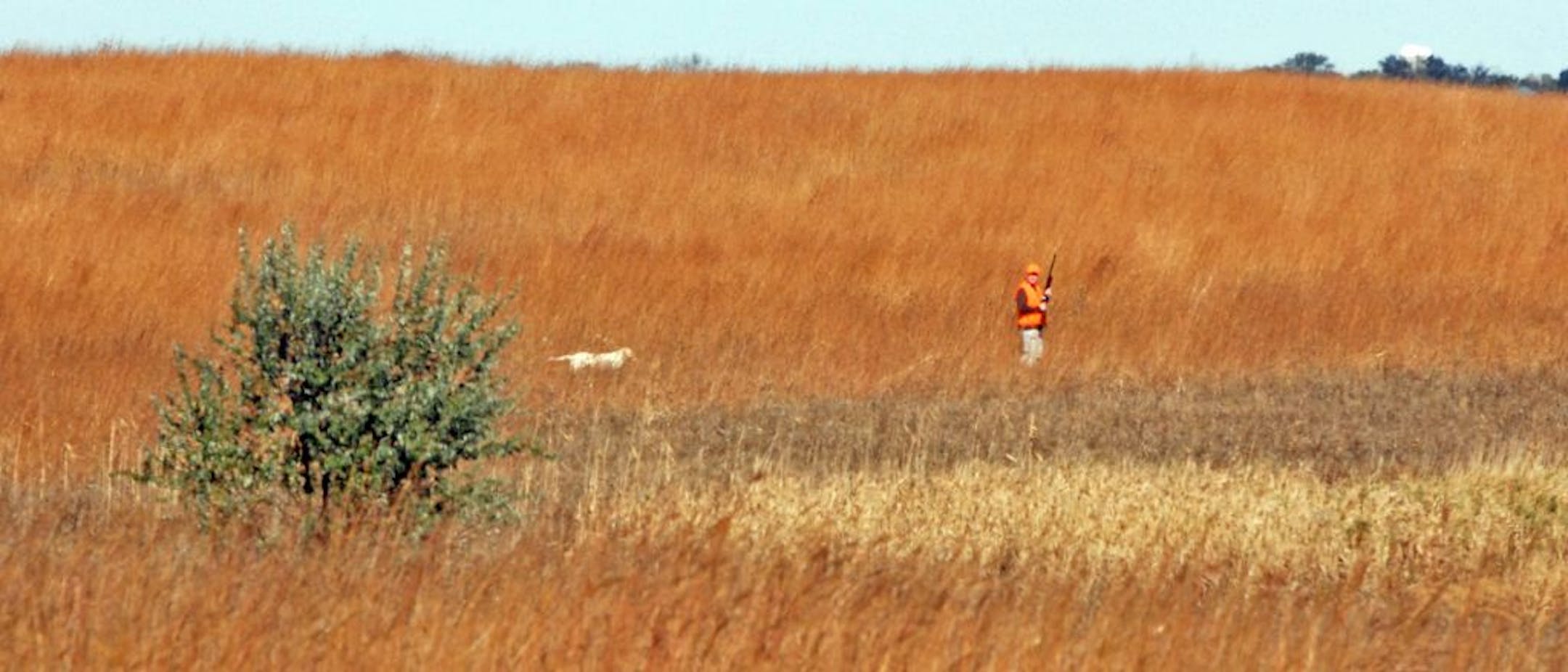
A hunter and his dog searched for pheasants Saturday in southwest Minnesota. Hunting pressure seemed to be down, compared to recent years. The DNR had said pheasant numbers declined significantly this year, due to a tough winter and wet, cold spring.
A hunter and his dog searched for pheasants Saturday in southwest Minnesota. Hunting pressure seemed to be down, compared to recent years. The DNR had said pheasant numbers declined significantly this year, due to a tough winter and wet, cold spring. (Star Tribune/The Minnesota Star Tribune)

IN SOUTHWEST MINNESOTA - At day's end, the pheasant hunter wants something to show for his efforts besides rubbery legs and a gaseous dog splayed on a couch. A bird for the pot is nice, also the memory of it cackling just before a discharge of cold steel was volleyed in its direction, blue sky arching overhead.

Remarkably, given the pheasant forecast issued last month by the Department of Natural Resources, we had that memory and others well stored by late afternoon Saturday.

Six birds is what we counted when we put up the dogs a final time on the first day of the state's 2011 ringneck season. Our bunch has done better on opening day. But we've done worse, too.

Call it: pretty good on a very pretty day.

Hunting with me were Willy Smith of Willmar, his sons Matthew, 17, Harry, 15, and Parker 12. Also Denny Lien of Lake Elmo was along, as was my son, Cole, 16.

Parker, a recent graduate of a DNR firearms training class, was the new addition to our group. We lost one, too: Trevor, my older son, is off to college at the University of Montana, from which he happily reports that each dormitory provides gun storage on site for student hunters.

Willy, Denny and I were students also on Saturday, after a fashion.

Because pheasants took such a licking last winter, and because they didn't recruit many young into their fold this past wet, cold spring, we worried that if we didn't plan specifically where we would hunt Saturday, we could come up completely empty -- miles walked with nothing to show for our efforts.
So it was that we drew a big circle on a map of southwest Minnesota that included the fine cities of Canby, Minneota and Montevideo, among others. Long a relative haven for Minnesota pheasants, this part of the state nonetheless suffered along with the state's other pheasant habitats last winter.

But it's also true that state wildlife management areas here are fairly abundant, and many are quite large. So if pheasants had any chance of surviving in Minnesota last winter, likely as not it was in the southwest.

Or so we thought when we stepped into a public hunting area a few minutes after 9 a.m. Saturday.

Shortly thereafter, up came the first bird. This was a rooster, and Harrison and Matthew jumped on it quickly with their 12-gauge pumps, sending the quarry tumbling in a cartwheel of feathers.

One of the four dogs working ahead of us -- Ben (mine), Sage (Cole's), Rufus (the Smiths') or Brit (Denny's) -- had flushed the bird, and as quickly, that dog or another flushed a second cock bird, then a hen and two more roosters. The wonder is that young Parker didn't suffer some kind of junior cardiac event, so many were the shots that rang out, as scattergun actions opened, ejected spent shells, then slammed new charges into awaiting chambers.

The smoke cleared, and three birds were down. The season wasn't yet a half-hour old. Call it dumb luck, or the reward of plans well laid. Or, more appropriately, the dividend of work begun a half-century ago by Dick Dorer, Dave Vesall and others who toiled in the 1950s for the DNR.

It was they who jump-started Minnesota's now long tradition of purchasing public lands that benefit hunters, birdwatchers and others, but especially wildlife.

On we marched, with one more rooster falling to our guns before we broke for lunch at a Dairy Queen we bumped into en route to the second large area we would hunt Saturday -- from which Cole and Matthew each would collect gaudily colored roosters to stuff into their blaze-orange hunting vests.

We cased our guns a final time almost precisely at 3 in the afternoon. The sun still shone brightly in a blue sky, as it had earlier in the day. Another long hike might have yielded one or two or three more birds. But on this opener, six was enough.

Besides, the dogs we worked Saturday bore graying muzzles, veterans now of many such hunts. If only in their doggy dreams, they were destined for couches Saturday evening, and they deserved not to have to play all of their energy cards on this first outing of the season.

Sunday morning, they'd have another chance to high-step through tall grass, looking for pheasants.

As would we.

Dennis Anderson • danderson@startribune.com

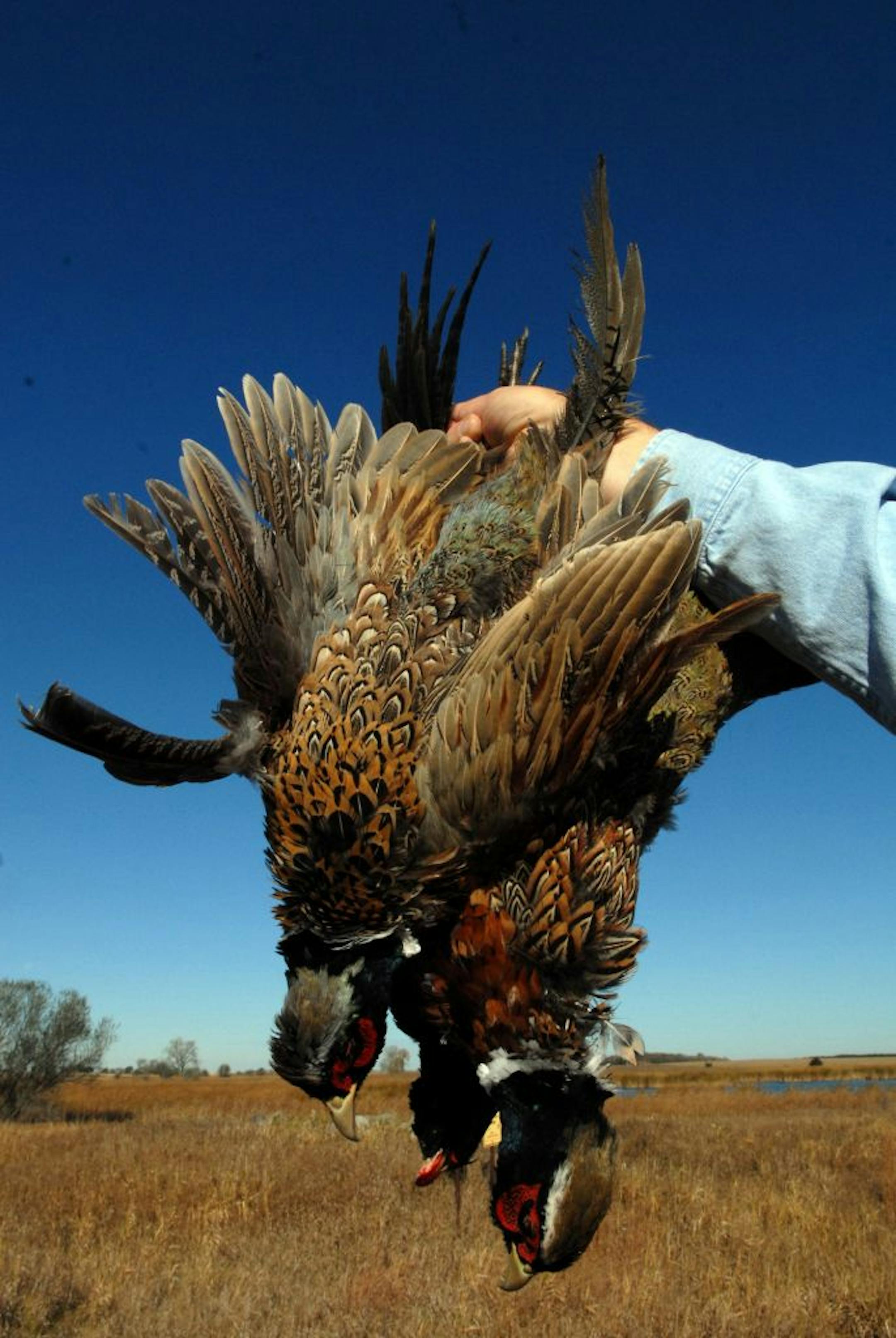
Three roosters were in the bag of Dennis Anderson's hunting party within an hour or so of the season opening Saturday, which began at 9 a.m. Two adults and four kids were hunting with Anderson in southwest Minnesota.
Three roosters were in the bag of Dennis Anderson's hunting party within an hour or so of the season opening Saturday, which began at 9 a.m. Two adults and four kids were hunting with Anderson in southwest Minnesota. (Star Tribune/The Minnesota Star Tribune)
about the writer

about the writer

Dennis Anderson

Columnist

Outdoors columnist Dennis Anderson joined the Star Tribune in 1993 after serving in the same position at the St. Paul Pioneer Press for 13 years. His column topics vary widely, and include canoeing, fishing, hunting, adventure travel and conservation of the environment.

See Moreicon

More from No Section

See More
FILE -- A rent deposit slot at an apartment complex in Tucker, Ga., on July 21, 2020. As an eviction crisis has seemed increasingly likely this summer, everyone in the housing market has made the same plea to Washington: Send money — lots of it — that would keep renters in their homes and landlords afloat. (Melissa Golden/The New York Times) ORG XMIT: XNYT58
Melissa Golden/The New York Times

It’s too soon to tell how much the immigration crackdown is to blame.