

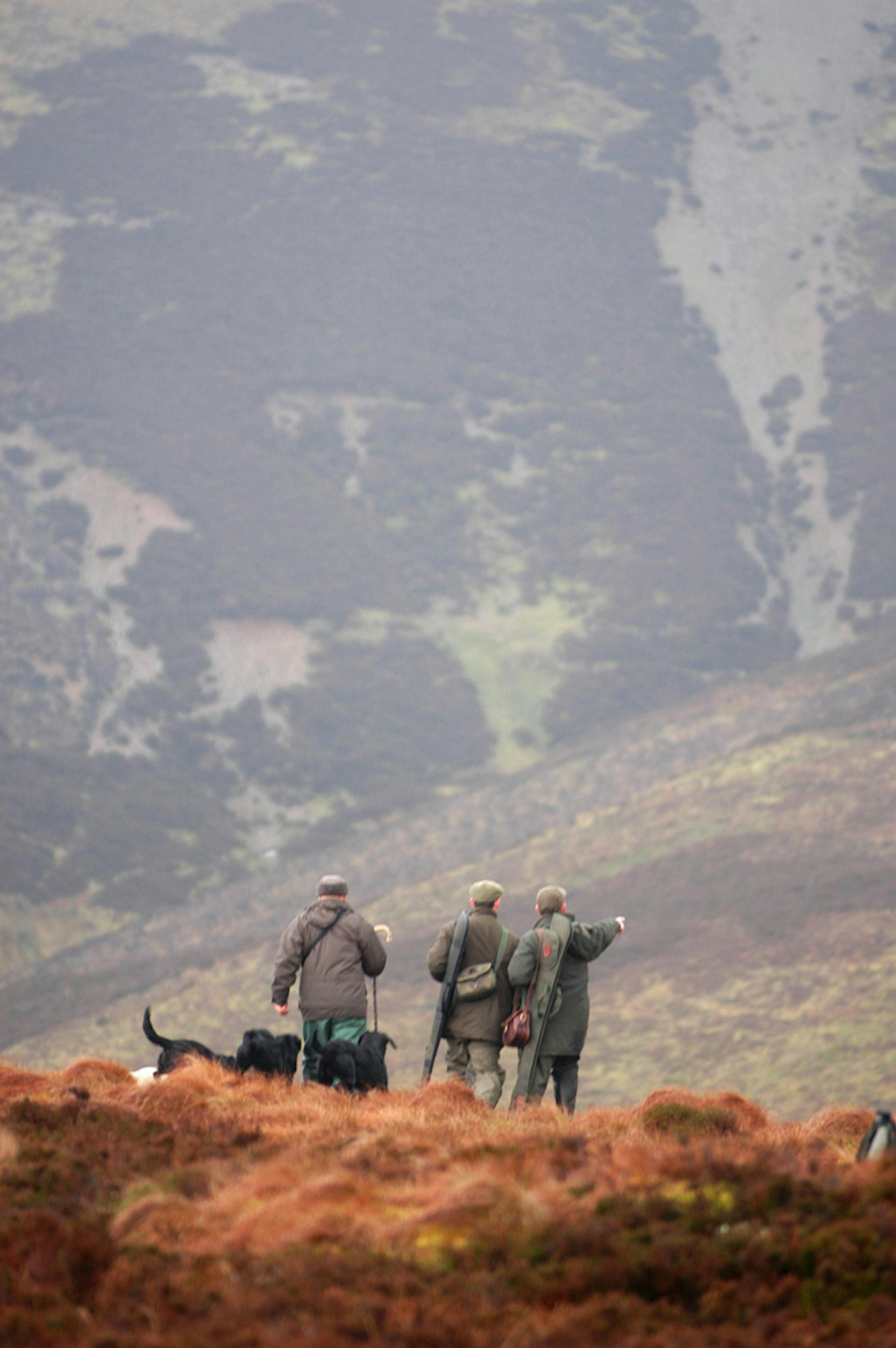
I doubted these hills could be traversed by any means other than on foot.
This was about a year ago, and the final shoot of the season on Leadhills Estate, in Scotland, was about to begin.
The morning was damp and cold and rain slanted from low, dark clouds. A furious Atlantic seemed to have rolled itself up in seismic undulations beginning as far away as Iceland before rampaging the Scottish countryside.
Spread among 20,000 acres of moors and deep valleys and streams that flow swiftly into other streams, the estate boasts 12,000 acres of heather, upon which its much-revered, and highly valuable, grouse depend for cover and food.
But the nine Irishmen gathered cheerfully on this day with 12-bores slung over their shoulders would not shoot grouse. The grouse season had ended and anyway the carefully managed estate had already taken its self-imposed allotment of birds.
Mountain hares would be the quarry, spry animals that can weigh up to 8 pounds and by season vary their colors from blue to brown to white.
I would shoot a few hares. But generally I would be an observer and guest of longtime friends Billy Steel Sr., the estate's retired keeper, and his son, young Billy, each of whom would be "picking up," or retrieving downed hares with their dogs.
"Three hares same as a sheep," cracked gamekeeper Steve Colmer.


