

WEAVER BOTTOMS, MISSISSIPPI RIVER
Tom Hexum first saw these waters as a 15-year-old, 40 years ago. The Mississippi was different then. There was more vegetation and you could hide a duck boat easier then than you can today. Also, there were more ducks.
Tuesday, the final day of Minnesota's duck hunting season, Hexum, of Rochester, was on the river again. With him were pals Doug Opsahl, also of Rochester, and Keith Peterson of Winona. These are real guys with real jobs, citizens at large. But on this day they were playing hooky from their obligations. Grizzled in the manner of true river men, if not quite river rats, they carried with them vintage decoys, repeating shotguns and enough egg salad sandwiches, coffee and cookies to last until sundown.
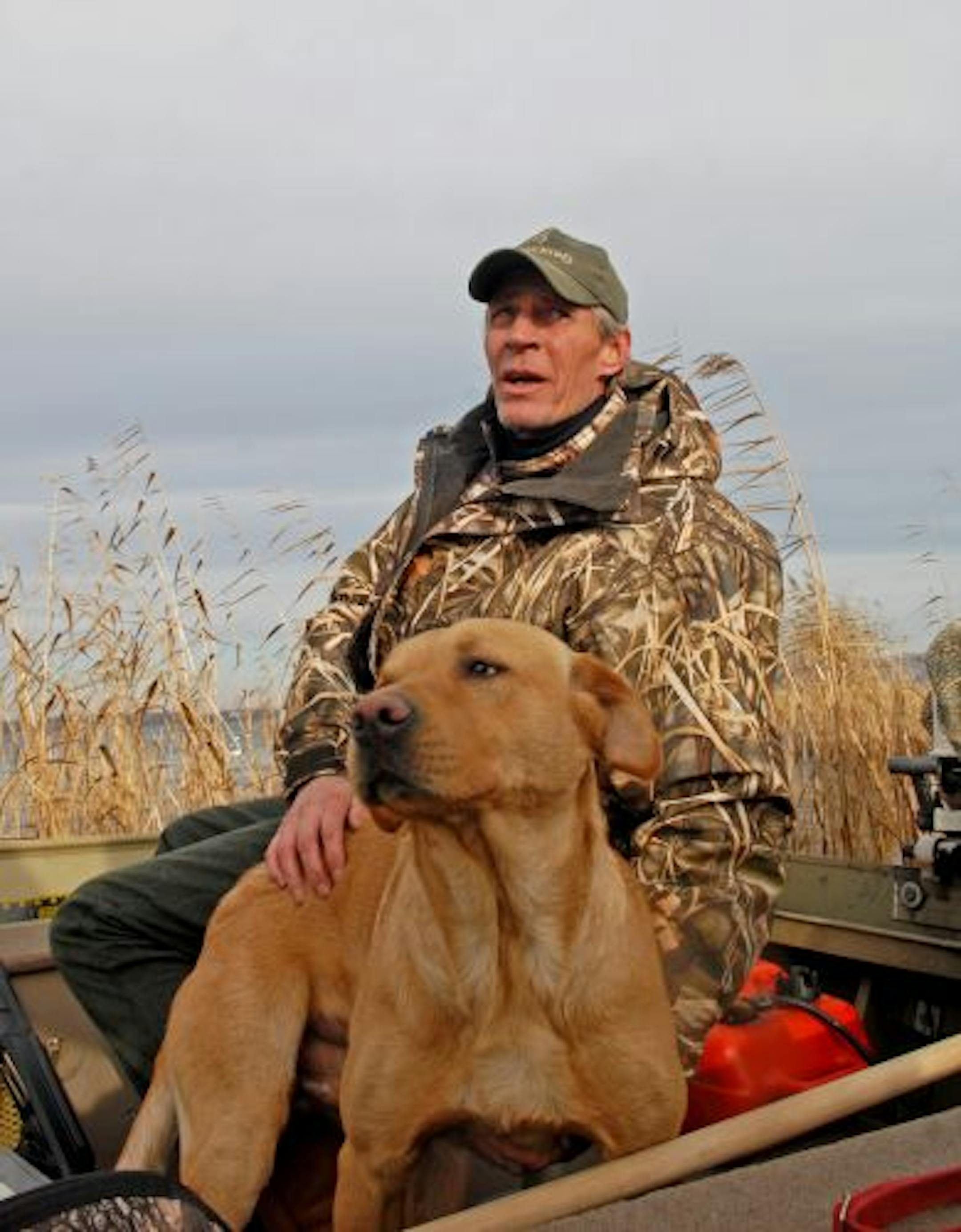
"My dad, who was born in 1928, hunted these river bottoms before me," Hexum said. As he spoke, the four of us hunkered in a stand of phragmites, spread among two boats. Pete, my yellow Labrador, was also along.
We didn't expect to see many ducks. Yet ducks were the reason we were on the river. Rarely sighted as they might have been in many parts of Minnesota this fall, we owed them nonetheless on this season's last day a proper fare-thee-well as they scattered to Gulf Coast wetlands, Arkansas bottomlands and the choppy waters of Chesapeake Bay.
"The most ducks we got in one day this year on the river was five," Hexum said. "Keith and I were actually fishing that day. We threw our guns in the boat as an afterthought. We shot the five ducks without putting out a decoy."
An argument that duck hunting will never die no matter how low duck populations sink could have been made convincingly Tuesday by anyone scanning the boat access at Weaver, a small burg lying just downriver from Wabasha, Minn.
This was a fair weather day, with no hope of a major duck movement into or out of the Upper Mississippi River National Wildlife and Fish Refuge, which extends from Wabasha to Rock Island, Ill., some 260 river miles south.


