
Advertisement

Dennis Anderson: Dean's legacy lives on in push for wildlife habitat

Tony Dean is gone, but his devotion to conservation has manifested into a push to raise money for a public hunting area in South Dakota.

December 29, 2009 at 2:30AM
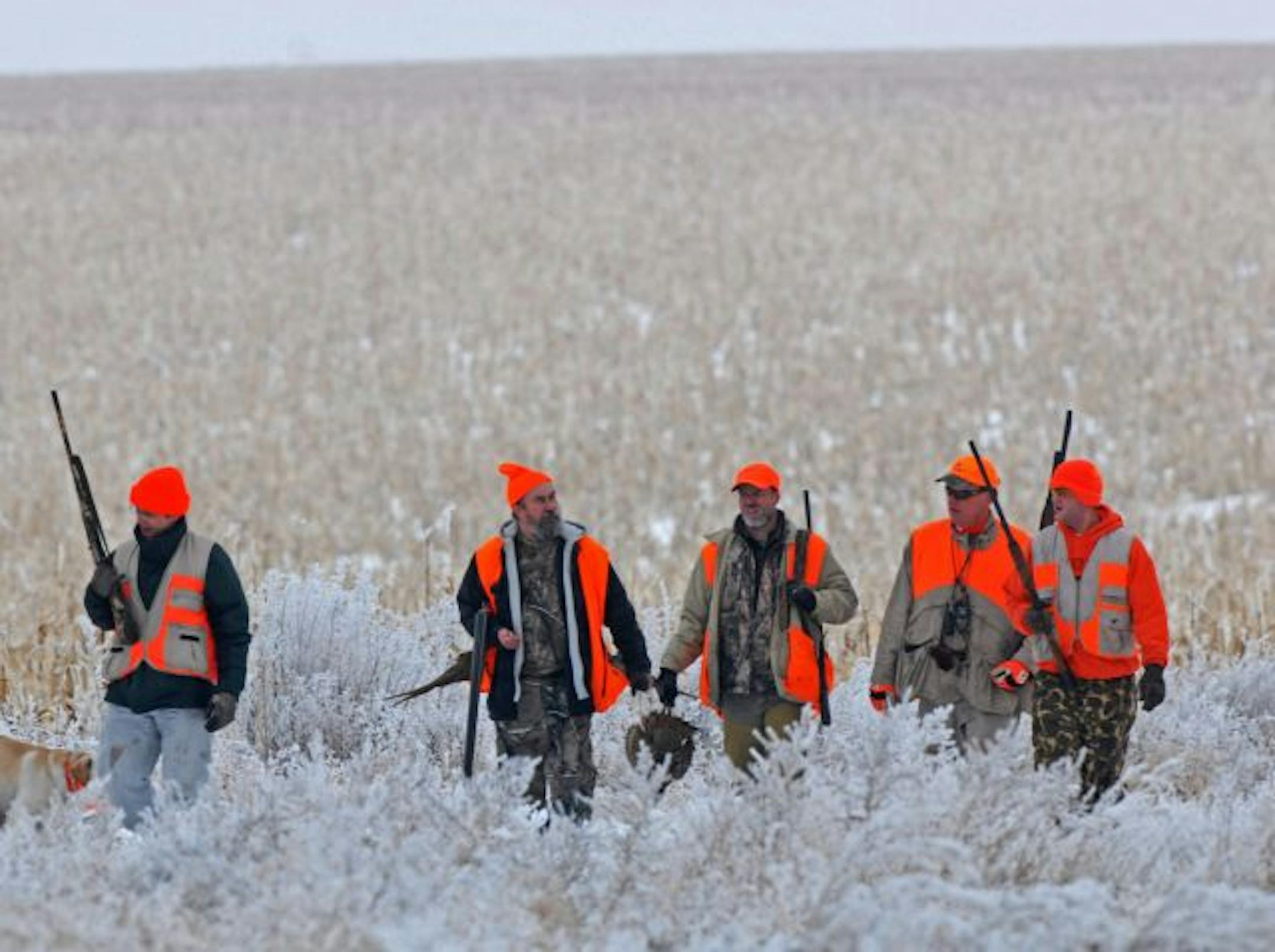
Land owner Steve Halverson, second from right, with four of the more than 20 wingshooters who last week paid $500 apiece to hunt on land Halverson donated to raise money to memorialize the late outdoors broadcaster Tony Dean of Pierre, S.D. About $21,000 was raised in an effort to fund a new, large public wildlife and hunting area in South Dakota.
Land owner Steve Halverson, second from right, stood with four of the more than 20 wingshooters who last week paid $500 apiece to hunt on land Halverson donated to raise money to memorialize the late outdoors broadcaster Tony Dean of Pierre, S.D. About $21,000 was raised in an effort to fund a new, large public wildlife and hunting area in South Dakota. (Star Tribune/The Minnesota Star Tribune)
Advertisement

KENNEBEC, S.D. — Gone now about a year, the late outdoors radio and television broadcaster Tony Dean last weekend reappeared here as an idea, a transformation he would have embraced. Dean's life, his love of Dakota prairies and his conservation activism were the reasons about 25 hunters traveled from near and far to pay $500 apiece to chase pheasants on South Dakota's snowswept dry lands.

When joined with monies raised at a banquet Dec. 19 that celebrated Dean's many accomplishments, the hunters' contributions pushed to more than $100,000 the amount that has been raised in the broadcaster's name since his passing in October 2008 at age 67.

The funds, in time, will be used to purchase up to 1,000 acres of South Dakota wildlife habitat at a cost of as much as $1 million -- a bonus to Minnesotans, who by far represent the largest contingent of out-of-state hunters to visit South Dakota each fall.

Called "Tony Dean's Acres" (for more information, including how to contribute, visit www.tonydean.com), the program intends to benefit wildlife while providing a public hunting area for sportsmen and women.

Many who joined the effort last weekend were Minnesotans, some of whom knew Dean well, others only in passing.

"In addition to buying the land, we intend to develop a youth hunting program that will encourage kids to appreciate what Tony appreciated so much," said Dave Zentner of Duluth, a longtime friend of Dean's and co-chair of the hunt and banquet.

As Zentner spoke, he stood in a large metal building owned by Steve Halverson, a farmer and rancher who had donated his pheasant-rich properties and commercial hunting operation to the fundraiser. This was on Saturday, and in the building, in addition to Zentner, were the other hunters, as well as Halverson and his guides. Additionally, a few eager Labrador retrievers marauded the large room, cruising for handouts or dropped tidbits, and eager for the hunt to begin.

Tony Dean's spirit, manifested in the land-buying idea and the gathering of so many conservation-minded hunters, was also present.
Advertisement

"We'll split into two groups," Halverson said. A big, genial man who readily offered up his lands (www.pheasantsrus.com) for the benefit, Halverson said his client-hunters had killed about 2,600 roosters this fall on the 10,000 acres he owns or leases.

"We really would like to get to 3,000 before the season ends," he said, noting that too many male pheasants over the winter reduces the chance that an optimum number of hens will survive to nest in spring.

• • •

If there is a divide among pheasant hunters, and there is, it is between those who wish to hunt solo, with their dog, or perhaps with one or two other hunters, and those who prefer to hunt in large groups.

In operations such as Halverson's, large-group hunting -- in which some wingshooters post at the ends of fields while others walk toward them, flushing birds -- usually carries the day.

This is especially true in late season, when pheasants remove themselves from harvested corn and soybean fields to cedar groves, sorghum food plots and large wetlands. Each offers a hiding spot from predators while providing food and protection from wind and cold.

Advertisement

It was precisely these habitats that Halverson directed the hunters to surround last weekend, with almost military precision, before advancing on the cover and putting pheasants -- hundreds and hundreds of them, all wild -- to wing.

The result, it was hoped, would be the equivalent of a European driven-pheasant shoot, in which multitudes of late-season ringnecks would be airborne simultaneously.

Among those on hand to support the effort were Minnesotans Ron Schara, host of the "Minnesota Bound" TV show and retired Star Tribune columnist; Doug Grann, president and CEO of Wildlife Forever; Steve Pennaz, TV fishing host and executive director of the North American Fishing Club; Howard Vincent, CEO of Pheasants Forever; and Dave Nomsen, Pheasants Forever vice president of government affairs.

Schara worked for the South Dakota Game, Fish and Parks Department before moving to the Star Tribune in the 1960s.

"Late-season South Dakota pheasants can be difficult to kill because they bunch up, and because they're so nervous they usually get up far ahead if only one or two guys and their dogs are hunting," Schara said. "Group hunting can be the best way to hunt pheasants at this time of year. And sometimes, the only way."

• • •

Advertisement

Tony Dean was born Anthony Eastman DeChandt II on Nov. 26, 1940, in Mandan, N.D. He lived in Bismarck, N.D., and Cedar Rapids, Iowa, until about 40 years ago, when he moved to Pierre, S.D.

Blessed with a million-dollar voice, Dean would find his calling as producer and star of radio and television programs titled, simply, "Tony Dean Outdoors."

An amiable sort, Dean nonetheless grew quickly irritable when land or water in either of the Dakotas was misused. Apolitical in his conservation leanings, he targeted Republicans and Democrats equally in such instances, a practice that at times cost him advertisers. And friends.

Last weekend, he had no shortage of the latter as hunters of both political stripes gathered to affirm their allegiance to natural resources.

"When the first shot is heard, the birds will start coming out," Halverson said as a group of hunters advanced on a large cedar grove. "Be ready."

Bang.

Advertisement

With that, pheasants arose, boiling upward in huge clouds, so many that sorting roosters from hens was as challenging as targeting the more colorful cock birds.

The South Dakota daily pheasant limit is three roosters per hunter, and within an hour or so, that number times 20 had been felled and retrieved.

A hot lunch of homemade chili followed, after which, later, in Pierre, thousands of dollars were raised at the banquet.

Everyone who needed to be on hand for the evening's gathering to succeed was in attendance.

Tony Dean and his ideas for conservation, included.

Dennis Anderson • danderson@startribune.com

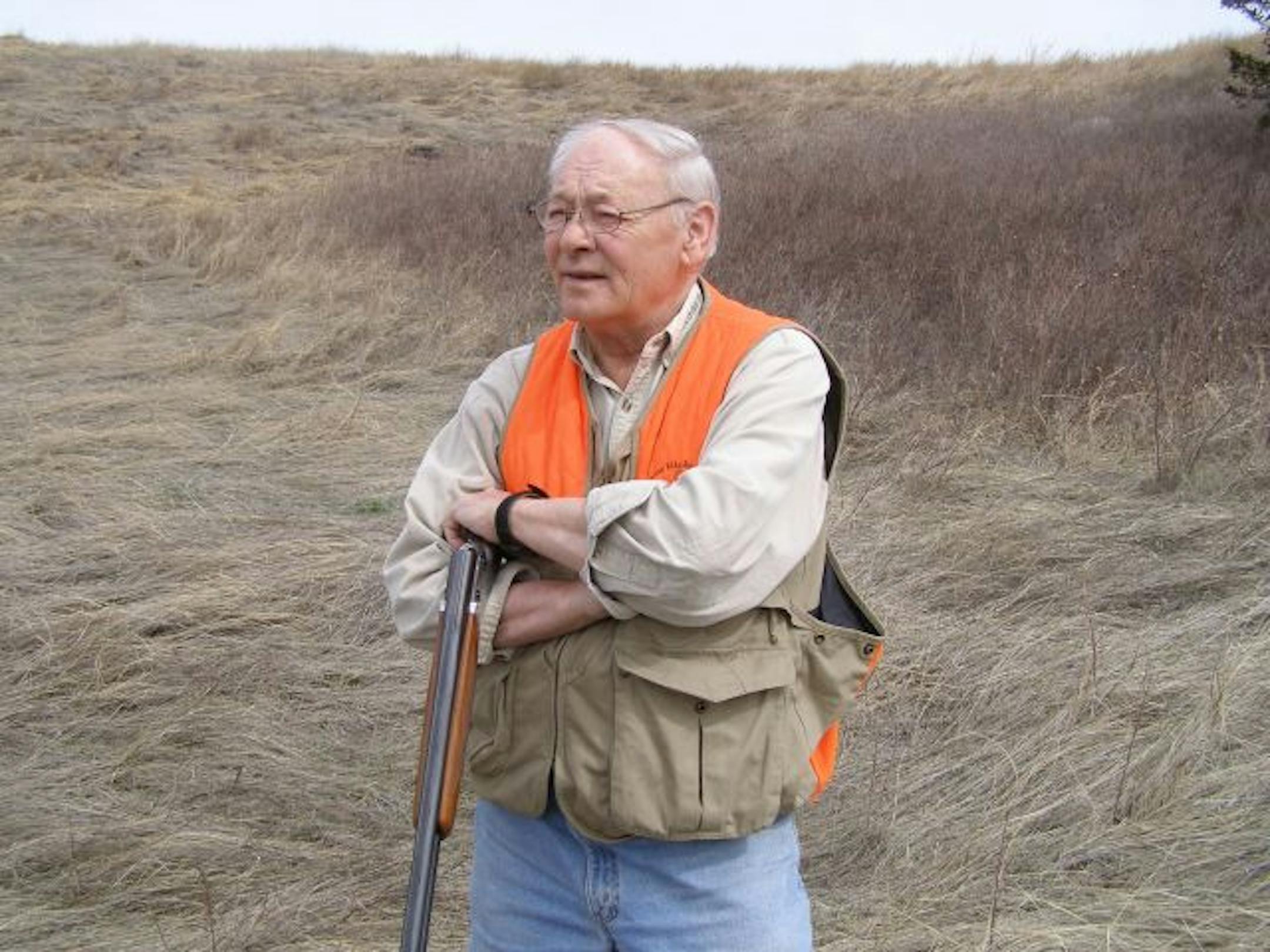
Tony Dean's TV show, aired in Minnesota as well as the Dakotas and elsewhere in the Midwest, the show was popular in part because Dean's sincerity was obvious, as were his skills in the field and particularly his conservation ethic.
Tony Dean's TV show aired in Minnesota as well as the Dakotas and elsewhere in the Midwest. The show was popular in part because Dean’s sincerity was obvious, as were his skills in the field and particularly his conservation ethic. (The Minnesota Star Tribune)
about the writer

about the writer

Dennis Anderson

Columnist

Outdoors columnist Dennis Anderson joined the Star Tribune in 1993 after serving in the same position at the St. Paul Pioneer Press for 13 years. His column topics vary widely, and include canoeing, fishing, hunting, adventure travel and conservation of the environment.

See Moreicon
Advertisement