

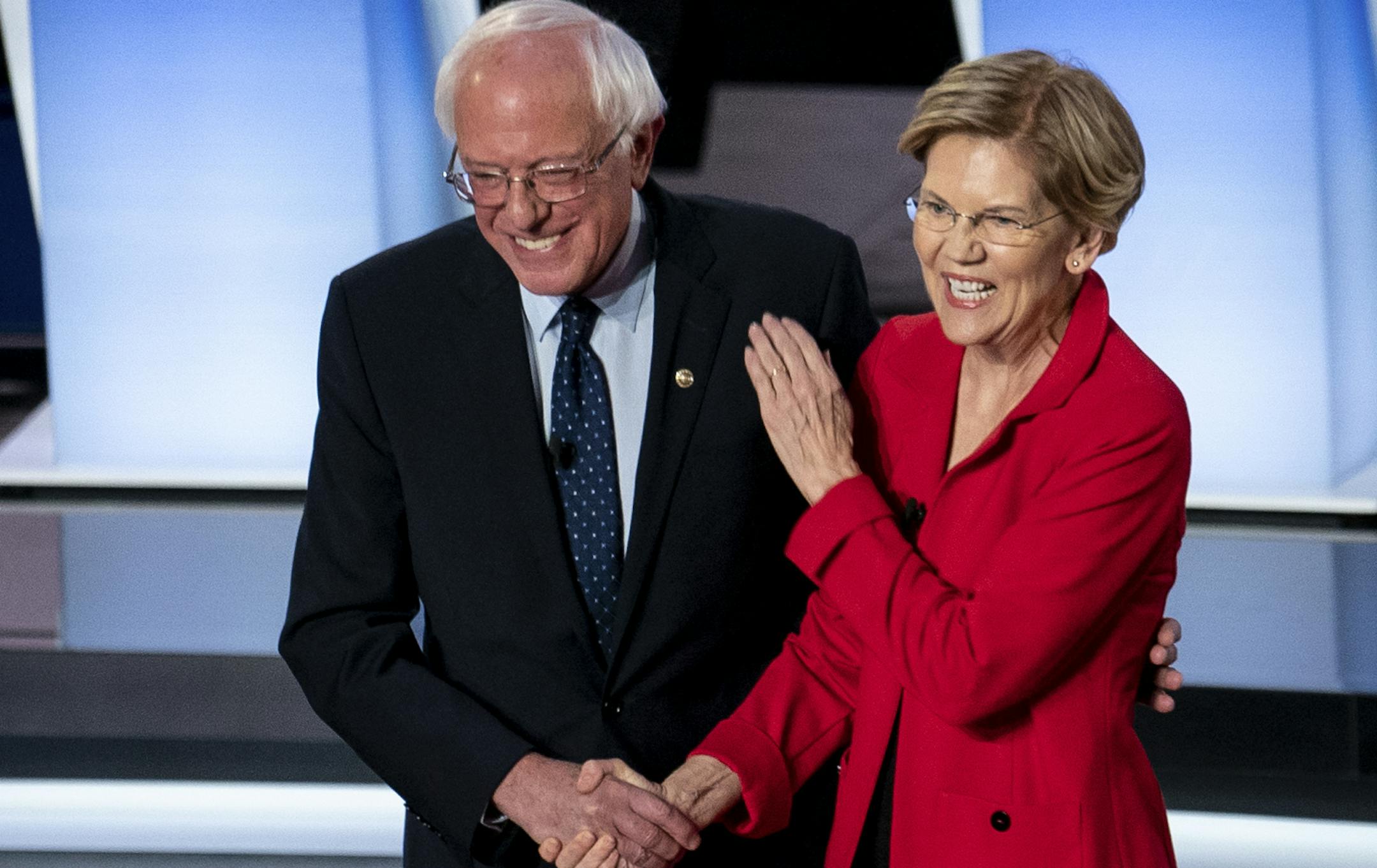
WASHINGTON — In April, many of the top Democratic presidential candidates eagerly lined up to cosponsor Bernie Sanders' Medicare for All bill — a vast restructuring of the U.S. health care system that would go far beyond Obamacare.
Sens. Elizabeth Warren, Kamala Harris, Cory Booker and Kirsten Gillibrand, along with Reps. Tim Ryan and Tulsi Gabbard, all co-sponsored the bill with an eye toward the upcoming primaries.
"It was a recognition that the center of gravity in the party has moved in a much more progressive direction," said Jeff Weaver, a senior adviser to Sanders' campaign. "Many candidates wanted to position themselves with the vast majority of Democratic primary voters by supporting real Medicare for All."
But as this week's Democratic debates in Detroit illustrated, many of those initial cosponsors, fearful of blowback from voters — particularly those who have satisfactory private health insurance they're reluctant to give up for something unknown, as they would have to under Sanders' plan — have begun backing away.
Sanders' Medicare for All would expand to all American residents the government-run health insurance program that's covered senior citizens and certain other people for more than 50 years. But as the costs and disruptions of the plan have come into focus, Medicare for All has emerged as the major fault line in the Democratic presidential primary.
Health-care coverage consistently ranks as the top issue for Democrats and helped drive the party's electoral gains in 2018. But polls show that voters harbor deep concerns about the possible disruption from a policy as far-reaching as Sanders has proposed.
The two-night gathering in Detroit made clear that the biggest fight in Democratic politics right now is whether the party should press ahead with remaking the health care system, which accounts for 18% of U.S. gross domestic spending, or instead pursue more limited reforms along the lines of front-runner Joe Biden's proposal to "build on Obamacare," the signature legislative achievement of President Barack Obama.
"At the level of the bumper sticker or talking points, proposals are very popular, but when you start filling in the details and the trade-offs become clear, it becomes more apparent that there are losers as well as winners," said Larry Levitt, executive vice president for health policy at the Kaiser Family Foundation. "At the bumper sticker level, it seems that everyone is a winner."


