

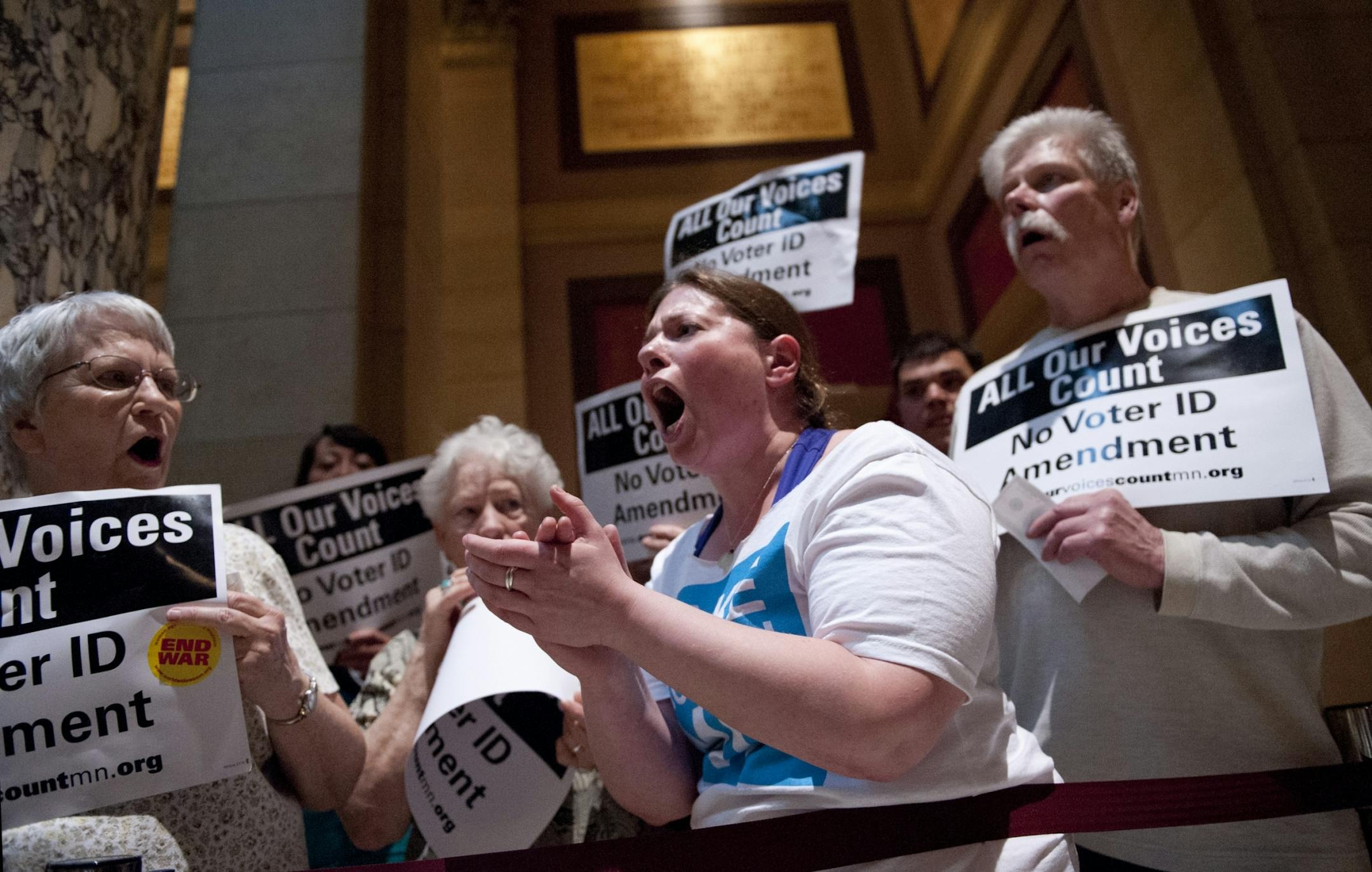
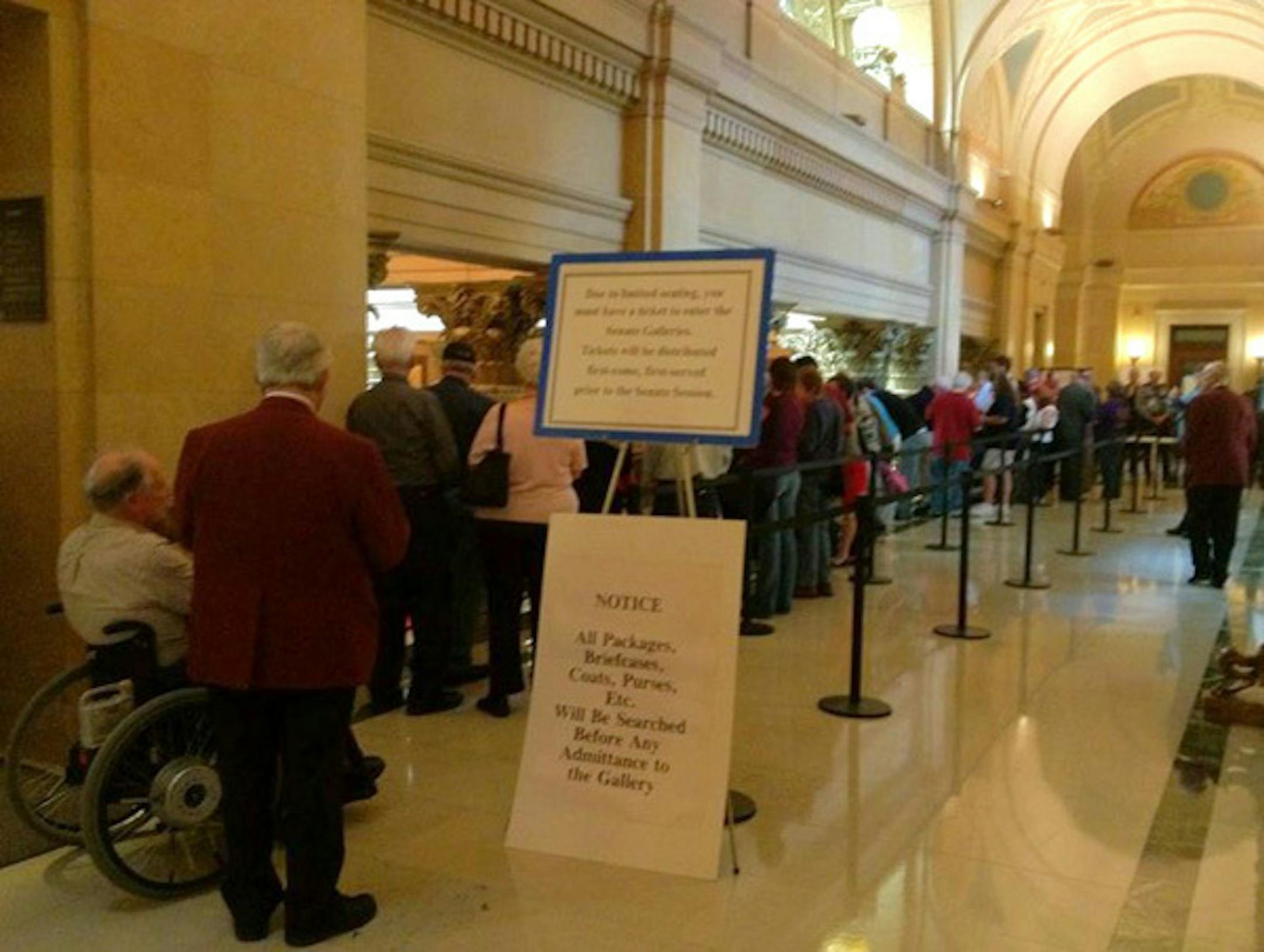
Demonstrators against the proposed Photo ID requirement for voters congregated outside the Senate chambers before legislators began debating the issue Friday afternoon.
Demonstrators with $100 dollar bills sealing their lips lay down on floor ways leading to the chamber. Capitol police kept clear pathways so legislators, staffers and lobbyists could still move through the area. The demonstrators were silent at first but began chanting as senators came into the chamber.
The demonstrators were organized by TakeAction Minnesota, the AFL-CIO and the Minnesota Public Interest Research Group, according to Greta Bergstrom of TakeAction. The $100 bills are symbolic of the group's claim that wealthy interests are trying to silence dissent by promoting the photo ID requirement.
When the debate begins, DFL opponents said they will focus on what they believe to be one of the bill's major consequences: its effect on Minnesota's popular system of Election Day registration.
"We will have very little choice but to eliminate same-day voter registration as a result of this legislation," Sen. Patricia Torres Ray, DFL-Minneapolis, told a news conference. She said the Secretary of State "would not be able to verify a person's identity fast enough to allow people to vote the same day."
Supporters of the proposal, including Sen. Scott Newman, R-Hutchinson, the Senate sponsor, have said that is not their intention. They say they want to end one form of same-day registration, in which registered voters "vouch" for those without ID's that show them to be residents of the precinct. But they say that other types of same-day registrations will be allowable.
Registering at the polling place is popular in Minnesota. In 2008, 18.5 percent of all voters registered on Election Day. Secretary of State Mark Ritchie, the state's chief elections officer and a photoID opponent, has expressed the same concerns that the ID plan will kill same-day registration.
The House passed its version of a photo ID bill after a nine-hour debate that ended at 2:14 a.m. Wednesday. The Senate version is somewhat different, and it appears there would have to be a House-Senate conference committee to come out with a final version.


