

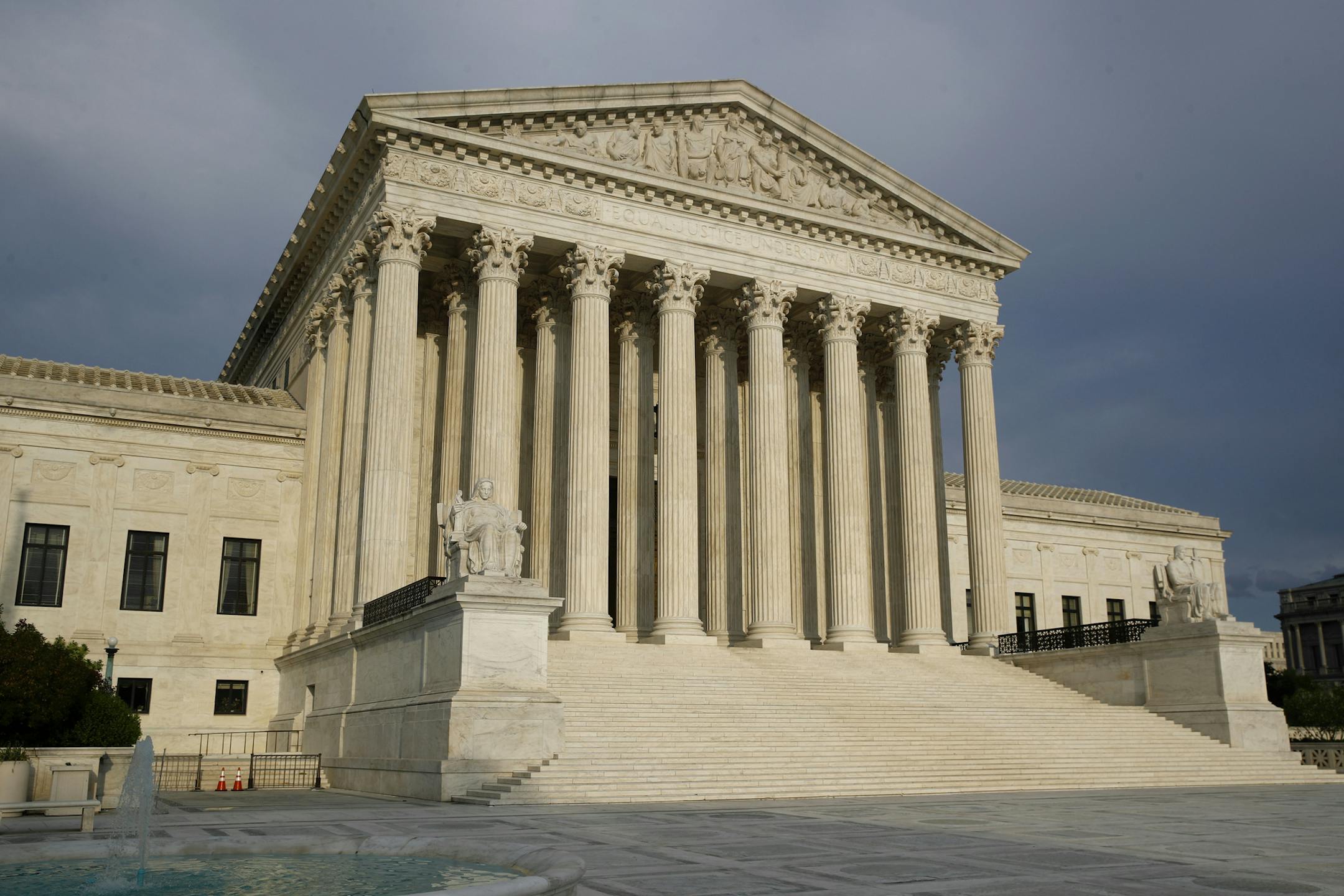
The court-packing question came up again during last week's debate between Vice President Mike Pence and Sen. Kamala Harris. Pence pressed Harris: If the Democrats win the White House and Senate, will they increase the membership of the Supreme Court — that is, "pack" it — in order to dilute the 6-3 conservative majority that will be established if Amy Coney Barrett is confirmed?
Harris declined to answer the question. Candidate Joe Biden did the same the following day. And should there be another presidential debate, when the question comes up, Biden should continue to refuse to answer. The question is a disingenuous attempt to deflect attention from the more profoundly important issues connected to this election.
Increasing the size of the Supreme Court is an unsavory option, but it is not illegal or necessarily unscrupulous. Unfortunately, the idea is tainted by language — "packing" just sounds bad — and by President Franklin Roosevelt's clumsy attempt to expand the court in 1937.
Nine is not a magic number designated in the Constitution. When FDR's New Deal policies hit roadblocks in the Supreme Court, he noted that the size of the court had varied widely since the nation's founding: The court was established with six justices. In 1801 it had five. In 1807 there were seven justices. In 1837 it had grown to nine, and there were 10 in 1863. In 1866 the justices numbered seven, and in 1869, they were back to the current nine.
Roosevelt believed that a too-conservative Supreme Court was wrongly derailing New Deal legislation meant to alleviate suffering during the Depression and provide for a fairer, forward-looking America. Many of the rejected measures are ones that we now take for granted, such as minimum wage laws and fair labor practices. His solution was to appoint additional justices who could adapt to the times.
Uncharacteristically, Roosevelt bungled his proposal, failing to convince the media, his fellow Democrats or the public. Fortunately, the court shifted on its own, obviating the need for enlargement. It began to rule in ways more consistent with a modern society.
Ideally, Supreme Court justices should be chosen on the basis of their integrity, fairness and competence. Centrist candidates, such as Merrick Garland, deserve bipartisan support, which Garland received before President Barack Obama nominated him to the court during the last year of his presidency.
The problem with the current court is that it is already packed. Trump has publicly committed to nominate only justices who are ideological, who will overturn Roe v. Wade, for example. And that is precisely what he has done.


