

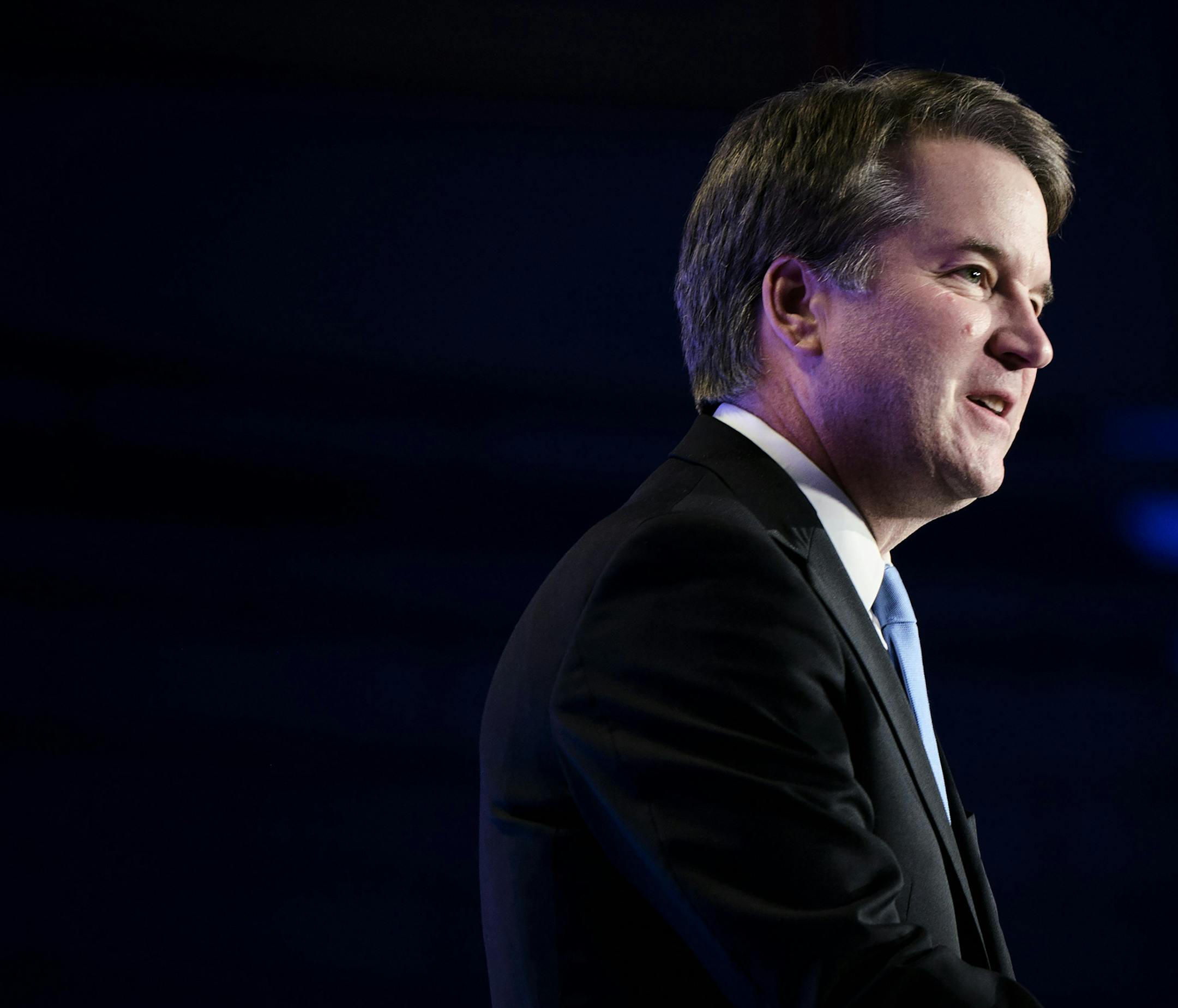
Nearly three years after Justice Brett Kavanaugh's tumultuous confirmation to the Supreme Court, the FBI has disclosed more details about its efforts to review the justice's background, leading a group of Senate Democrats to question the thoroughness of the vetting and conclude that it was shaped largely by the Trump White House.
In a letter dated June 30 to two Democratic senators, Sheldon Whitehouse of Rhode Island and Chris Coons of Delaware, an FBI assistant director, Jill C. Tyson, said that the most "relevant" of the 4,500 tips the agency received during an investigation into Kavanaugh's past were referred to White House lawyers in the Trump administration, whose handling of them remains unclear.
The letter left uncertain whether the FBI itself followed up on the most compelling leads. The agency was conducting a background check rather than a criminal investigation, meaning that "the authorities, policies, and procedures used to investigate criminal matters did not apply," the letter said.
Tyson's letter was a response to a 2019 letter from Whitehouse and Coons to the FBI director, Christopher A. Wray, posing questions about the FBI's review of Kavanaugh.
In an interview, Whitehouse said the FBI's response showed that the FBI's handling of the accusations into misconduct by Kavanaugh was a sham. Tyson's letter, Whitehouse said, suggested that the FBI ran a "fake tip line that never got properly reviewed, that was presumably not even conducted in good faith."
Whitehouse and six of his Democratic colleagues on the Senate Judiciary Committee replied to the FBI's letter on Wednesday with demands for additional details on the agreement with the White House that governed the inquiry. They also pressed for more information on how incoming tips were handled.
"Your letter confirms that the FBI's tip line was a departure from past practice and that the FBI was politically constrained by the Trump White House," the senators wrote. Among those signing the letter were Sen. Dick Durbin of Illinois, the committee's chair, Coons and Sen. Cory Booker of New Jersey.
Donald McGahn, the White House's general counsel at the time, and the FBI did not immediately respond to requests for comment.

