

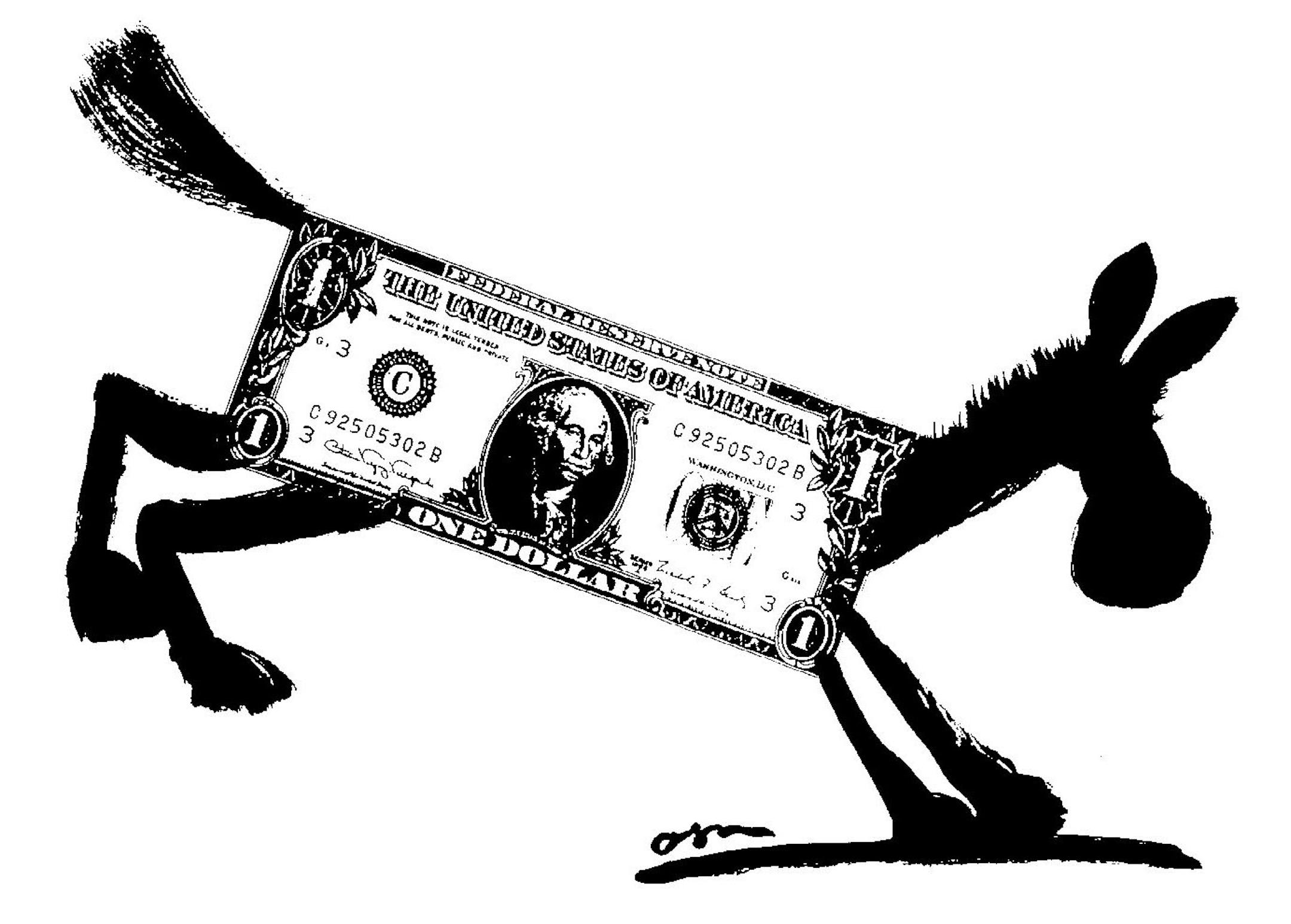
A lot of people keep waiting for the Democratic Party to jump into the deep end. Pew Research Center pollster Andrew Kohut produced the latest installment in this vein with a Washington Post essay, "Are the Democrats Getting Too Liberal?"
I get it. Republicans have gone mad, so by some assumed but never fully articulated law of physics, Democrats must be primed to let their freak flag fly, too. Newtonian politics.
Democrats are unquestionably more liberal on gay rights and marijuana than they used to be. Who isn't? Current congressional Democratic leaders Harry Reid and Nancy Pelosi are more liberal than such predecessors as Sen. Robert Byrd and House Speaker Tip O'Neill. President Obama is more liberal (OK, barely) than President Bill Clinton. But we are still a long way from the Weather Underground.
Kohut raised the specter of liberal Sen. Elizabeth Warren or, implausibly, New York City Mayor Bill de Blasio taking the reins of the party. Meanwhile, a Pew poll released this week finds liberal Democrats "are especially likely to associate positive traits with Hillary Clinton," which suggests something other than fertile terrain for radicalism.
There is ample evidence that the Democratic Party is rusty, uninventive and stuck on reflexive policy positions — such as minimum-wage increases — that seem weak in the face of economic conditions that are clobbering the working class, draining the middle class and, as it happens, vastly enriching the rival party's donor base. Still, there is no evidence Democrats are — or are about to become — ideologically unhinged.
There are reasons for that beyond searing institutional memories of the 1968 Democratic National Convention or the 1984 presidential campaign. Perhaps most important is that the Democratic donor base has something very much in common with the Republican donor base: wealth. And one remarkably common trait among those who have prospered under present conditions is an abiding belief in the virtues of the status quo. (Conservative billionaires yearning for freedom from taxes and regulation might be described as seeking a status quo plus.)
Wealthy Democrats may cherish abortion rights or gay marriage; they may even acknowledge the need for higher taxes on people like themselves or a wage supplement for the working poor. But they have little interest in fundamental changes to an economic system — or a social contract — that has bolstered both their net worth and their self-worth.
And wealthy Democrats matter more — far more — than middle-class or poor Democrats. In his 1988 book "Honest Graft," Brooks Jackson chronicled a decisive shift in Democratic Party politics. With the money race in high gear, the party, under the guidance of then-Rep. Tony Coelho, accelerated its pursuit of funding from corporations.


