
Defective bridges remain problem in Minnesota

Half a billion in spending is not keeping up with the state's deteriorating structures.

June 20, 2013 at 2:58PM
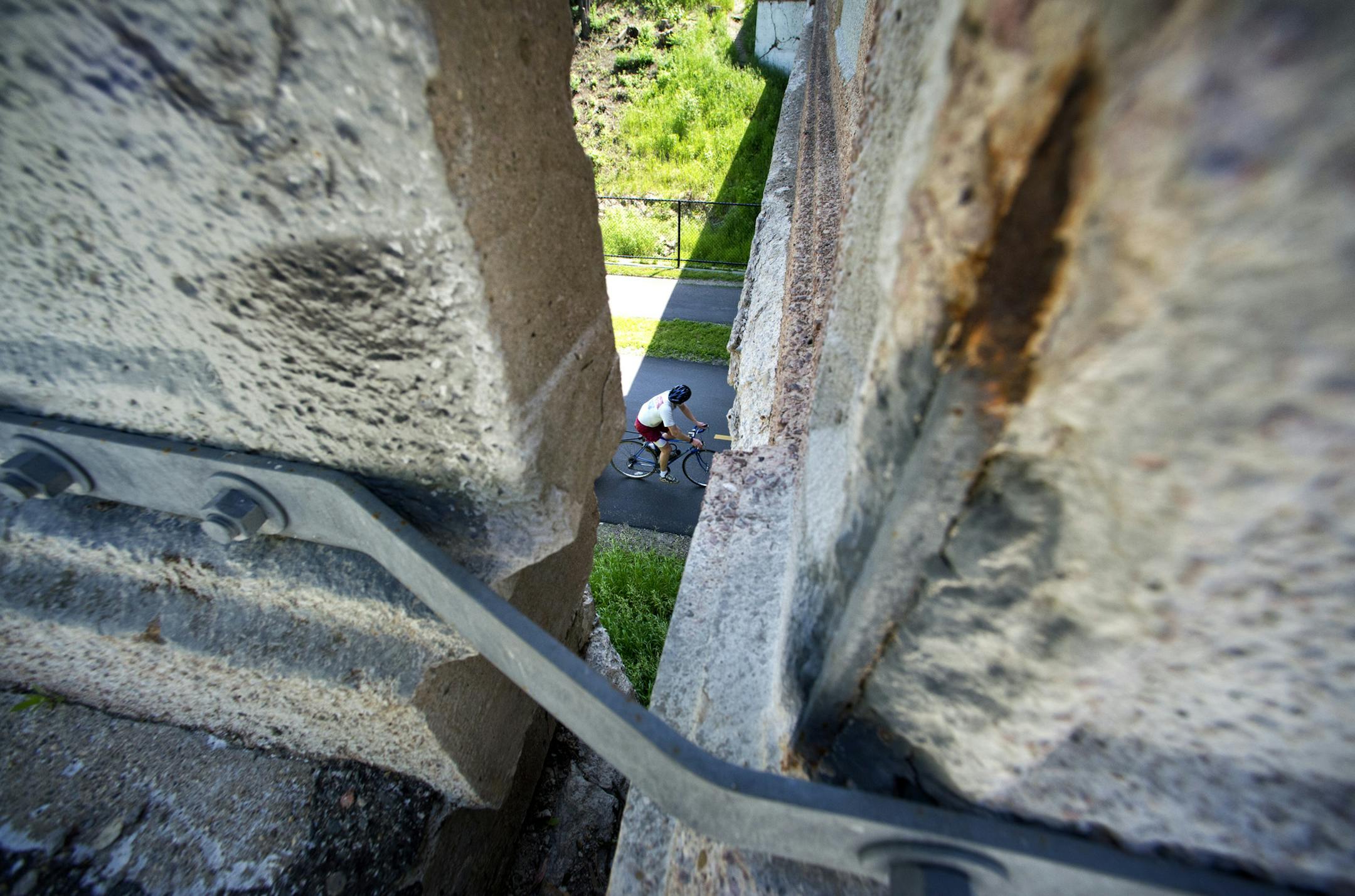
Concrete has chipped away exposing rusting reinforcement bars under Fremont Ave. S. one block north of Lake St in Uptown. A huge crack can be seen in the north wall. The bridge goes over a bicycle greenway. It is on the list of deficient bridges put out by Transportation for America. Wednesday, June 19, 2013 ] GLEN STUBBE * gstubbe@startribune.com
Eroding concrete has exposed rusting reinforcement bars under Fremont Av. S. north of Lake Street in Minneapolis. A huge crack can be seen in the north wall. (The Minnesota Star Tribune)

Minnesota has seen a bigger jump in the number of deficient bridges than all but a handful of other states, raising concerns about how the state will fix them.

There are 1,191 troubled bridges in Minnesota, a 3.5 percent rise from 2011, according to a new analysis of federal highway data. Most are under county or local control but rely on state and federal funding for much of their maintenance and repair.

The number rose even as Minnesota used revenue from an increase in gas taxes to spend more than half a billion dollars on a special program to repair and replace bridges under state control.

Commissioner Charlie Zelle of the Minnesota Department of Transportation (MnDOT) said Wednesday that program expires in 2018, and the state will need to find new money to repair and replace bridges.

"There's more challenges ahead," he said.

The condition of the nation's bridges came under intense scrutiny after the 2007 collapse of the Interstate 35W bridge in Minneapolis, which killed 13 people, and after the collapse last month of a bridge in Washington state that sent vehicles tumbling into a river.

Rep. Tim Walz, D-Minn., said cash-strapped states and local governments will be forced to consider drastic alternatives without more money to fix bridges.

"I think we'll cut off the collapse, we won't cut off the closings, and those are going to start coming at an increased rate," Walz said Wednesday.
The 66,405 bridges considered deficient by the federal government have a major defect in their support structures or decks requiring exceptional maintenance, repair or weight limits to remain in service.

About 9 percent of Minnesota bridges are considered deficient, according to the report by Transportation for America, a coalition of government, business and union officials that analyzes Federal Highway Administration data. The number of deficient Minnesota bridges climbed from 1,151 in 2011 to 1,191 this year.

About 3 percent of the bridges under state management are deficient, more than the 2 percent target set by MnDOT, but slowly declining.

But 12 percent of county and local bridges are deemed deficient and Zelle said their problems may have worsened slightly.

32nd in bad bridges

Minnesota ranked 32nd among states in deficient bridges, up from 34th in 2011, and was among 15 states that had an increase in deficient bridges.

Its 3.5 percent increase was exceeded by only five other states: Arizona, Delaware, Wyoming, Hawaii and Connecticut.

"Three, 4 percent sounds like a lot, but it's kind of a moving target," Zelle said of the increase, noting that some bridges are taken off the deficiency list and replaced by others. "We're not seriously concerned."

But Walz said the uptick in deficient bridges underscores a larger problem.

"It's depressing, but predictable," he said. "This is what happens when we don't have a long-term policy on transportation."

Congress last year passed a transportation bill that lacked long-standing dedicated federal funding for bridges. Bridge needs must now compete with other transportation priorities.

The Minnesota Legislature in 2008 passed a 8.5 cent gas tax increase for transportation, with 3.5 cents of it providing $866 million for bridge repair and replacement through 2018. Of that, $532 million already has been spent, including on such major projects as the Lafayette Bridge and Hastings Bridge.

"We're making progress," Zelle said. "The bigger issue is the longterm, beyond 2018."

Minnesota's deficient bridges have an average age of 67 years. The biggest share of bridges deemed deficient — nearly 28 percent — is in Pipestone County in the far southwestern part of the state. More than 20 percent of the bridges in Sibley, Renville and Mower counties were deficient.

Pat Doyle • 612-673-4504


Time and erosion have eaten away at the bridge at Fremont Avenue S. near Lake Street. The state will soon be seeking more bridge money.
Time and erosion have eaten away at the bridge at Fremont Avenue S. near Lake Street. The state will soon be seeking more bridge money. (The Minnesota Star Tribune)
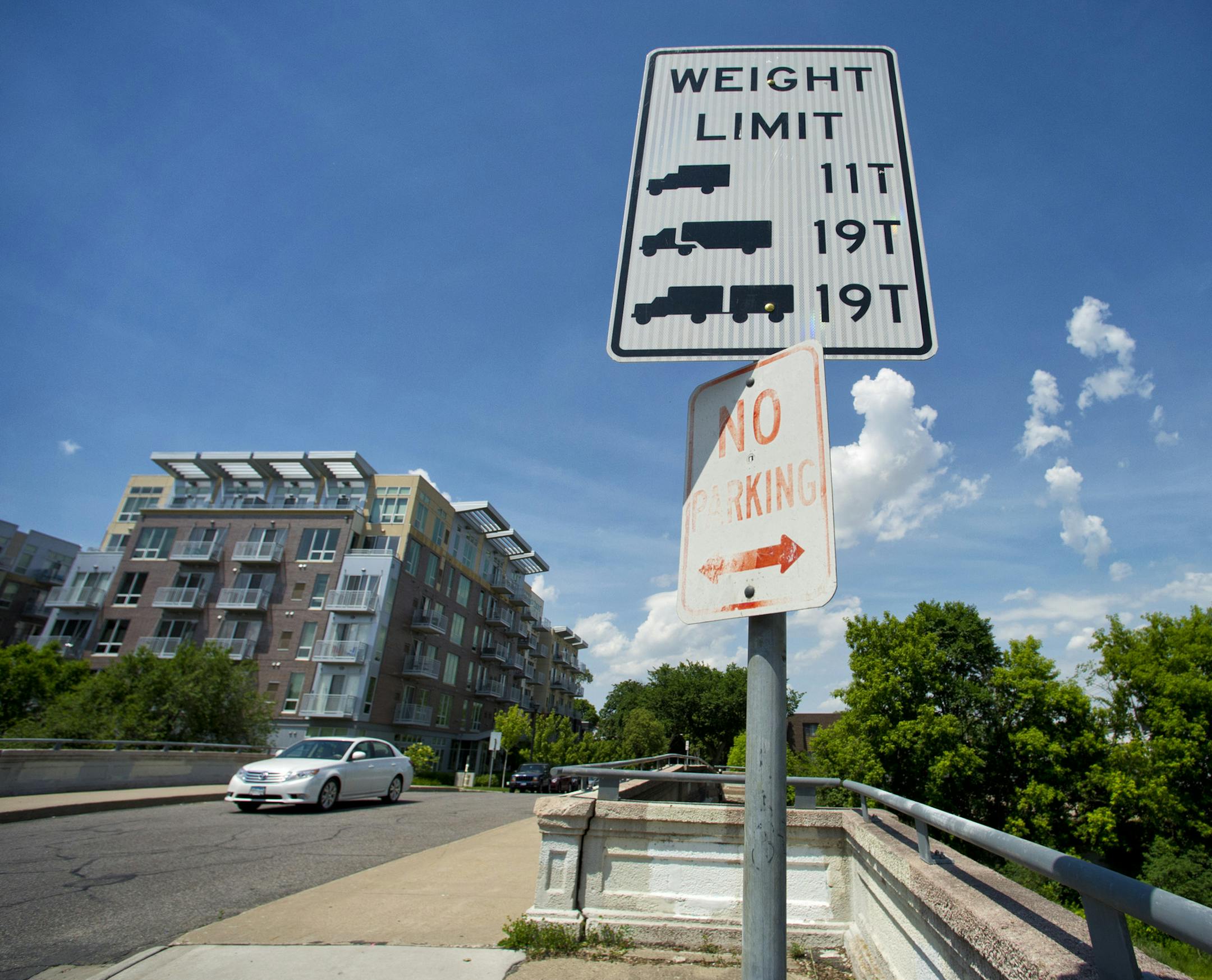
A commonly seen sign on the state’s bridges indicates the weight limits of each structure. Minnesota was among 15 states that had an increase in deficient bridges last year.
A commonly seen sign on the state’s bridges indicates the weight limits of each structure. Minnesota was among 15 states that had an increase in deficient bridges last year. (The Minnesota Star Tribune)
about the writer

about the writer

Pat Doyle, Star Tribune

More from No Section

See More
FILE -- A rent deposit slot at an apartment complex in Tucker, Ga., on July 21, 2020. As an eviction crisis has seemed increasingly likely this summer, everyone in the housing market has made the same plea to Washington: Send money — lots of it — that would keep renters in their homes and landlords afloat. (Melissa Golden/The New York Times) ORG XMIT: XNYT58
Melissa Golden/The New York Times

It’s too soon to tell how much the immigration crackdown is to blame.