

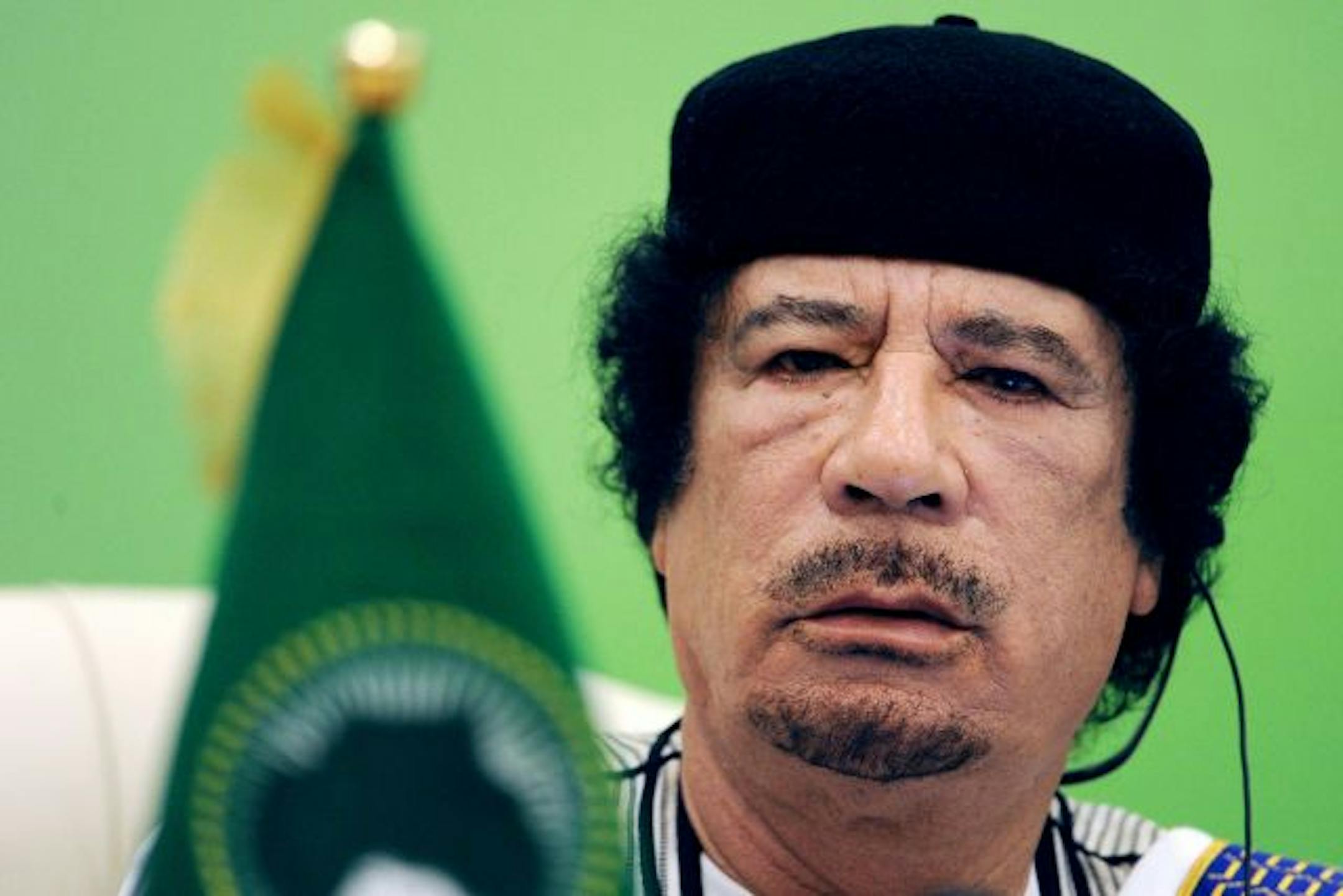
Libyan leader Moammar Gadhafi, his son Seif, and his chief of military intelligence, Abdullah al-Sanoussi, are wanted men.
Not just by Libyan rebels fighting what has become a civil war, or by NATO forces prosecuting a United Nations mandate to protect civilians, but now by the International Criminal Court in the Hague, which on Monday issued arrest warrants for them for crimes against humanity.
The indictments are a welcome, but also complicating, development.
A legal framework has now been established to hold the three accountable for murdering peaceful protesters. (Gadhafi has a decades-long history of terrorism, but the indictment only covers Libya's version of the "Arab Spring.")
While the wheels of international justice grind slowly, they can eventually work, as in the case of two former presidents similarly indicted, Liberia's Charles Taylor and Serbia's Slobodan Milosevich.
Gadhafi has clearly lost legitimacy with most Libyans, just as he long ago did with Western governments. Now other world leaders have incentive to isolate him the same way they do Sudanese President Omar Bashir, who also faces an indictment from the court.
But the indictment may also complicate attempts to find a diplomatic settlement to the war. That scenario most likely would have involved Gadhafi fleeing Libya and seeking asylum in another country. The few countries that may have been willing to take him now may not, for fear that they would be pressured to turn him in.
Despite the diplomatic difficulties, the indictments are still legally and morally right. And besides, Gadhafi has shown no inclination to explore diplomacy. Instead, he appears set to fight to the finish.


