

Opinion editor's note: Editorials represent the opinions of the Star Tribune Editorial Board, which operates independently from the newsroom.
•••
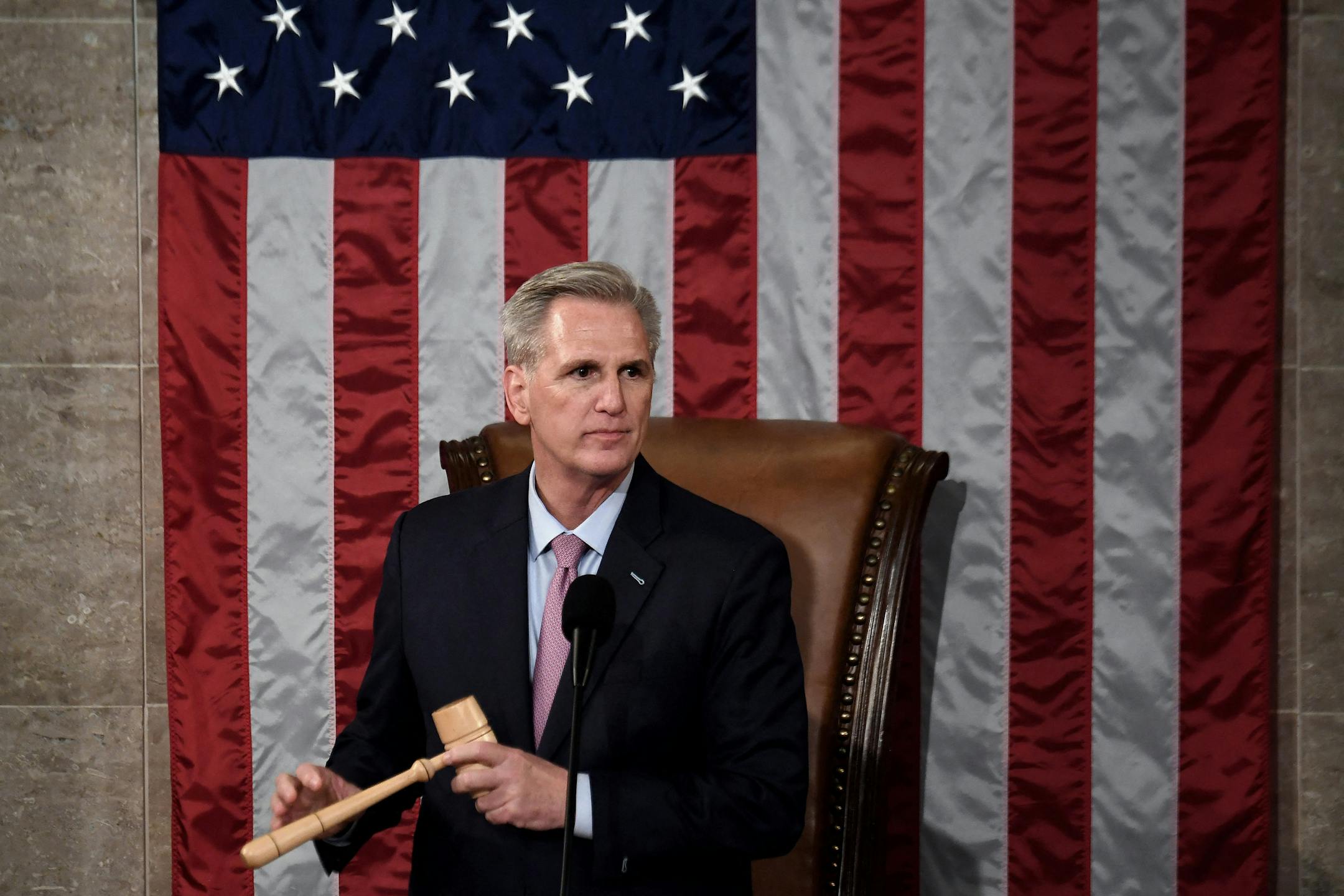
After a brutal 15-ballot floor battle that included untold concessions, GOP Rep. Kevin McCarthy realized his life's ambition to become speaker of the U.S. House, but the cost could be far steeper than imagined.
For this is no ordinary political victory. The House Republican Caucus remains deeply divided, and its most extreme members, the so-called Freedom Caucus, have now proven that they can go toe-to-toe with McCarthy and force him to grovel. That could be an ominous harbinger on various issues, but most notably on raising the U.S. debt ceiling.
Raising the debt ceiling is a leftover from last month's lame-duck session. Democrats, then marginally in control of the House and Senate, were confronted with a pile-up of issues and opted to vote on what they could rather than risk everything in a protracted battle over the debt ceiling. At stake were a massive appropriations bill needed to sustain government funding and the Electoral Count Reform Act — a vital safeguard for democracy. To be sure, the result was a Hobbesian choice, since failure to pass the appropriations bill would have resulted in a government shutdown.
Yet the debt ceiling continues to loom as a potential threat to the U.S. and even the world economy. Congressional action is needed to raise the level of debt the U.S. can incur to pay its current obligations. If the ceiling is not increased, temporary measures must be taken to finance the government. According to the Committee for a Responsible Federal Budget, once the government hits the ceiling and runs out of temporary measures, "it is no longer allowed to issue debt and soon after will run out of cash-on-hand." The unthinkable result would be a default on current obligations, including Social Security payments, federal employee salaries and veterans benefits.
Republicans' continued willingness to act as if this were just one more wedge issue, one more political game, is irresponsible. The last most serious threat in this game of chicken came in 2011 when Tea Party Republicans (forerunners of today's Freedom Caucus) threatened to let the U.S. default on debts. A deal finally arrived after weeks of negotiations, with just two days to spare. Nevertheless, the stock market was thrown into turmoil, and the government's credit rating was downgraded for the first time in U.S. history.
Extremists in the Republican caucus have already demonstrated no compunctions about gun-to-the-head negotiations. Rep. Matt Gaetz, R-Fla., at one point boasted that "I ran out of things I could even imagine to ask for" in the McCarthy negotiations. It seems unlikely that they would be moved by a potential default.


