

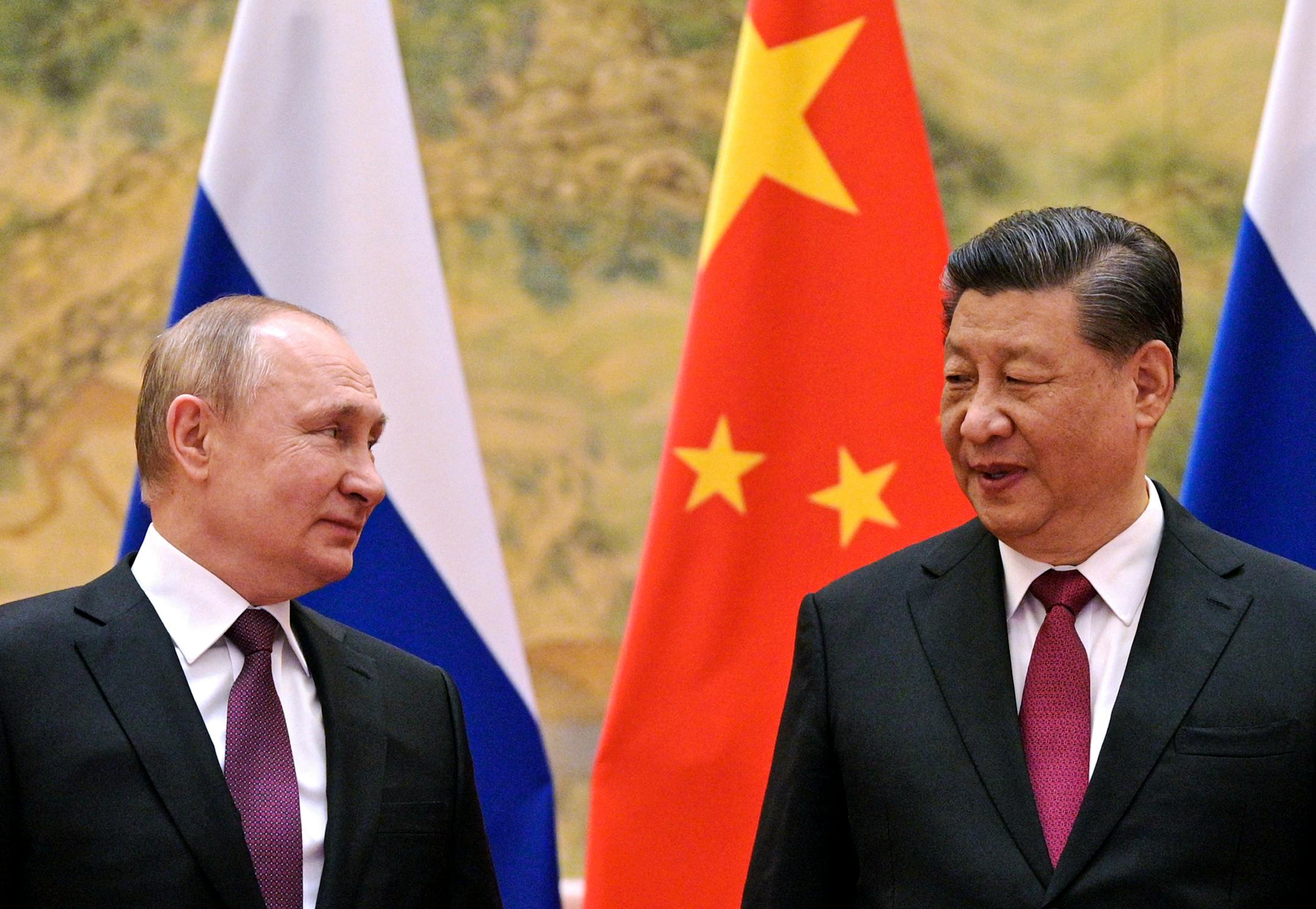
With every passing day, the war in Ukraine becomes a bigger tragedy for the Ukrainian people but also a bigger threat to the future of Europe and the world at large. There is only one country that might have the power to stop it now, and it's not the United States. It's China.
If China announced that, rather than staying neutral, it was joining the economic boycott of Russia — or even just strongly condemning its unprovoked invasion of Ukraine and demanding that it withdraw — it might shake Vladimir Putin enough to stop this vicious war. At a minimum, it would give him pause, because he has no other significant ally aside from India in the world now.
Why would President Xi Jinping of China take such a stand, which would seemingly undermine his dream of seizing Taiwan the same way Putin is attempting to seize Ukraine? The short answer is that the past eight decades of relative peace among the great powers led to a rapidly globalizing world that has been the key to China's rapid economic rise and the elevation out of poverty for some 800 million Chinese people since 1980. Peace has been very good for China. Its continued growth depends on China's ability to export to and learn from that world of steadily integrating and modernizing free markets.
The whole Faustian bargain between the Chinese Communist Party and the Chinese citizenry — the CCP gets to rule while the people get to be steadily better off economically — depends to a significant degree on the stability of the global economy and trading system.
To Chinese strategists caught up in old-think — that any war that weakens modern China's two primary rivals, America and Russia, has to be a good thing — I would say the following: Every war brings with it innovations (new ways to fight, win and survive), and the war in Ukraine is no exception.
We have already seen three "weapons" deployed in ways we've never seen before or not seen in a long time, and China would be wise to study them all. Because if China doesn't help stop Russia now, these weapons will either ultimately hammer Putin into submission — which means they might be used against China one day, should it seize Taiwan — or damage Russia so badly that the economic effects will radiate everywhere. These weapons might even prompt Putin to do the unthinkable with his nuclear arms, which could destabilize and even destroy the global foundations on which China's future rests.
The most important innovation in this war is the use of the economic equivalent of a nuclear bomb, simultaneously deployed by a superpower and by superempowered people. The U.S., along with the European Union and the United Kingdom, have imposed sanctions on Russia that are crippling its economy, critically threatening companies and shattering the savings of millions of Russians at an unprecedented speed and scope that bring to mind a nuclear blast.
Putin has now figured that out — and said so explicitly Saturday: The U.S.- and E.U.-led sanctions are "akin to a declaration of war." (Vladimir, you haven't felt the half of it yet.)


