Twin Cities nurses and hospitals turned their bitter labor standoff into a surprise settlement Thursday, concluding a suspense-filled day of secret talks and averting the biggest nursing strike in U.S. history.
The 3 p.m. announcement stunned many members of the Minnesota Nurses Association, who had been bracing for a strike Tuesday. Instead of striking, they'll be voting on the agreement that day. At 1 a.m. Wednesday, the two sides had grimly broken off negotiations and announced that there was "no reason to talk." But by 11 p.m., they had quietly returned to the bargaining table and hammered out a tentative agreement, which was formally endorsed by the union leadership Thursday.
As part of the agreement, the union gave up what it had called its central demand -- mandatory nurse-to-patient staffing ratios. It agreed instead to work on staffing concerns through existing hospital committees. The union also accepted the hospitals' pay offer: no wage increase the first year, then 1 and 2 percent increases in the next two years.
In exchange, the hospitals dropped their proposed cuts to nurse pensions and changes in health insurance and other benefits. The union told members that its negotiators had successfully fought off "all the hospitals' takebacks and concessions."
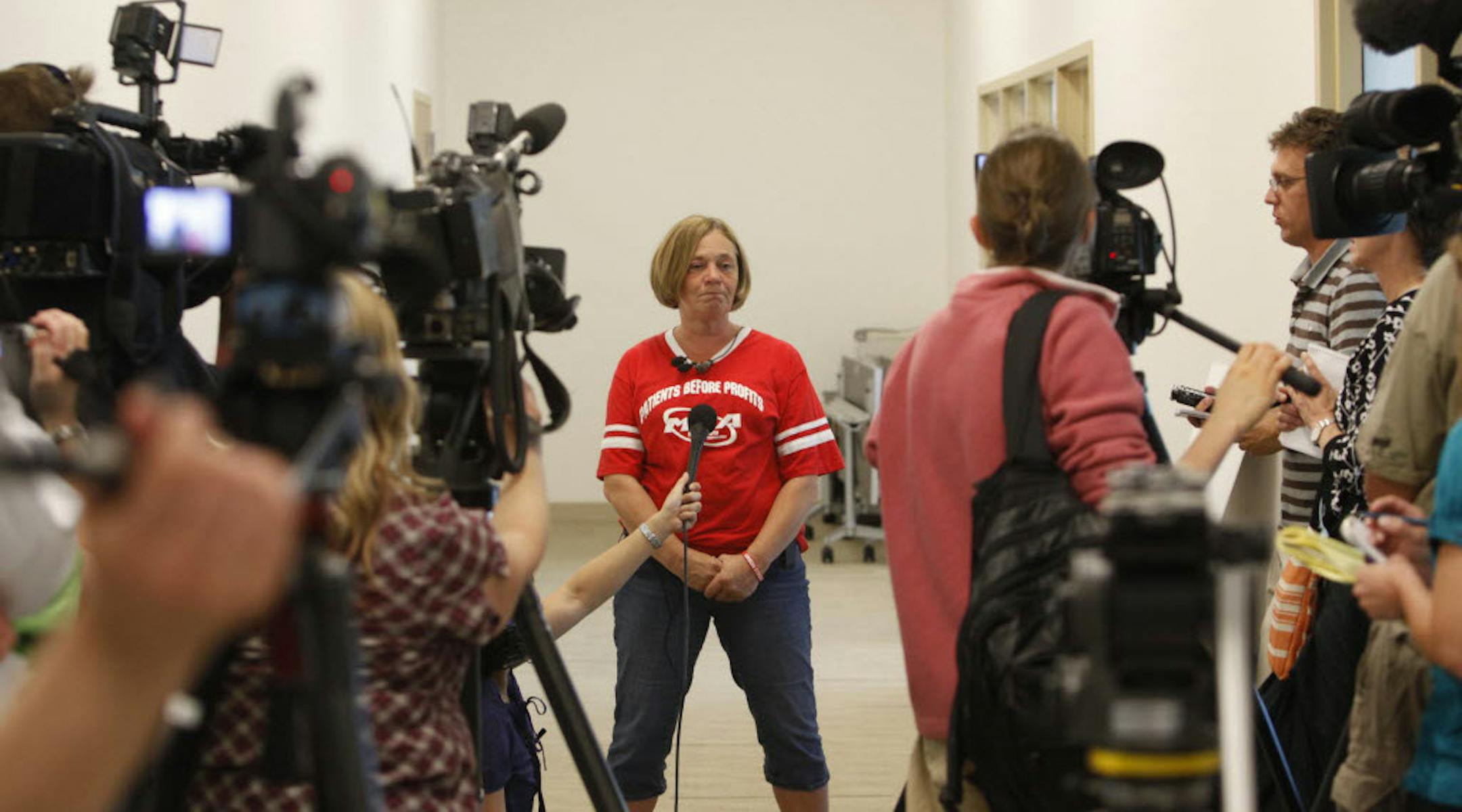
"I know it's not everything I hoped for in a contract," Cindy Olson, a member of the nurses' bargaining committee, said at news conference at union headquarters. "But they haven't gutted my profession either."
Olson, a nurse at St. John's Hospital in Maplewood, added: "When you go on strike nobody wins."
The agreement must be ratified by a majority of voting members, the union said.
"It's a win for both sides -- the fact that they figured out how to continue doing their jobs for the people of the Twin Cities," said Aaron Sojourner, who teaches labor relations at the University of Minnesota. "They realized that coming to terms is better than going on strike."