

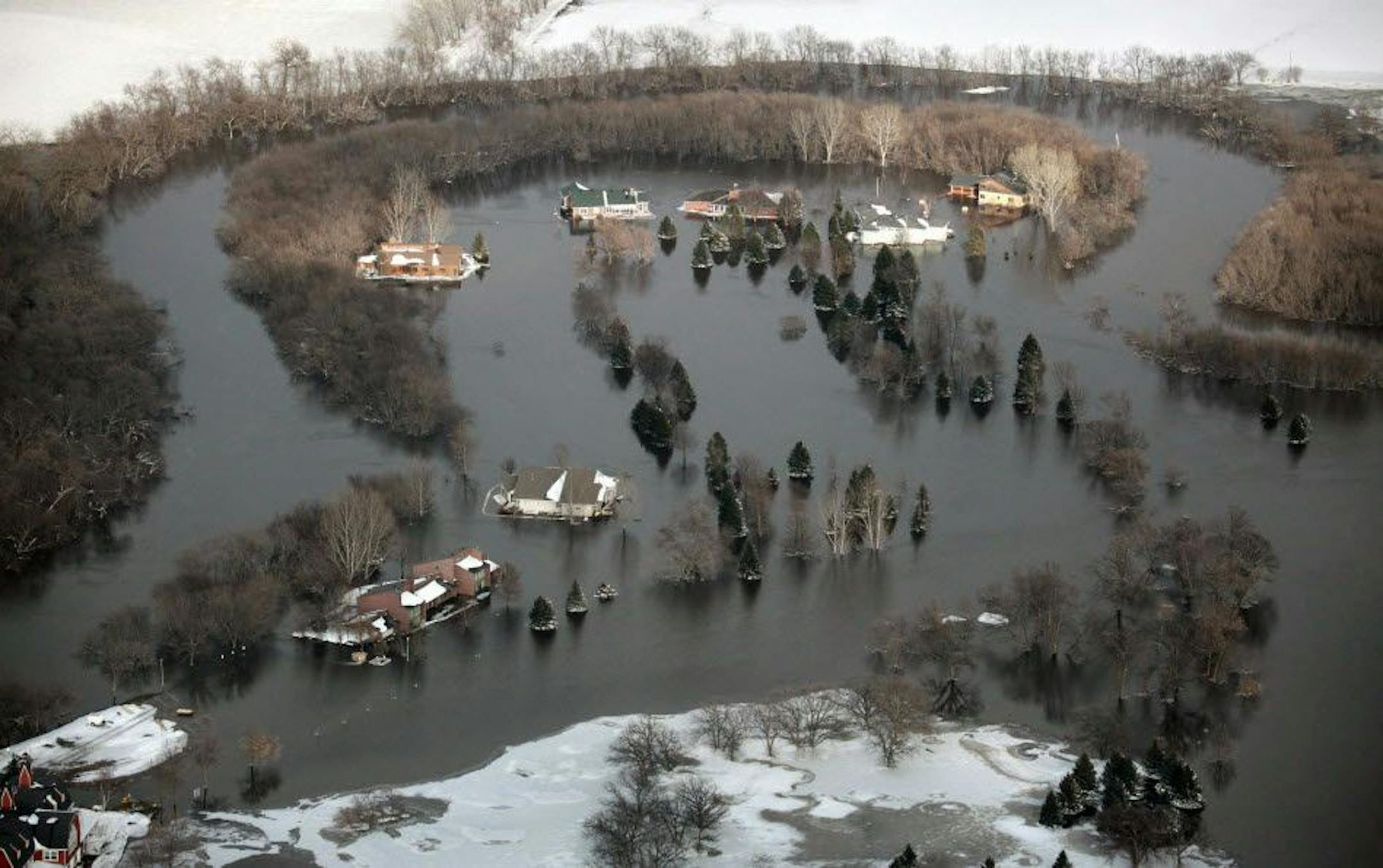
Moorhead, Minn., and Fargo, N.D., share a border, a river and a problem.
Many springs, when the snow starts to melt, the Red River of the North rises, threatening both cities with millions of dollars in flood damage. How to control that flooding is a question that is driving a $2 billion wedge between two neighboring states.
The U.S. Army Corps of Engineers has proposed a $1.8 billion flood control project. The Fargo Moorhead Diversion would erect a dam across the Red, dig a 36-mile-long trench around Fargo and send the spring melt spilling back into surrounding countryside — including acres of good Minnesota farmland that now sit safely above the flood zone. That plan, in its current form, might prove to be "unacceptable," Minnesota Gov. Mark Dayton warned last week.
"Governor Dayton and his administration will do everything possible to ensure that Minnesota's best interests are not trampled by this project," Dayton spokesman Matt Swenson said.
Congress has authorized the Fargo Moorhead Diversion. North Dakota is on board. Minnesota, however, is withholding approval until its Department of Natural Resources completes a detailed study of the diversion's effects on the environment and the Minnesota farmers and communities in its path. That report is expected to be released next May.
But while Minnesota studied the plan, North Dakota was forging ahead with the plan's next stage — breaking ground last month on construction of a large ring levee that will surround and protect three small North Dakota towns that would be in the path of floodwater diverted from Fargo. The construction irked Minnesota officials, who saw it as North Dakota jumping the gun. After construction began, the DNR sought to join in a lawsuit filed by project opponents.
"Flood relief which would greatly benefit North Dakota, and would damage property in Minnesota, is unacceptable, as are attempts to override our state's environmental review procedures and permitting authority," Swenson said.
Diversion authority officials say the levee is a North Dakota project, built with North Dakota money, on North Dakota soil. The levee was needed to protect the towns of Oxbow, Hickson and Bakke from floods, regardless of the diversion project.


