

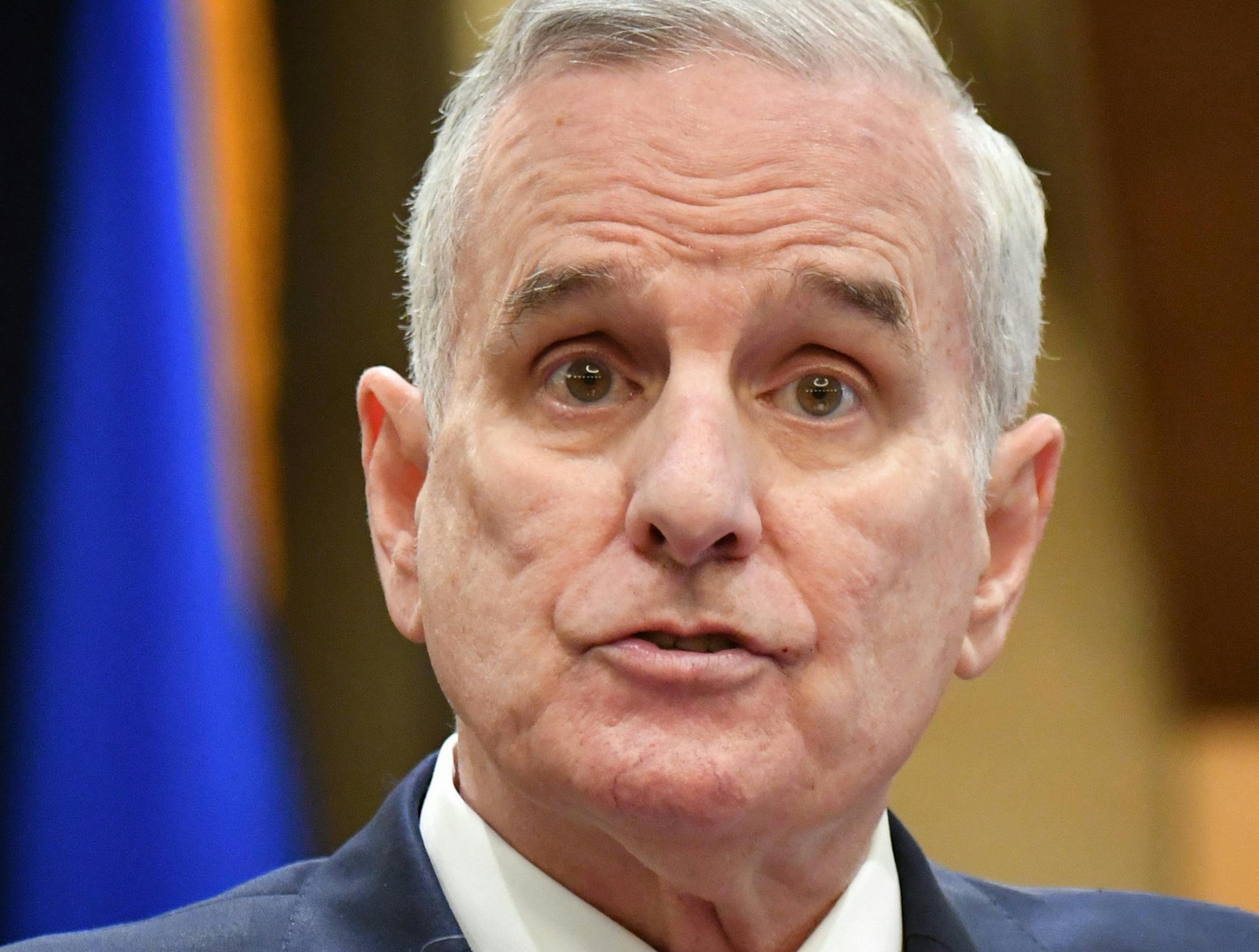
Aging technology and a growing threat of cyberattacks on Minnesotans' private data are reasons the state should spend another $125 million to update and protect its IT systems, according to Gov. Mark Dayton and his administration.
"Our technology systems are the lifeblood of how we keep government running," said Thomas Baden, Minnesota IT Services commissioner, at a Tuesday news conference. "Millions of Minnesotans' private data is at risk."
Dayton's two-year, $45.8 billion budget plan, released last week, includes a handful of provisions specifically aimed at upgrading and securing the state's technology systems. Those systems process millions of paychecks, tax returns and payments to cities, school districts and social service organizations, and the officials who manage them say they are increasingly out of date and vulnerable to hacking.
The state fends off up to 3 million separate attempts to compromise sensitive information each day — and must act quickly to stay ahead of the problem, Baden said.
The governor's budget plan, now being considered by legislative committees, includes $51 million for upgrades to IT systems and another $74 million for IT security improvements. Among the security spending plans: making the state's data center more physically secure, hiring more employees to focus on cybersecurity and purchasing new software that can fend off hackers.
Baden said the state is battling an increasingly sophisticated range of cyberattacks, which come from up to 150 countries each day. He said hackers often try to access private data by sending out official-looking requests to state employees or by posing as Minnesota residents. In one such attack, Baden said, a hacker got into a state employee's e-mail and sent a message to all state employees, requesting sensitive information. He said the state was able to shut down that attack within 10 minutes.
Officials said those heightened threats are complicated by the fact that many of the state's IT systems are either soon to be out of date or so old that the state has a tough time finding people who know how to fix problems when they arise.
Baden said that means old technology can turn into a new risk to public safety.


