

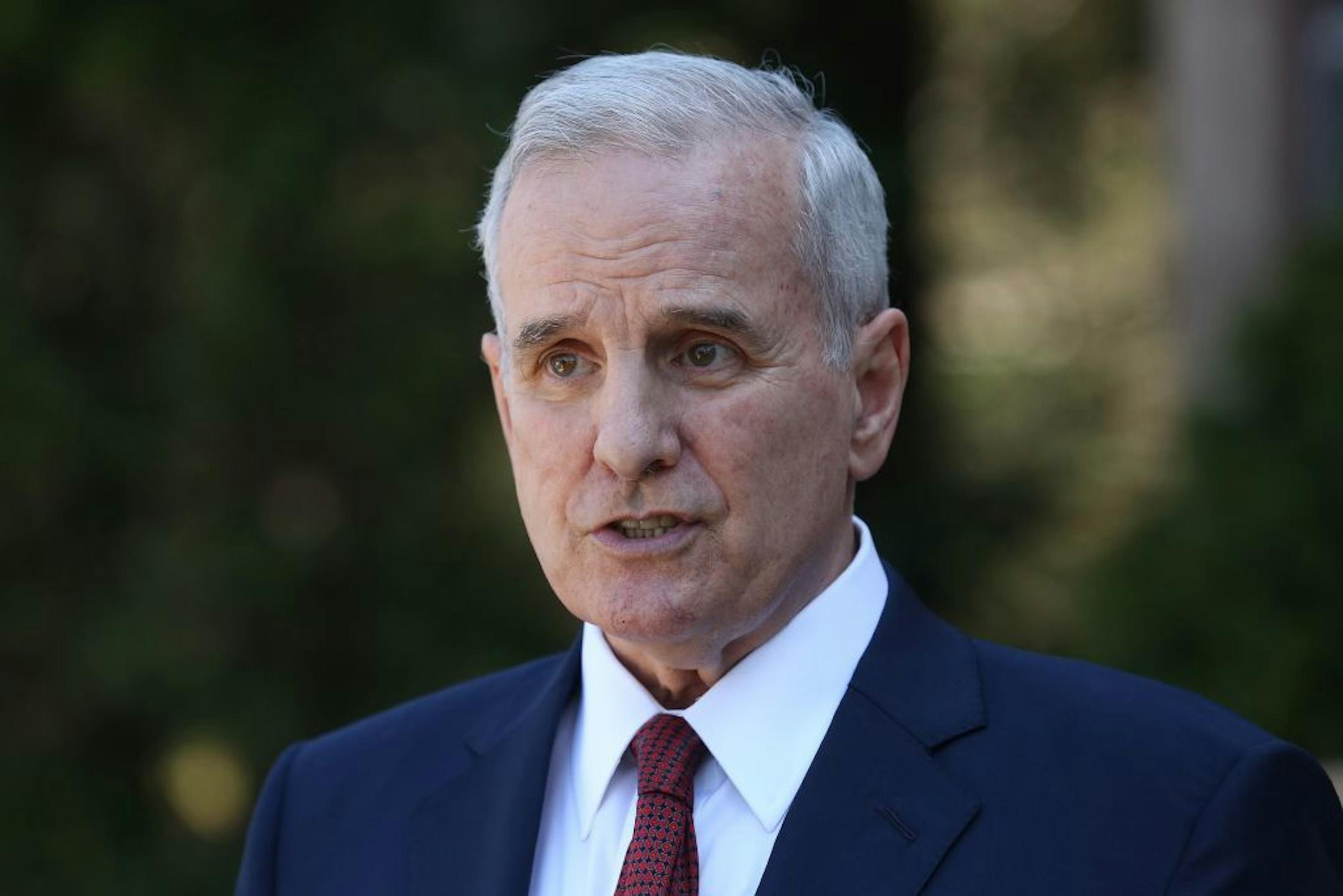
Gov. Mark Dayton on Wednesday saw two of his key initiatives take a thumping in the Legislature, by both parties.
The DFL-led Senate, in approving its education budget bill, moved no closer to Dayton's goal of universal preschool. The House, meanwhile, sent a symbolic message on Dayton's wholesale gas tax plan to fix the state's roads and bridges, rejecting the proposal in a rare unanimous vote.
With less than three weeks left until the Legislature is expected to pass a two-year budget, wide gulfs in competing proposals from the two legislative bodies and Dayton are expected to make for difficult end-of-session negotiations.
Dayton reaffirmed that he does not plan to cede any ground on his top priorities, even as House Republicans passed a $2 billion tax plan Wednesday that would wipe out most of Dayton's proposals. The bill passed 74-58 late in the evening on a mostly party line vote.
Dayton acknowledged the gap in priorities. "We're a long way apart on matters of improving policy measures, and a long ways apart on overall budget targets," Dayton said. "I'm not going to back down on things I've identified as absolutely essential to have and absolutely essential for Minnesota not to have."
The Dayton administration called in an assist from U.S. Education Secretary Arne Duncan, who visited a North St. Paul elementary school Tuesday to voice support for Dayton's universal preschool plan. "I can't overstate how important this is, and I hope, I just really hope this state doesn't squander this opportunity," Duncan said.
Despite the continued push, the DFL-led Senate on Wednesday went a different route on early-learning initiatives. Senators approved a $17 billion education budget, which includes a $70 million boost for school readiness programs aimed at preparing 3- and 4-year-olds for kindergarten. That's only a fraction of the $343 million Dayton has requested in the upcoming biennium for his universal preschool plan.
Senate Education Chairman Chuck Wiger, DFL-Maplewood, said school readiness programs, which have existed for more than 20 years, are proven and give school districts flexibility in tailoring prekindergarten programs. "There has not been a substantial investment in this for many years," he said.


