

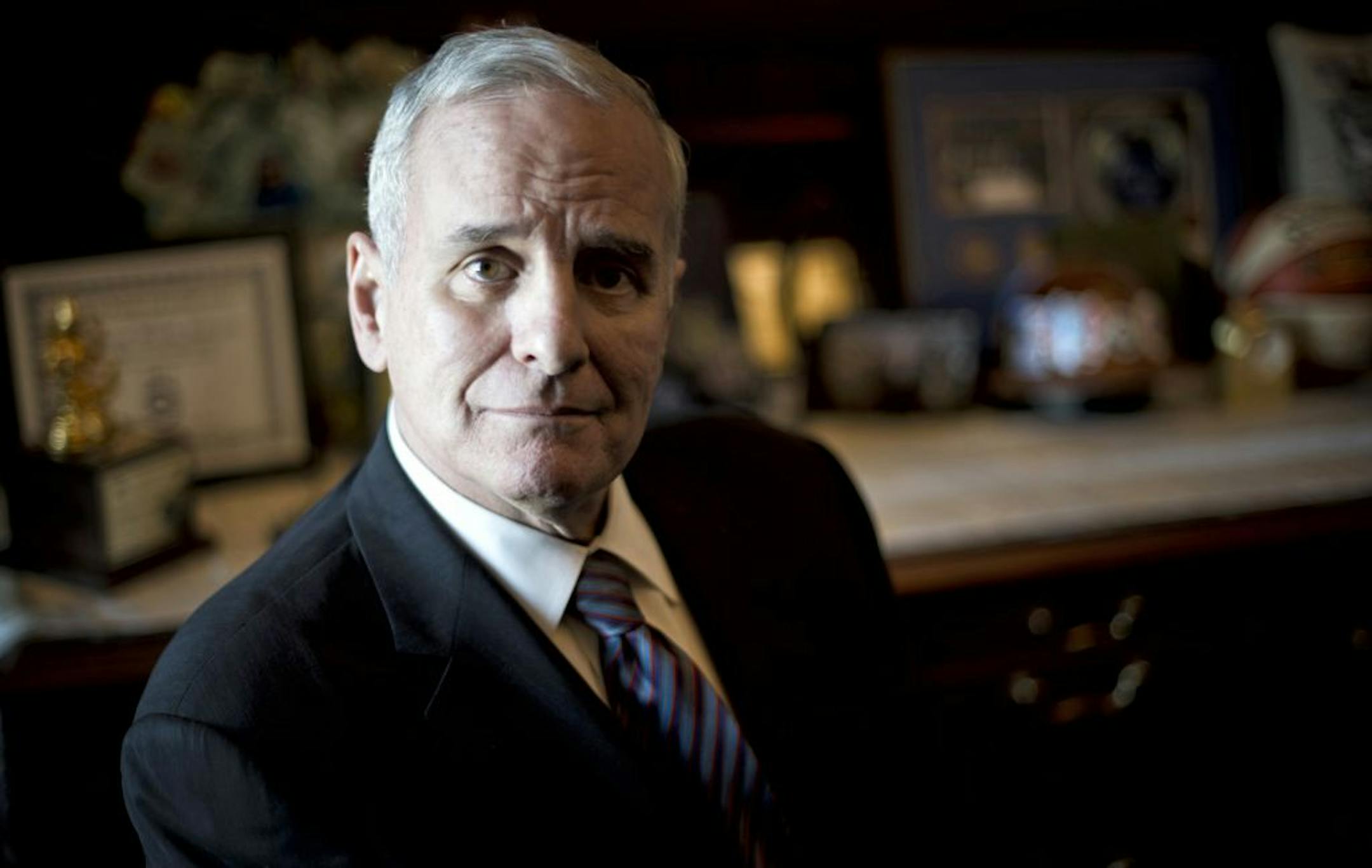
Gov. Mark Dayton's plan to boost aid to college students could provoke a bigger debate about who gets the extra help.
Dayton's budget proposal, announced last week, would add $80 million to the state's grant program -- the same dollar increase he proposed for the University of Minnesota and the Minnesota State Colleges and Universities systems.
That's "historic," said Larry Pogemiller, director of the Minnesota Office of Higher Education. If passed, it would bump up the State Grant Program's total funding by 25 percent, he said, the greatest increase in 25 years.
"It's a recognition that the financial aid system has not kept up with what's really going on in higher ed," Pogemiller said.
Dayton's proposal for the grants, which students could use at colleges of their choosing, comes as states and think-tanks across the country study whether college students' financial aid could be structured in new ways to encourage graduation.
"There's a lot of soul-searching going on right now about the financial aid system," said Donald Hossler, a professor of educational leadership and policy studies at Indiana University at Bloomington. "Have we really got this right? Might there be ways to do it better?"
The state's public, nonprofit and for-profit colleges and universities often debate the complex math behind the grants, which is based largely on family income but also takes into account things like the price of a college. "It's a wicked complicated formula," said Chris Halling, MnSCU's financial aid director.
MnSCU spokesman Doug Anderson praised the governor's grants proposal , saying it "will help remove financial barriers for students."


