

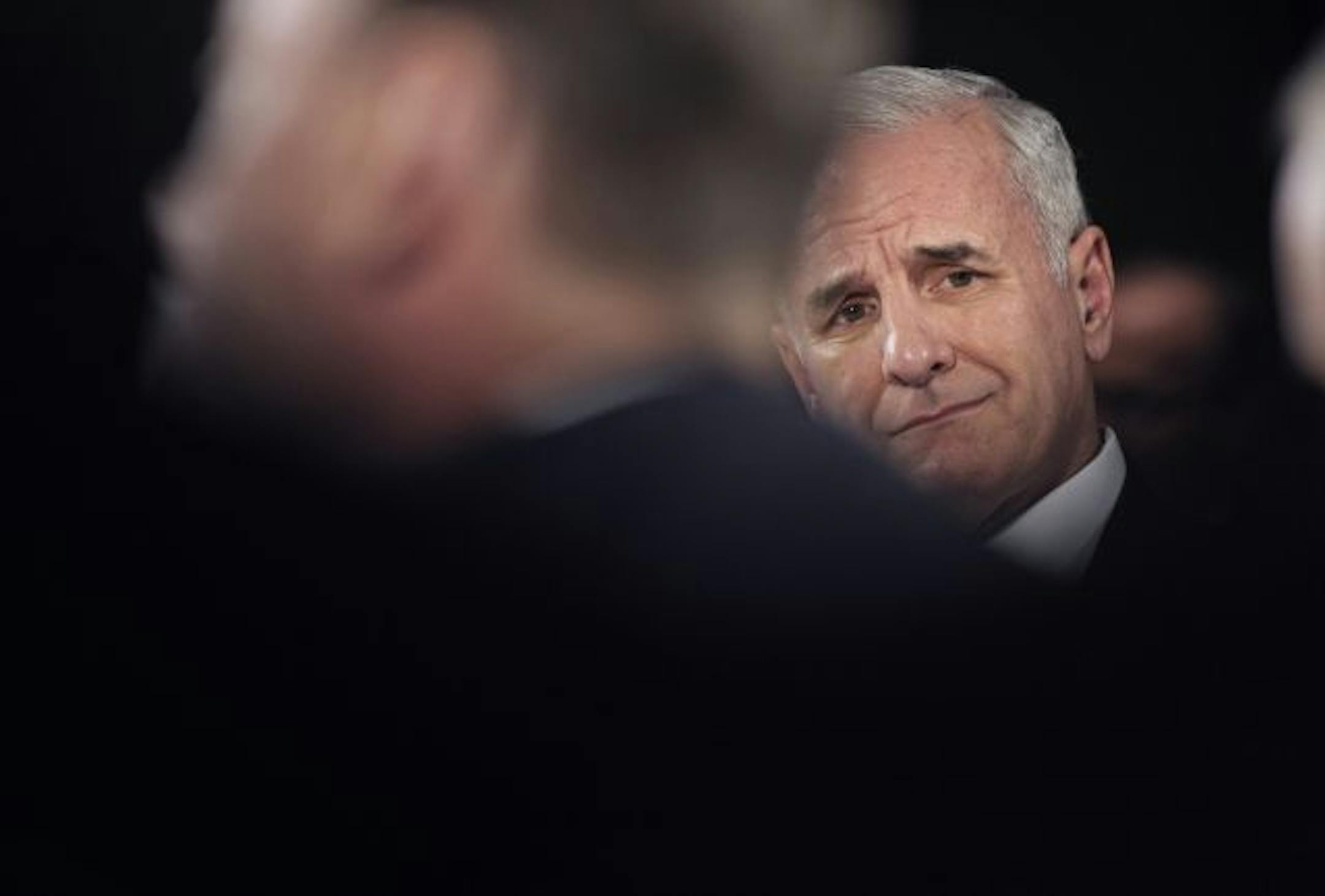
WASHINGTON - Amid a raging national budget debate, Minnesota Gov. Mark Dayton played the new kid on the block at the winter meeting of the National Governors Association, staying in the background and generally avoiding the movable press scrums that make up much of this annual policy and schmooze fest.
"I'm here to listen," said Dayton, the state's first DFL governor in two decades and one of a record 29 fresh faces following a mass turnover in last year's elections. Against a background of budget and labor battles in Wisconsin and other states, Dayton was among 20 Democratic governors this weekend who seem determined to avoid friction with their state's public employee unions.
"Minnesota has already made some of these common sense and difficult decisions that Wisconsin is now addressing," Dayton said.
Compared to some of Dayton's recent predecessors, his low-key tone was one of style as well as substance. As governor, Jesse Ventura couldn't avoid a crowd at these meetings, and former Gov. Tim Pawlenty, in Washington Monday for a fundraiser, used his leadership role in the NGA as a springboard for a potential White House bid.
Dayton, by contrast, downplayed any broader agenda. Accompanied by three aides, he moved easily around the conference -- which included an audience with President Obama -- without much fuss from the national media.
Arriving a day early to meet with Obama administration officials, Dayton and the other Democratic governors emphasized job creation, largely avoiding Gov. Scott Walker's standoff with public employee unions in Wisconsin, a drama that has gripped the nation.
"Most of us see that as a distraction from the most important [thing] we can do to create jobs," said Maryland Gov. Martin O'Malley, chairman of the Democratic Governors Association.
As Dayton and the other governors prepare for partisan battles over their own state budgets, they set aside their differences in Washington to call on Congress not to do anything to increase financial burdens on the states, which face a collective $175 billion shortfall in the next two years.


