

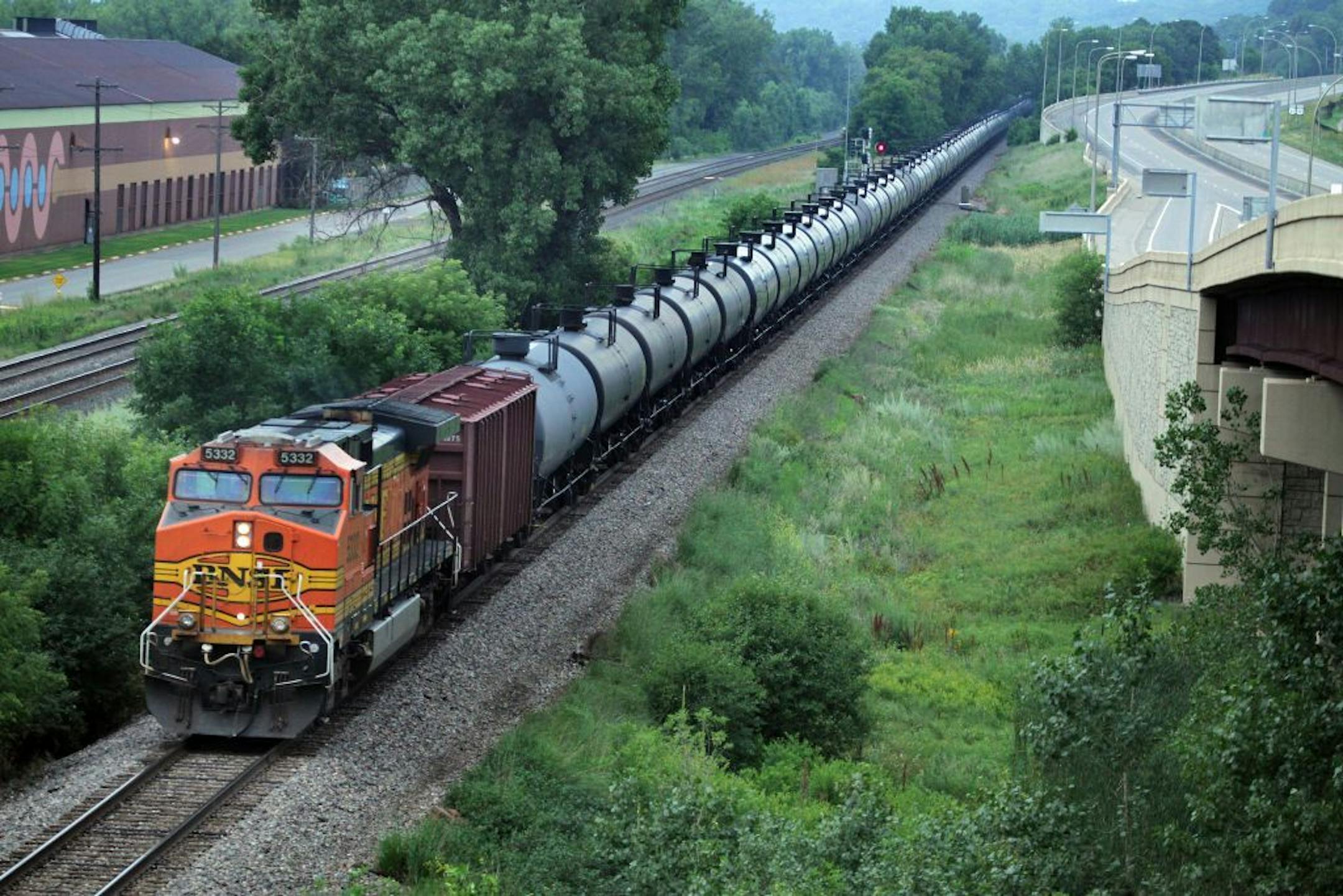
Suburban St. Paul officials told Gov. Mark Dayton on Monday that communities across the state need more money and training to prepare for the possible catastrophe of a train loaded with volatile oil exploding as it rumbles through Minnesota.
With the volume of North Dakota oil rolling through Minnesota continuing to grow, the need for greater coordination, training and preparedness is becoming increasing desperate, they told the governor in Little Canada at the first of several meetings scheduled for cities from Moorhead to Winona in the coming week.
Over and over Monday, Dayton heard emergency planners worry about how volunteer fire departments in small cities would handle a major explosion or fire.
There's just not a lot of information out there on how to respond to a 50-car oil train disaster, said Doug Berglund, director of emergency management for the Washington County Sheriff's Office.
"I think it's too early for us to know exactly what needs to be done," he told Dayton. "It can get pretty expensive when it's on the scale we're talking about." To beef up training and preparedness will take more money than the federal government currently offers, he said.
"The question is, are there critical gaps?" Dayton said Monday. "Is there a way to figure out what's missing so that people are better informed — and better trained — when something happens?"
Public Safety Commissioner Ramona Dohman said her office will begin offering training next month on the basics of emergency preparedness regarding oil trains. She called such training "Bakken 101," a reference to North Dakota's Bakken oil fields.
Rep. Frank Hornstein, DFL-Minneapolis, said the Legislature is trying to get a better handle on rail and pipeline safety. A total of $13 million will be spent over the next three years to study and improve the safety of rail and pipelines that carry crude oil across the state. About $2 million of that will be for improving the most dangerous grade crossings, he said.


