

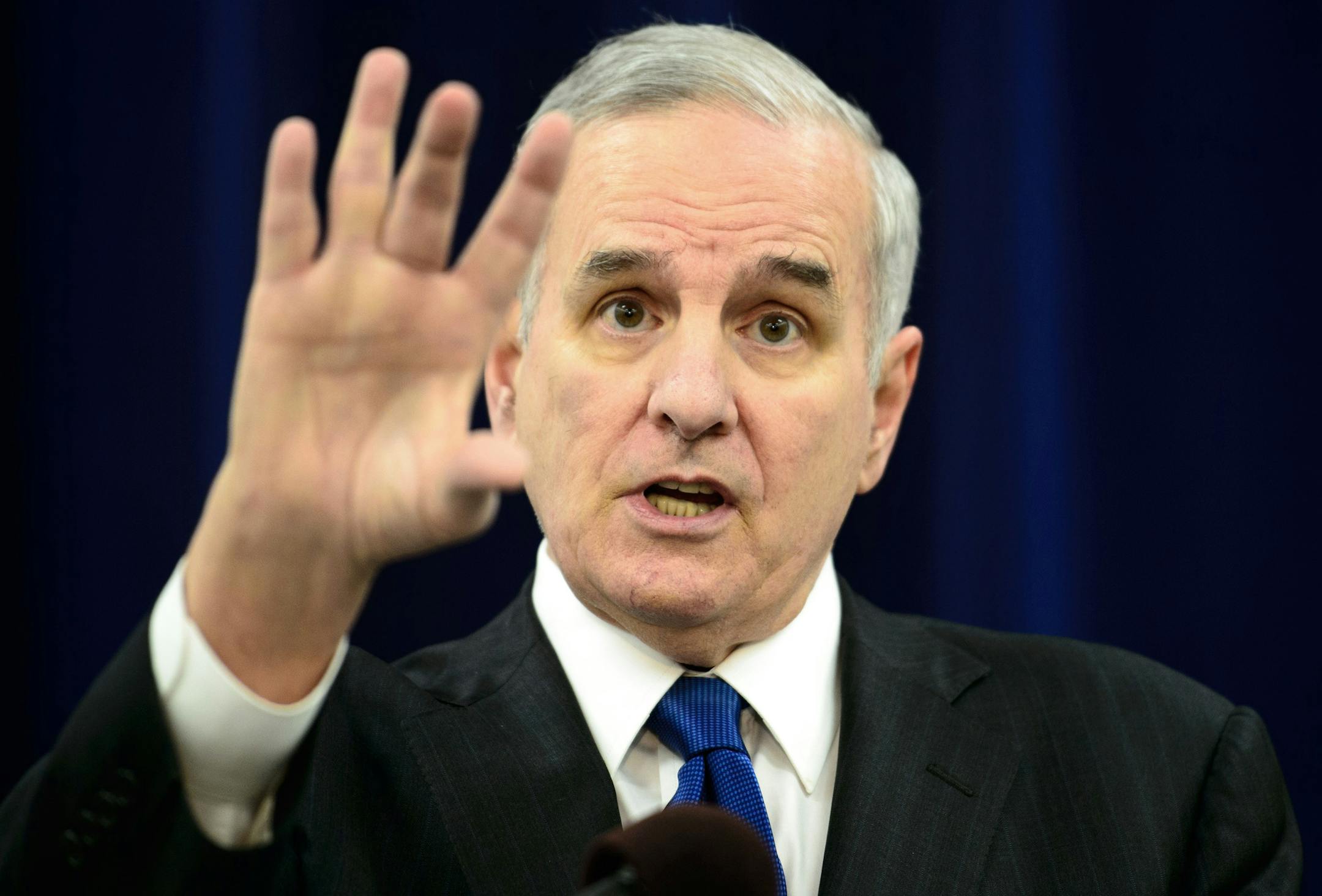
Gov. Mark Dayton said Wednesday he is strongly considering a ban or limits on state taxpayer-funded travel to Indiana, in response to a new law in that state that has prompted a harsh nationwide blowback from gay rights supporters.
"I abhor the actions taken by the Legislature and governor of Indiana," Dayton told the Star Tribune. "I'm heartened to see even the Republican mayor of Indianapolis has distanced himself. I think they have done significant damage."
Should Dayton issue the ban, he will become the fourth governor to do so in the past week. That's when Republican Gov. Mike Pence of Indiana signed the "Religious Freedom Restoration Act," which purports to protect the right of religious expression. But critics see it creating a legal basis for discrimination by business owners, landlords or others on the grounds of religious objections to homosexuality.
Several prominent Minneapolis politicians have already gone a step further than Dayton. On Wednesday, the Minneapolis Fire Department canceled a planned trip to a conference in Indianapolis after Mayor Betsy Hodges called for a moratorium on city-funded travel to Indiana. City Council President Barb Johnson is planning to introduce such a resolution at Friday's council meeting.
"Until the governor and the Legislature repeal the law, enact protections for LGBT people, or both, I don't think we should betray Minneapolis residents' values by spending public dollars in Indiana, or put Minneapolis public employees at risk there," Hodges said in a statement.
Several Democratic mayors and governors around the country have taken similar steps in recent days. Governors of Connecticut, New York and Washington have prohibited official state travel to Indiana, as have mayors in Denver, San Francisco, Seattle and Washington D.C. In most cases, the bans allow some measure of flexibility in the event such travel is somehow essential.
Dayton said his office was a bit behind in responding because he was out Monday and Tuesday after oral surgery, but he said he hopes to announce an official response of some sort within 48 hours. He said the mechanics of a travel ban are "complex and multifaceted," and suggested there should be some sort of exemption for travel deemed essential.
"We are considering now what we can legally and properly do without overreaching, and setting up a situation where you're telling state employees they can't go to Indiana for some resolution of a public issue," Dayton said.


