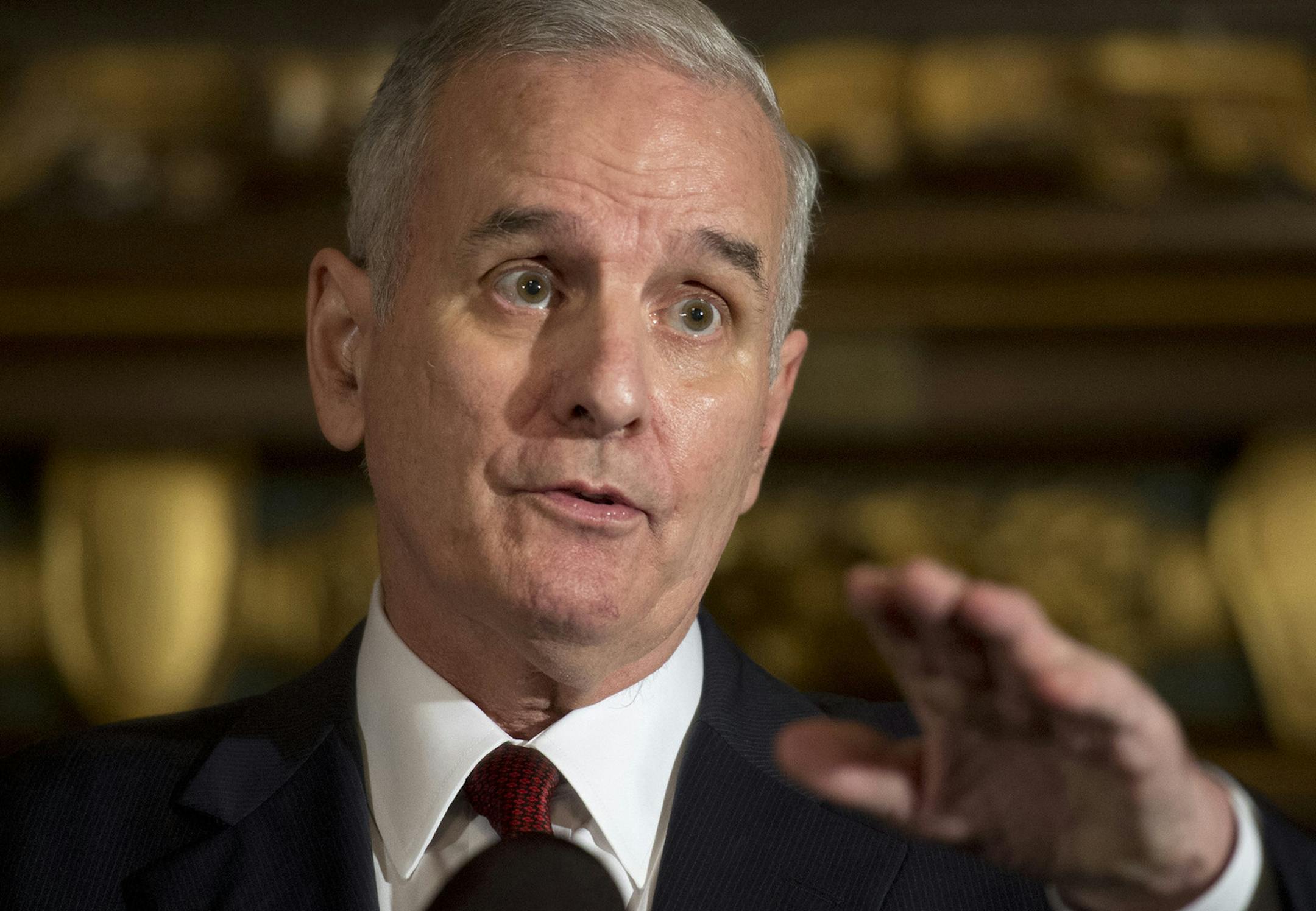
Minnesota Gov. Mark Dayton said Thursday that there was no signed agreement or "heads up" that Bureau of Criminal Apprehension investigators would handle high-profile cases for the Minneapolis Police Department before Chief Janeé Harteau made the plan public on Wednesday.
Dayton said he first learned of the plan on Monday evening and contacted Public Safety Commissioner Mona Dohman, whose office oversees the BCA. Dohman, who was also unaware of the proposed change, contacted Harteau on Tuesday to "express clearly that we had real concerns about this, that it hadn't been handled properly."
To his surprise, Harteau went ahead the plan Wednesday, saying that state investigators would take over criminal investigations of Minneapolis police officers whenever someone was killed or seriously injured as a result of police force, or when the chief deems it necessary.for other officer-involved incidents.
"The fact that this very public announcement was made without any forewarning to myself or Commissioner Dohman; consultation and just a heads up that they're going to do this, announce it, is very inappropriate," Dayton said in a Thursday news conference on an unrelated topic.
Harteau said earlier that Minneapolis police officials and the BCA had discussed collaborating since summer and had met as recently as last Friday. She maintained that at the end of that meeting, they agreed the new policy would be effective Monday.
Dayton said he was not criticizing the plan, but the way it was handled. He did note that when the BCA is called upon to handle criminal investigations for other departments, "It's the exception to the norm."
That, he said, "is a lot different from automatically referring every critical incident at the (Minneapolis) chief's discretion to the BCA, with the assumption that the BCA's just going to automatically take it."
BCA protocol calls for the agency to assist in investigations of homicides or other serious crimes, terrorism, and some felonies if there are special circumstances. Internal affairs cases are investigated only with the signoff the BCA superintendent or assistant superintendent.
"I don't see why Minneapolis felt the need to try to establish a special arrangement." he said. "The status quo was working. Minneapolis could have, according to the Commisioner, for the last number of years gone to the BCA under the same terms as any other city, received the same consideration as any other city and received the same assistance as any other city. You didn't need to have some grand press announcement as though it's a reform effort in Minneapolis. I've really got to question why it was handled the way it was."