

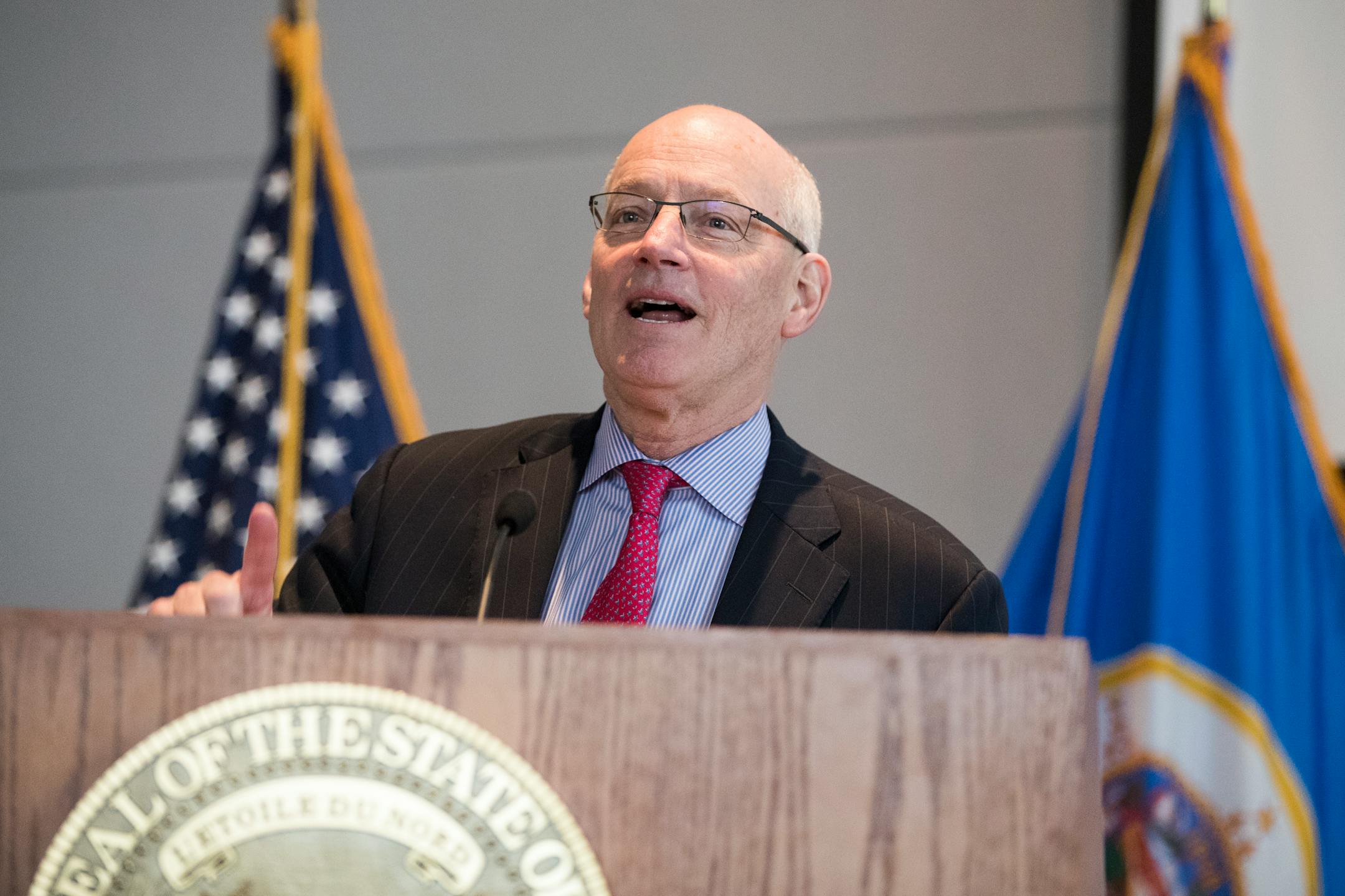
Gov. Mark Dayton's budget director on Wednesday blasted legislative Republicans for relying on what he called "alternative math" in their spending proposals, which he said would hurt critical services provided by the state of Minnesota.
Commissioner Myron Frans of Minnesota Management and Budget said he would advise Dayton to veto the Republican-crafted bills, which together comprise the GOP's blueprint for spending more than $40 billion in taxpayer funds in the next two years.
With about six weeks left in the legislative session, Frans' comments — and an equally sharp response from House Speaker Kurt Daudt, R-Crown — raise the prospect of the kind of politically contentious, messy finale that in recent years produced multiple special sessions and a government shutdown.
"This is setting up a dynamic that just doesn't look very fruitful," said Frans, who alleged that the Republican budget measures contain "fake savings."
Daudt responded with his own charge of "fuzzy math" from the administration and noted their criticism came before Republicans even finished approving all the budget measures. House and Senate votes on a series of spending measures have come in recent days, accompanied by lengthy debates.
"The governor talking about vetoing bills before we've even passed them takes this rhetoric here at St. Paul to a whole new level," Daudt said.
Minnesota is projected to have a $1.65 billion surplus over the next two-year budget cycle, and Dayton and GOP leaders are split on how best to use that money. Dayton's $46 billion budget plan includes new spending on priority areas like education and transportation and modest tax breaks for some Minnesotans, and it leaves about $200 million on the state's bottom line.
House Republicans would spend about $1 billion less on state programs than Dayton and propose to use the bulk of the surplus — $1.35 billion — on tax cuts and credits. Senate Republicans approved a $900 million tax cut, spending increases on transportation and targeted cuts similar to those in the House plan. Both the House and Senate would reduce or cut spending on a wide range of state departments and programs.


