

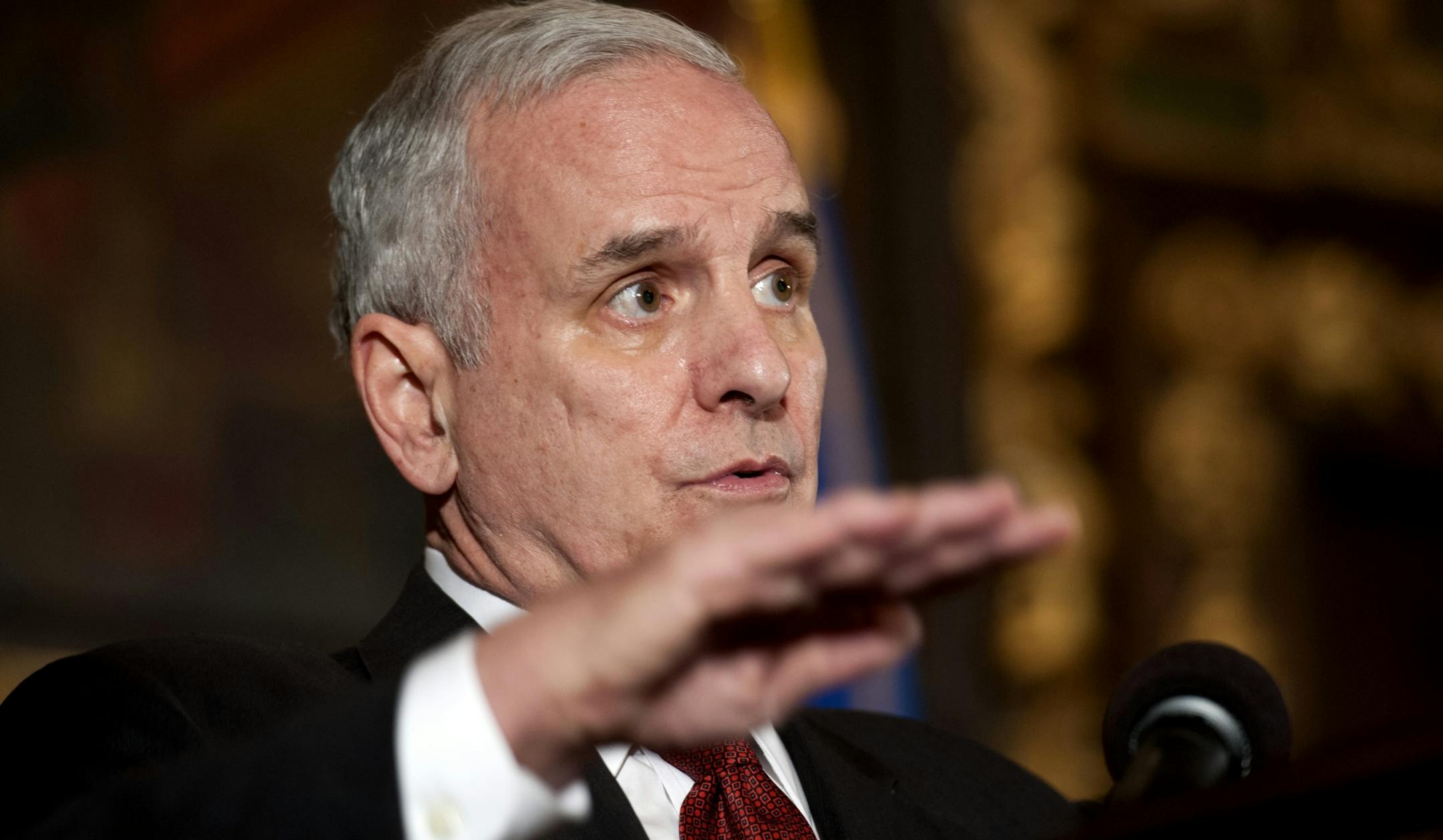
Gov. Mark Dayton is embarking on what could be the most dramatic overhaul of the state tax system in a generation.
After years of careening from one budget crisis to the next, the alarm bells are sounding everywhere: Minnesota's corporate income tax rate is among the highest in the nation, yet many businesses don't pay it. The sales tax rate is the highest in the region, but includes the least amount of goods and services. Legal fees, food, clothing, architectural plans, baby bottles and feminine hygiene products all are exempt. And over time, the state has carved out obscure tax breaks for an array of powerful industries, including mining companies, hospitals and even ski hills.
Minnesota collects $16 billion in taxes every two years. But in that same period, another $11 billion goes out the door in tax breaks. Legislators even exempted their own stipends from taxation.
If Dayton is to succeed, he must overhaul the tax system without causing a wobble in an already fragile economic recovery and do it in a way that appeals to Minnesotans' sense of fairness. He also must contend with a chorus of Republicans ousted from power who remain fiercely committed to blocking tax hikes.
"Everything is a minefield," said Minnesota Revenue Commissioner Myron Frans. "The last thing we want to do is do something that would somehow be viewed as a roadblock or hindrance to any kind of economic growth."
Emboldened by a new, DFL-controlled Legislature, the Democratic governor stands to eliminate certain corporate tax breaks, expand the sales tax and finally make good on a campaign pledge of raising state income taxes for the highest earners.
The goal, Dayton has said, is to create a more stable revenue stream, more predictability in state budgeting and a more modern tax system that can match the shifting dynamics of the economy.
The last time the state embarked on such an endeavor was in the late 1980s, years before the first Internet purchase and long before income tax rate reductions siphoned $11 billion from state coffers. Now the tax system is out of whack, in Dayton's view, relying too little on sales and income tax and far too heavily on property taxes.


