

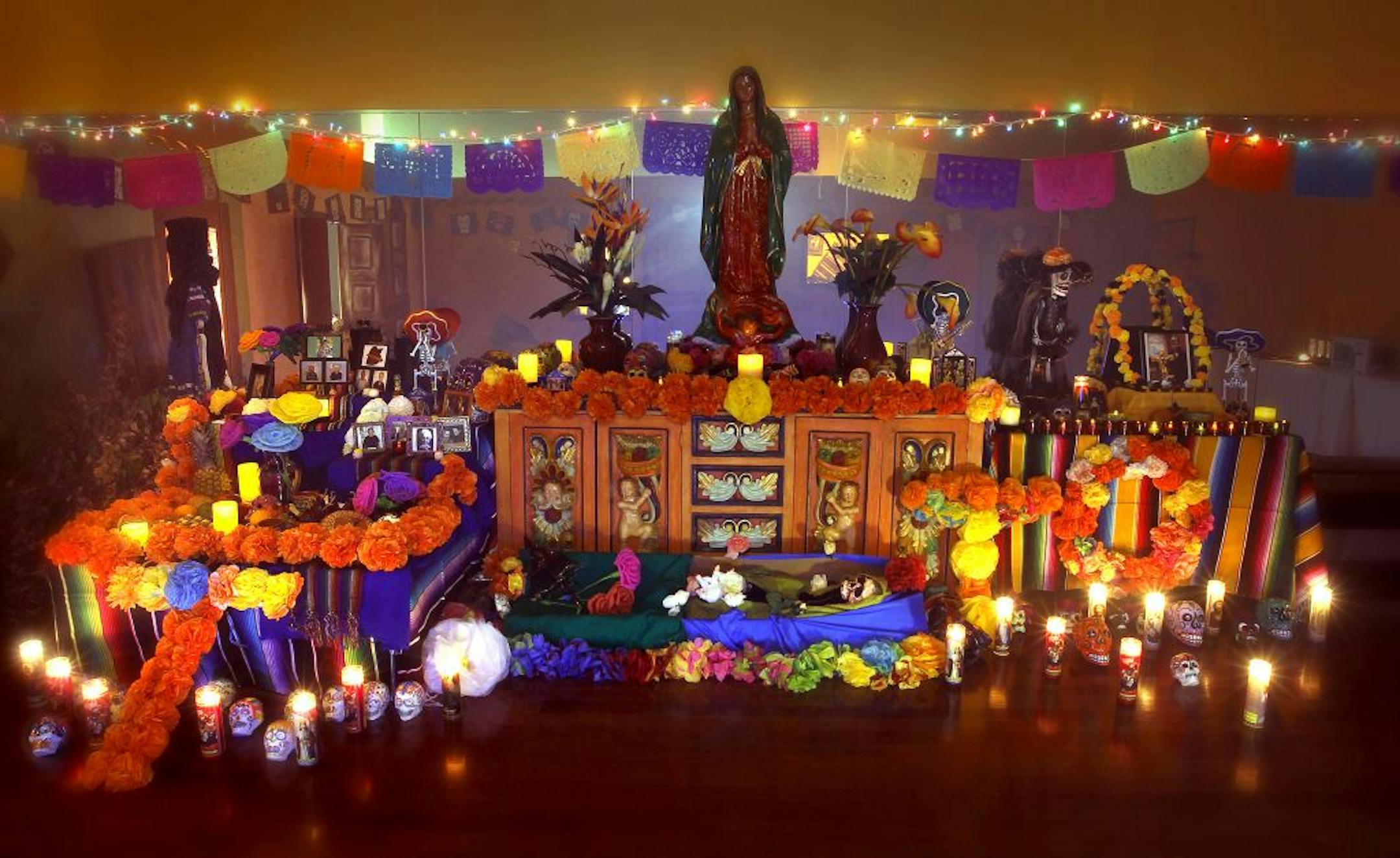
No matter how many times Marlon Ferrey warns school groups before he leads them into the Day of the Dead exhibit at Centro community center, "They think something is going to pop out and try to scare them," he said. "It isn't going to happen, but I can understand why they think that way."
The kids see the skeletons and intricately decorated skulls, and they hear the stories about how the holiday often is marked by people bringing food, flowers and candles to cemeteries, where they hold parties that can last late into the night. With all of this coming during the height of the Halloween season, it's only natural that they would jump to the wrong conclusion, he acknowledged.
"It's a very festive, very happy holiday," said Ferrey, the artistic and cultural director of Centro at 1915 Chicago Av. S. in Minneapolis. "It's not supposed to scare people."
The holiday's roots go back 3,000 years. Typically celebrated Nov. 1-2, it's primarily associated with Mexico, but other Latino cultures also mark the event, "although to a lesser extent," Ferrey said.
In Minnesota, the number of people taking part in Day of the Dead festivities is difficult to judge because participants celebrate both publicly and privately. Many build private altars, called ofrendas, in their homes, he said.
It's a time of remembrance that is closer in purpose to Memorial Day than Halloween, said Ana Luisa Fajer, general consul at the Mexican consulate in St. Paul.
"The belief behind Day of the Dead practices is that spirits return to the Earth for one day of the year to be with their families," she said. "The spirits are greeted with offerings of food and things that the person enjoyed in life: beans or rice or tamales or, yes, tequila. It's about celebrating more than about mourning."
Susana De Leon, director of the Twin Cities-based Kalpulli KetzalCoatlicue Aztec dance troupe, which performs at Day of the Dead celebrations, said that tone of the holiday is a major difference from Halloween.


