

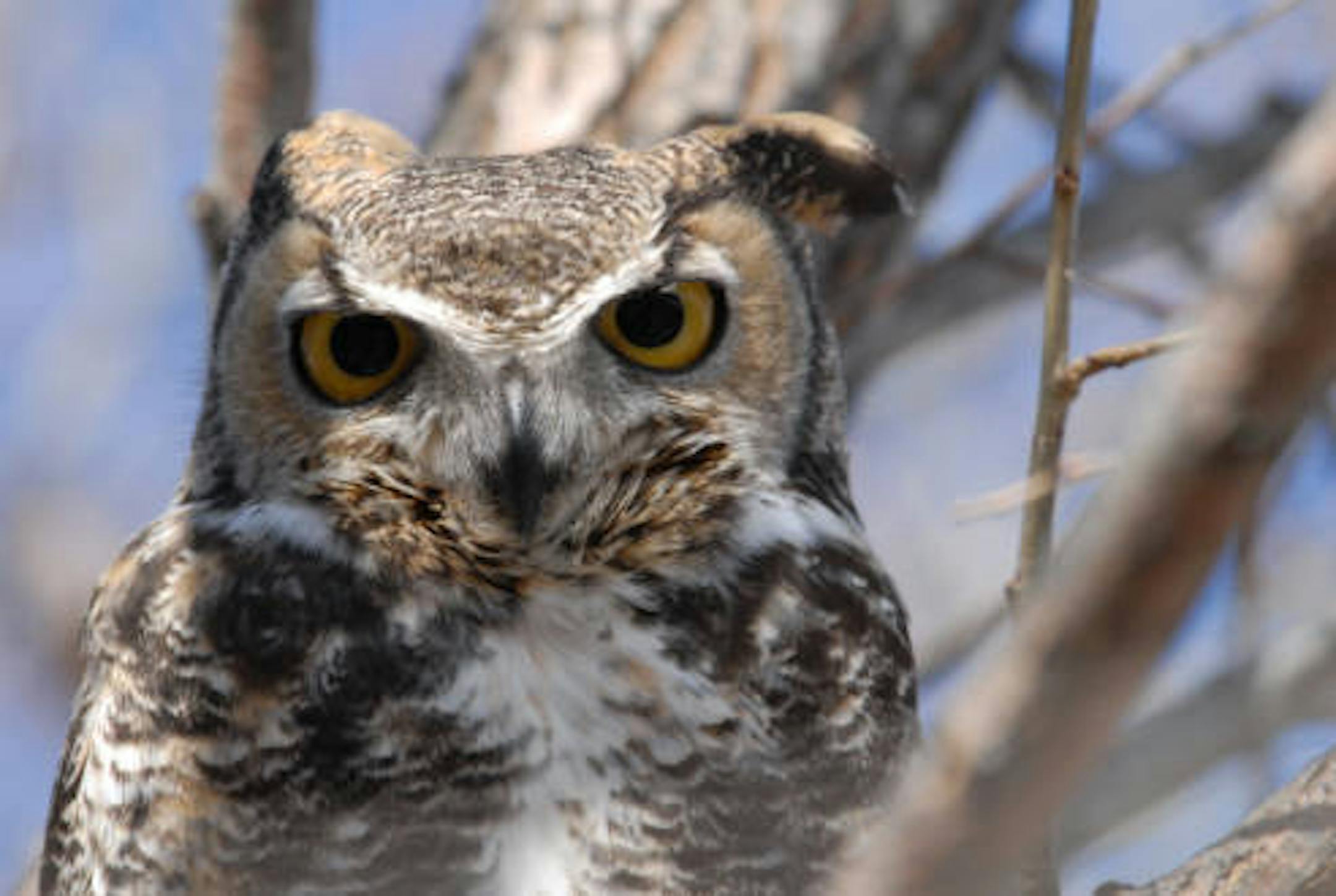
Because great horned owls go into crow roosts at night to take crows for food, we often see bands of American crows chasing and generally harassing owls in the daytime. I have witnessed this several times. The voices of the crows carry the hysterical fear of their nights over into the day. They know it's possible that owls will come to the crow roost and repeat the ritual.
Mobbing is the customary response of birds to certain predators that pose a threat, such as cats, foxes and large snakes. Presumably this behavior has survival value to the mobbers by drawing attention to the whereabouts of a killer. When owls are discovered, the action that best ensures survival of the local birds seems to be exposing the enemy by mass display, and even chickadees and other small birds can be seen engaged in this activity against small owl species like the saw-whet. Since crows must spend a good part of their day finding and eating food, they eventually lose interest in the owl, and the mobbing response ends.
American crows are seen regularly in winter in the southern half of the state. They have a wingspread of about three feet and weigh about a pound. They gather in communal roosts, sometimes containing thousands, no doubt for safety. I know of at least two large roosts in Minneapolis the last couple of winters. Find roosts by watching the direction toward which groups fly in late afternoon or the direction from which they arrive at dawn.
Jim Gilbert taught and worked as a naturalist for 50 years.

