

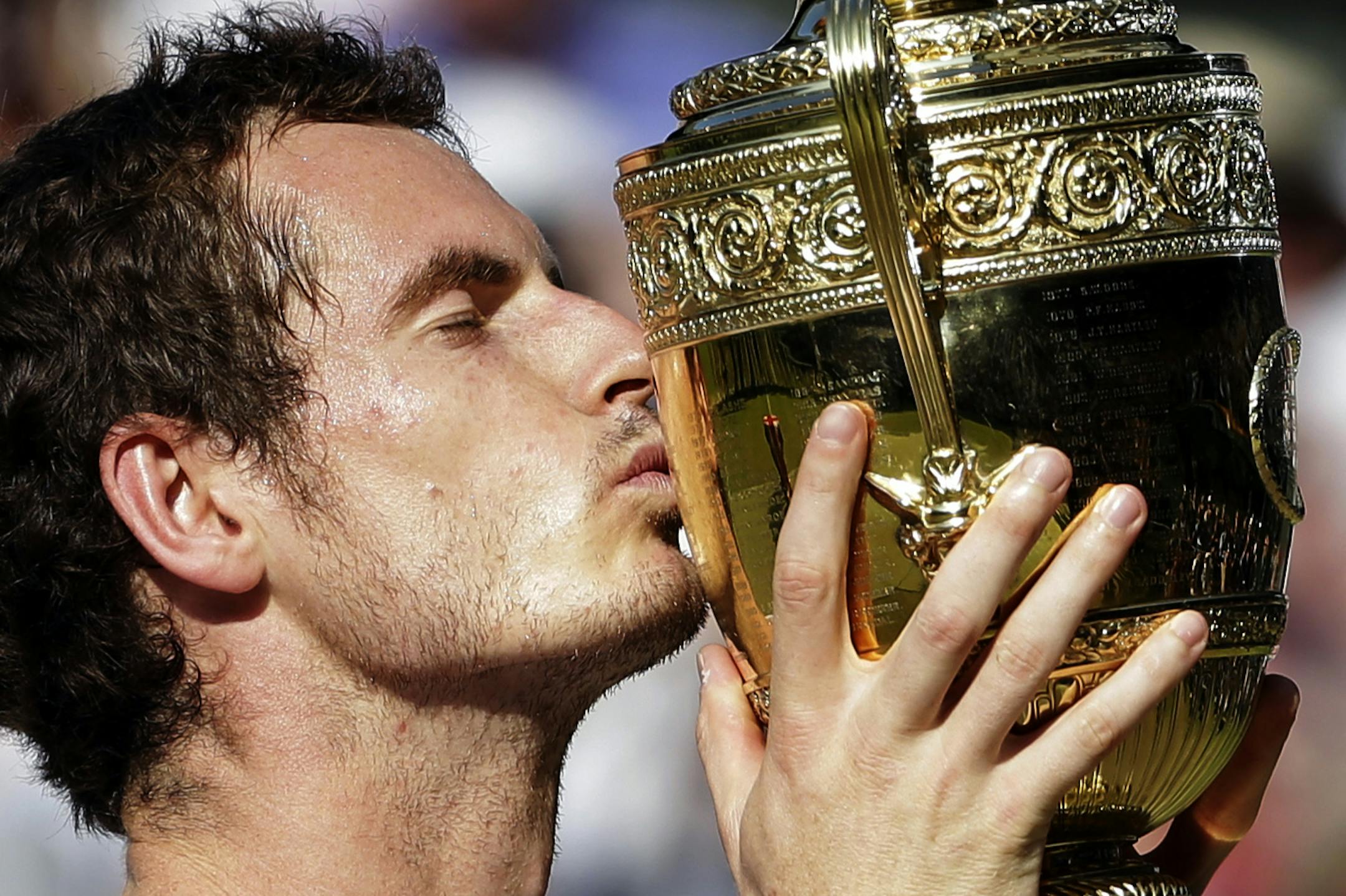
In a country known for its hyperbolic headlines, it would be hard to overstate the magnitude of Andy Murray's victory at Wimbledon last summer. (Or the gratitude the rest of us feel that the oft-repeated refrain "No British man has won Wimbledon since Fred Perry in 1936" finally can be put to rest.)
Of course, a Scottish bloke ending the 77-year drought was never going to go down quite so smooth for the English, what with the centuries-old simmering resentment toward the Scotch ("Braveheart" didn't help). A Wimbledon victory it was, however, and an unlikely one at that from a man who didn't seem to have a big enough game, mind or set of shoulders to carry the hopes of the empire.
That is, until Ivan Lendl entered the picture.
You'll remember Lendl as the former world No. 1 from Czechoslovakia who dominated the tour for much of the 1980s with his strong serve and forehand, winning eight majors and causing John McEnroe to lose his temper even more. But there was one kingdom that Lendl never conquered — Wimbledon.
It became an annual tragedy of sorts to watch Lendl, in his latter years on tour, skip a major he had won three times (Roland Garros) in order to spend more time practicing on grass for a major where he had lost twice in the final (Wimbledon). Unfortunately, preparing for success didn't lead to it at the All England Club. Shoot, even a kid from Minnesota beat him one year in the third round on Centre Court.
The problem for Lendl was that he was playing in the BC era of Wimbledon, as in, Before Change.
Change began to take place in 1995, when Wimbledon made, in its words, "a very minimal alteration in compression" to the balls. Then in 2001, the grass was modified from a mix of rye and creeping red fescue to 100 percent rye "to combat wear and enhance court presentation and performance without affecting the perceived speed of the court."
Don't let propaganda get in the way of the facts — after decades of serve-and-volleyers winning Wimbledon, every champion since 2002 has done so from the baseline. Lendl tried admirably to become a serve-and-volleyer to win Wimbledon. In the new era of slower balls and higher-bouncing lawns, Murray never had to.


