

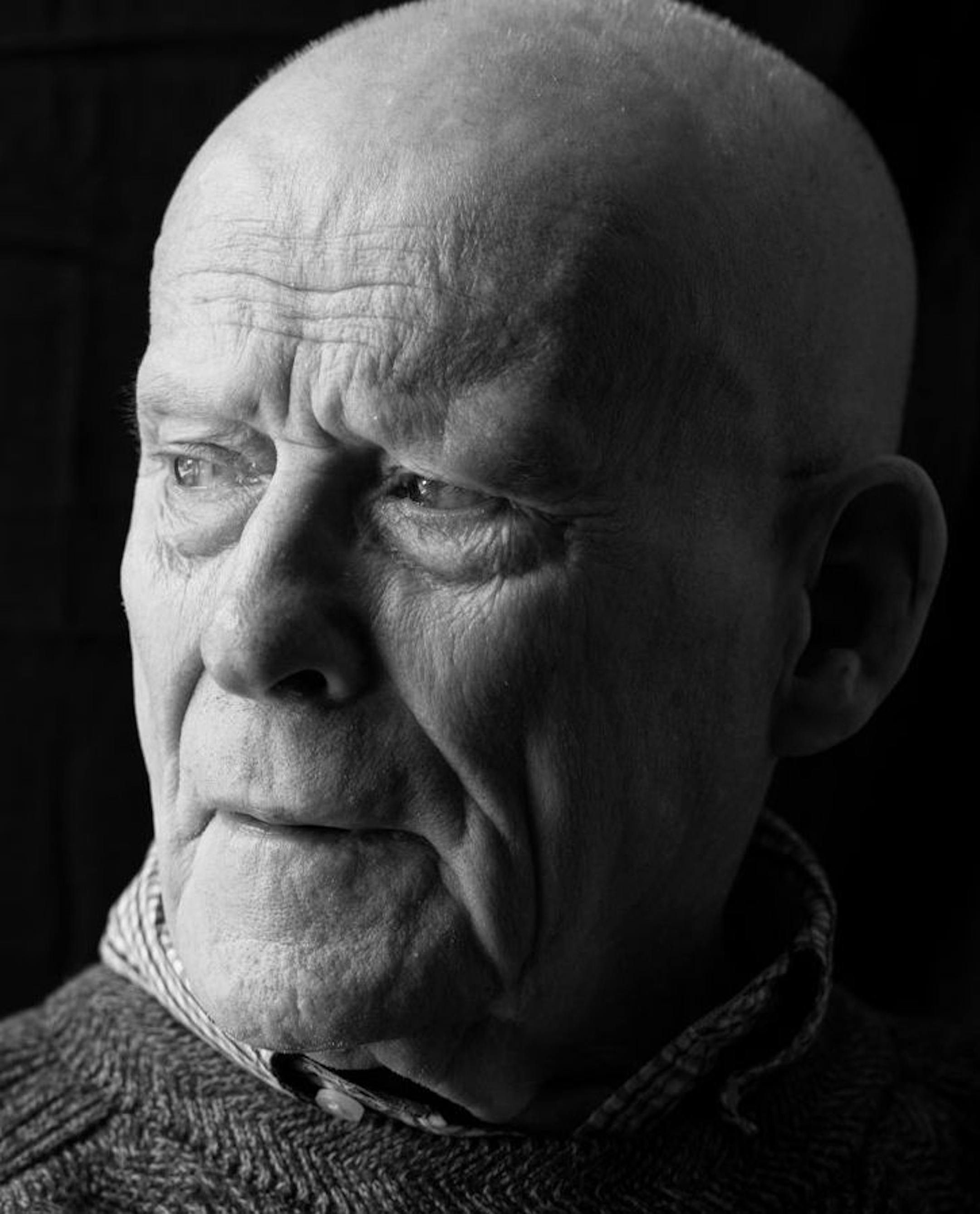
David O'Connor had one last medal pinned to his chest near the end of his life. One final honor for a man who served on the battlefields of two wars and in the classroom for generations of southwestern Minnesota students.
Few in his shop class knew their teacher — "Big O" — had landed on Utah Beach on D-Day and led his men in a bayonet charge on Heartbreak Ridge. O'Connor, who put more energy into helping others than talking about himself, earned so many honors in World War II and Korea that it took 60 years to realize that the Army hadn't awarded all of them — namely, the Bronze Star he earned in Korea.
As O'Connor's own memories of his service began to slip away because of Alzheimer's disease, his family researched military records and arranged for a belated medal ceremony. On Jan. 27, U.S. Rep. Tim Walz traveled to the Minnesota Veteran's Home in Luverne to award the Bronze Star that O'Connor had earned 65 years earlier. O'Connor died there one month later — Feb. 28 — surrounded by family, including his wife of 67 years, Charlotte. He was 92.
O'Connor rarely spoke of his service and never attended military reunions. Years later, his family learned that the veterans at the gatherings still celebrated the heroism of a young First Lt. O'Connor, who earned the Bronze Star and the Silver Star in almost back-to-back engagements in the fall of 1951.
"He was not a person who wore the flag on his sleeve," said his son, Stephen O'Connor. "He would tell us he defended the Constitution and what we stood for as a nation."
O'Connor was a man with a ready smile and steady grace. He was devoted to Charlotte, his four children and the students he taught as an industrial arts teacher and driving instructor. Determined to help students learn and create, O'Connor would encourage them to collect random scraps they found around the farm — wheels, a motor, an old crank case — and help them turn it all into something they could drive away with.
The contraptions the students built "didn't look like much," Stephen O'Connor recalled with a laugh, "but they worked."
O'Connor understood the value of hands-on learning, encouraging the students he taught in Jeffers and Pipestone, Minn. "He changed so many lives," Stephen O'Connor said. "He was always taking time to work with students. They'd stop over to the house, and he'd sit down with them on the patio or the kitchen table. ... It was kind of like sharing our father."


