

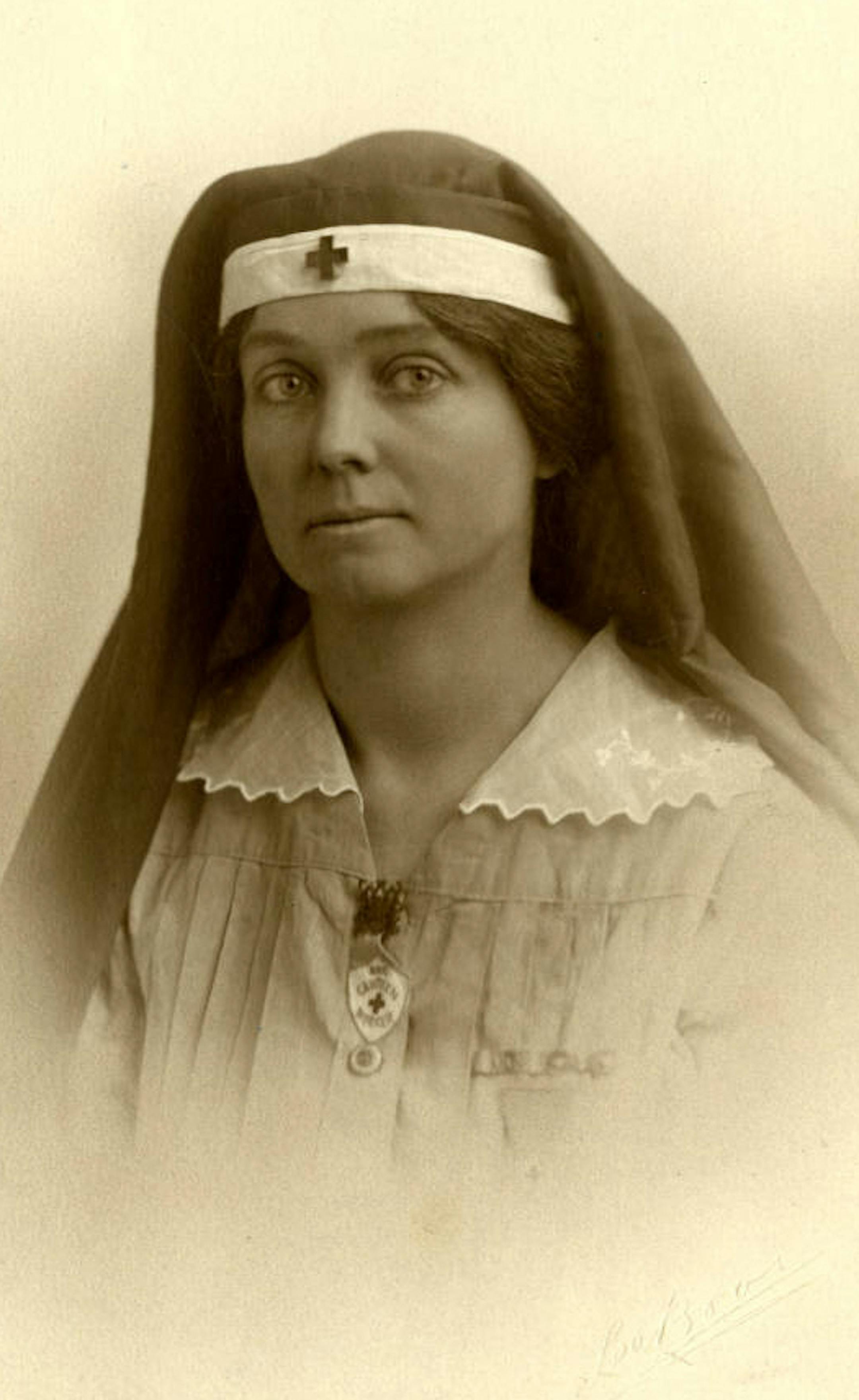
Her father, Andrew Bonney Robbins, founded a first-ring Minneapolis suburb in 1893 — naming Robbinsdale after himself. Her mother's brother, lumber baron Thomas Barlow Walker, created a museum for his art collection — naming the Walker Art Center after himself.
Amy Robbins Ware was born in 1877 in her uncle's art-filled home in Minneapolis. A daughter of privilege, she could have lived a life of leisure like many ladies of her era. But Ware made a name for herself on the trench-pocked battlefields of France during World War I as a Red Cross canteen worker, radio operator and front-line nurse.
When she came home to Robbinsdale in 1919, she published her war diary of poems and prose. Titled "Echoes of France," the little volume is available online (tinyurl.com/AmyWare) and offers an oddly poetic glimpse of the horrors of the Great War.
"To one who knows them well, there is as much difference in the sound of a German and an American plane, as between the spoken words of language," she wrote on Sept. 17, 1918, at Field Hospital 41 near the Western Front.
In a poem written the same day, "Birds of the Night," she describes watching her first air battle — observing flying maneuvers for her radio work at the aviation center. "I crouch down one step further Into the oozing trench, And my heart takes up the rhythm With a terrifying wrench … "
It's not always easy reading. On Nov. 10, 1918 — the day before the armistice that would end the war that left more than 16.5 million civilians and soldiers dead — Ware wrote three paragraphs from the Brizeaux-Forestière where she staffed Evacuation Hospital No. 11 in the Argonne region. "I thought of the boys in the trenches enduring the bitter chill and the wounded lying waiting while their life-blood ebbed away."
She was 41 at the time and far from the comfortable life she left behind in Minnesota. In the book's introduction, written in Robbinsdale 96 years ago this month, Ware says she hopes her presence did some good on the bloody Western Front: "To Mothers of boys 'Gone West' and those who returned, I hope this assurance that American women were at the scene of action may be a comfort."
Based on her lineage, it's no surprise she offered to help on the battlefield. Both her mother and grandmother — Adelaide Julia Walker and Mary Shaw Robbins — served as Civil War nurses. Ware's ancestor, John Howland, was a Pilgrim who arrived on the Mayflower. Her great-great grandfather, Capt. Abraham Shaw, fought against the British in the Revolutionary War. And when her dad was 17, he joined the Eighth Regiment of Minnesota Volunteers in 1862 — fighting in the Civil War in Tennessee as well as in the U.S.-Dakota War.


