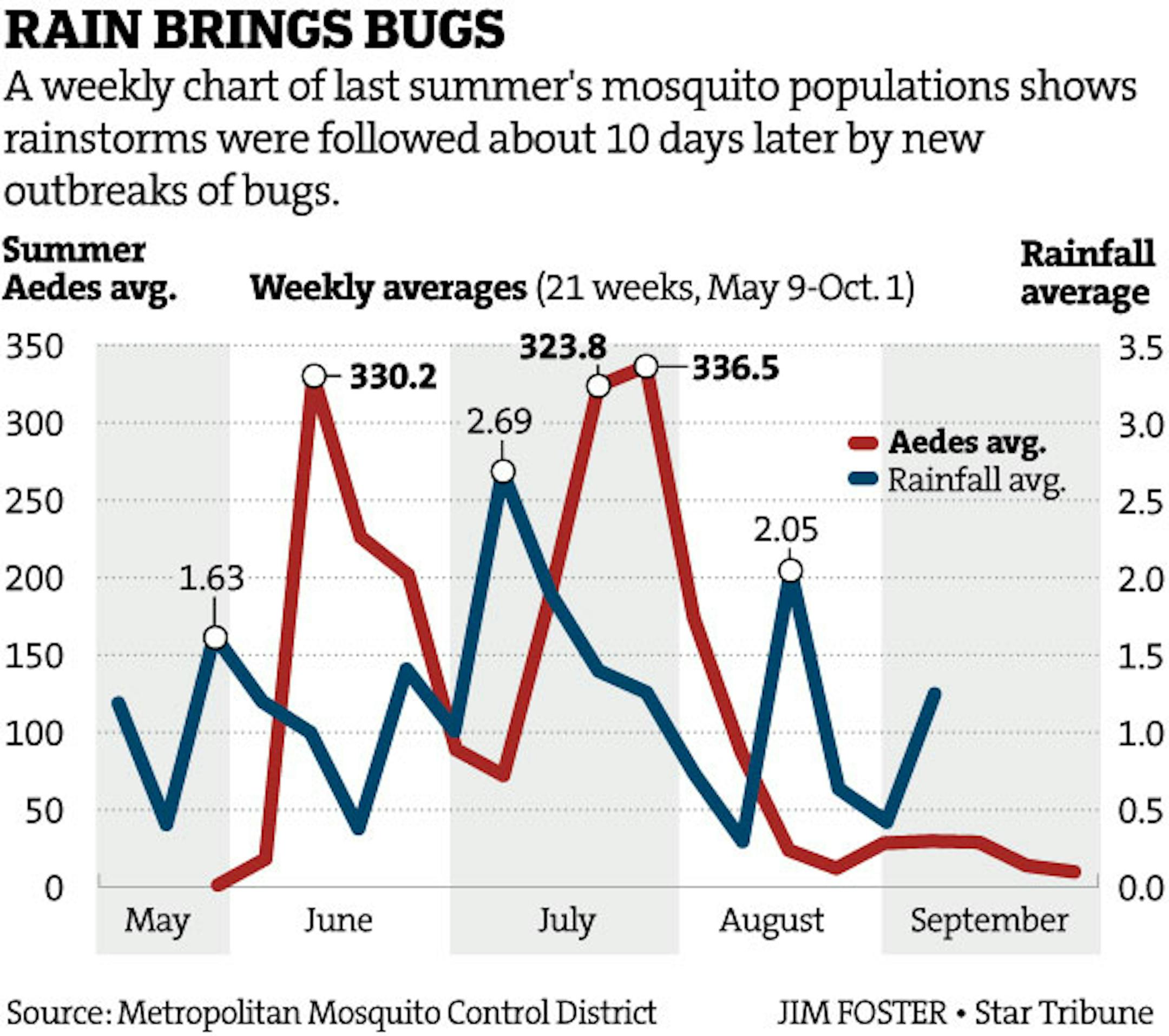
An arid spring has kept the number of mosquitoes in Minnesota down this summer, but don't put away the bug spray just yet.
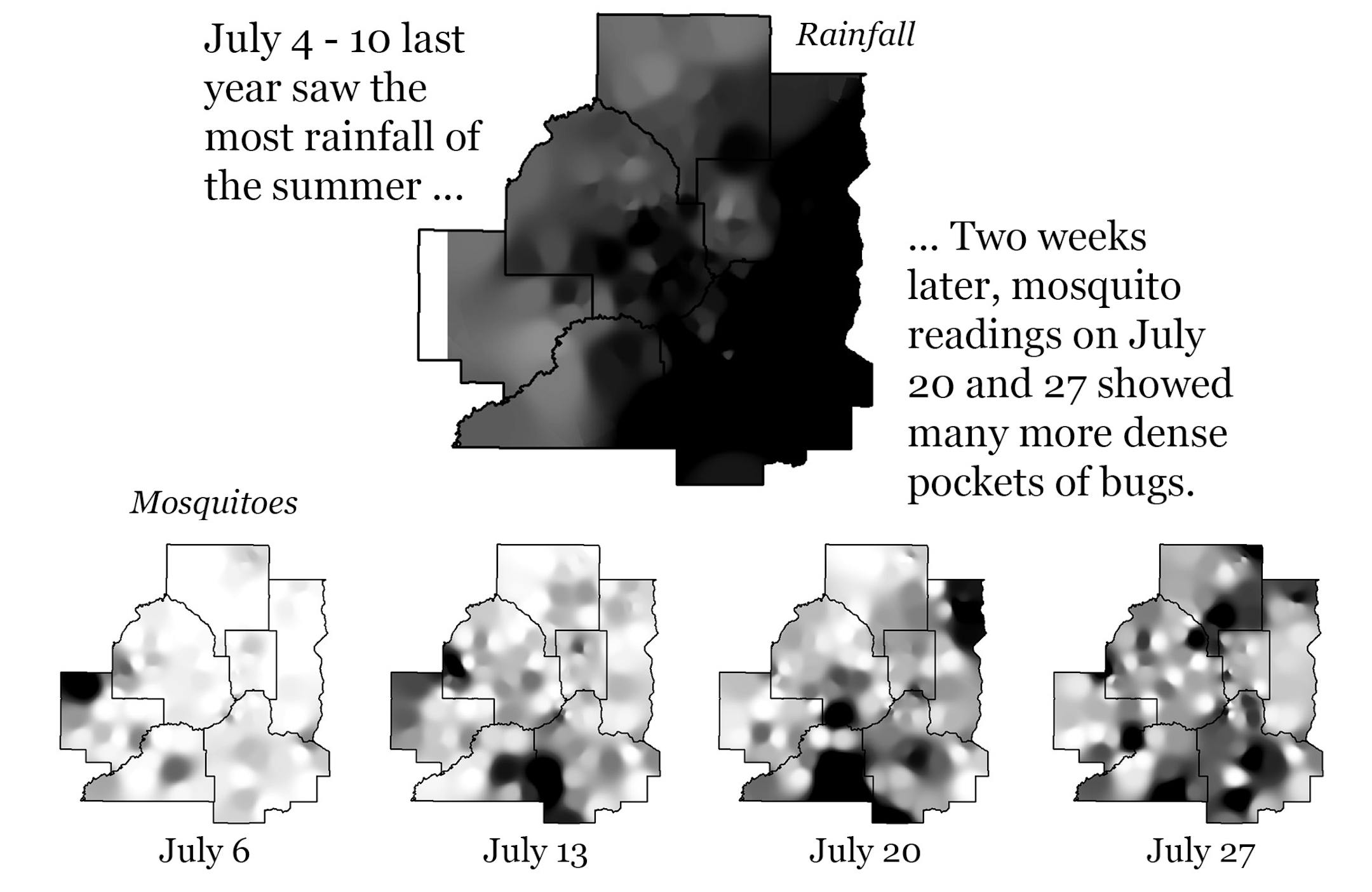
Recent downpours in parts of the Twin Cities have caused a sizable new crop of skeeters to hatch.
That's the latest buzz from the experts at the Metropolitan Mosquito Control District, a government agency that tracks the number of mosquitoes across the seven-county metro.
"Rainfall is the biggest factor," said Mike McLean, the MMCD's communications director.
District staff also are responsible for treating affected areas to control the mosquito population. There are more than 50 different mosquito species in the state, but the type that people are most likely to swat at this time of year is the summer Aedes, he said.
More pest than disease-carrier, this type is heavily dependent on rain for its survival, and it can spawn several generations throughout the summer. Adult mosquitoes of this type can live up to two weeks.
Frequent or heavy rains cause water to pool on the ground, creating an ideal surface for the mosquito to lay its eggs. Lots of eggs. It takes about a week and a half after the rain stops for the eggs to hatch.
The result: an uptick in bloodsuckers. In general, the northern parts of Anoka, Hennepin, Washington and Ramsey Counties tend to have more mosquitoes than the rest of the metro, according to the MMCD, which maintains data-collecting sites scattered across the metro.
"Last week's heavy rains did cause a hatch," said Stephen Manweiler, the MMCD's executive director. "It had been so dry before the rain that a lot of the sites didn't flood up as much as they usually would. We got a medium sized hatch out of it."