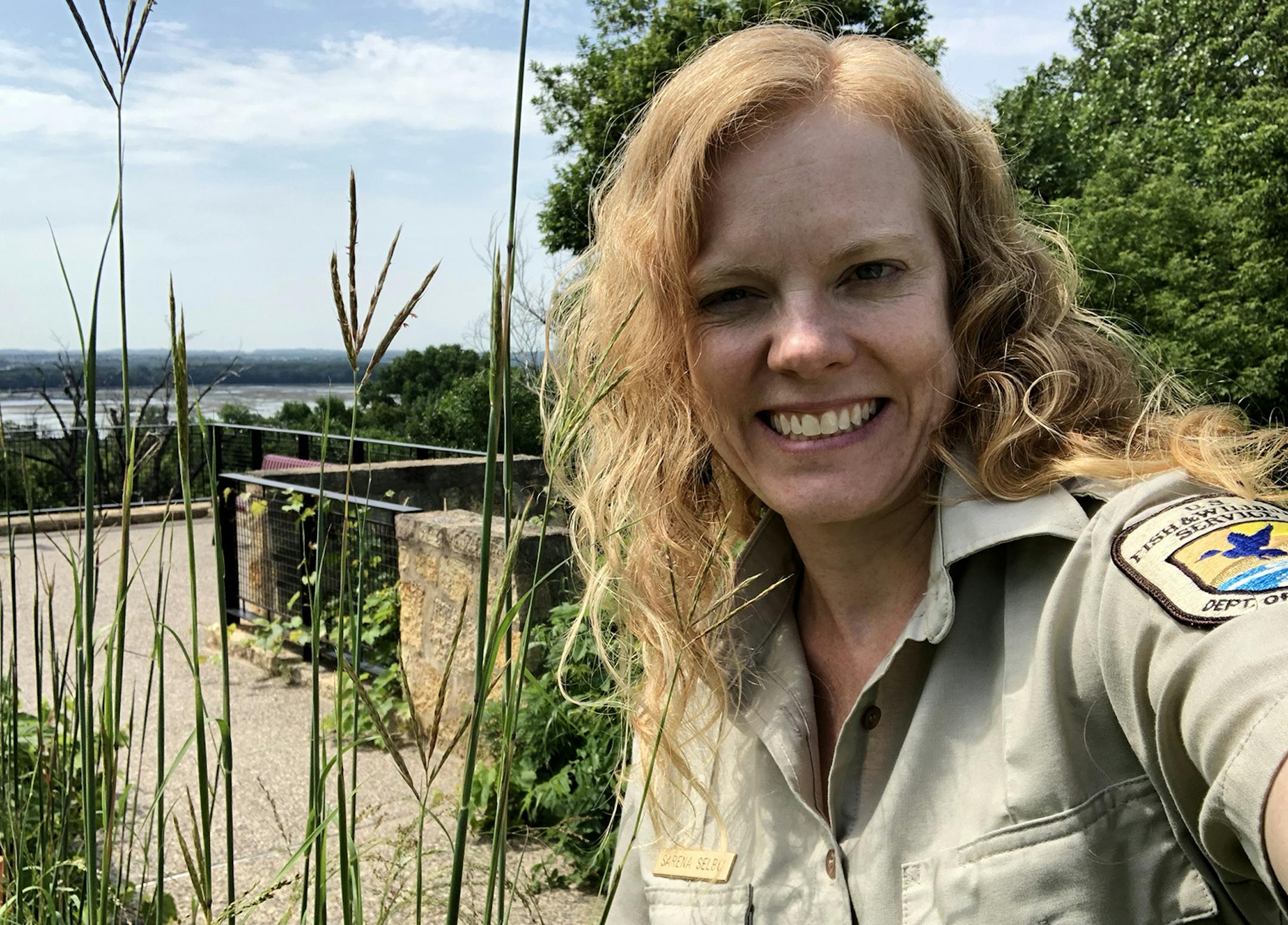
Today: Sarena Selbo, the new manager at Minnesota Valley National Wildlife Refuge. Selbo came from Anchorage, Alaska, where she was a U.S. Fish and Wildlife Service regional director, focused on conservation through science. Find an archive of Currents here.
Reading
I am reading "Darwin Comes to Town: How the Urban Jungle Drives Evolution" by Menno Schilthuizen. As a national wildlife refuge manager in the Twin Cities, I am fascinated by how some wildlife species adapt to human-dominated environments. Even the birds sing louder to find each other over the sounds of a bustling city. I am passionate about connecting people with wild places and providing spaces for both people and wildlife in urban communities.
Following
I recently returned to the Upper Midwest after 19 years working throughout the country, most recently as regional lead for the U.S. Fish and Wildlife Service's science program in Alaska. My four years in Alaska put me face to face with the challenges of a warming climate. Understanding the changes in migration patterns of wildlife, flowering times for berries, or rising temperature of streams is an important piece of the puzzle to build resilience into communities. Even now, returning to the Midwest, I am observing change. One example is a trend in more severe summer storms and flooding events. This has a practical impact on public access at Minnesota Valley National Wildlife Refuge — many of the trails closed this summer due to high river levels.
Watching
Monarchs! From egg to caterpillar to beautiful butterfly, we have had a great showing of monarch butterflies this year at the refuge. I can walk just steps from our visitor center in Bloomington and see hundreds of butterflies hanging in the trees on the edge of the prairie. They appear as dead leaves on bur oak trees, unless you look closely. But periodically and almost in unison, they open their wings to display splendid orange and black. It is not unusual for this showy pollinator to be throughout our prairie nectaring on wildflowers, but to see them congregate in the refuge woods is a rarity that should not be missed.
Listening